By Ajaz Ashraf On the World Anti-smoking Day, 31 May, Pattali Makkal Katchi (PMK) leader Anbumani Ramadoss haunted me as I frequently tumbled out of the make-believe world which the director of The Great Gastby had assiduously sought to create. It was exasperating to the extreme—every time an actor in The Great Gastby lit up – there were too many characters lighting up too often in the film—a message popped up on the screen warning the viewers of the dire consequences of smoking. It was the equivalent of an infant, asleep in the mother’s lap, suddenly bawling in the theatre, shattering the cocoon of silence into which audiences must willingly slip to enjoy a film. Indeed, the discredit for killing the joy of watching films has to be assigned to Anbumani Ramadoss, who as Union health minister between May 2004 and April 2009 launched a veritable war against smoking. His crusade has created a new breed of pariahs—the smokers—who have been hounded out from public places, made to suffer ignominies, and compelled to accept their inferiority as both deserved and legitimate. Smokers accept their status and fate grimly, not least because a barrage of statistics has persuaded them about the causal link between their addiction and a variety of health problems. Yet, even the non-smoking public, particularly those who sniff and snarl every time someone lights up, should oppose the rule demanding film directors to insert a warning in every smoking scene they conceive. The rationale behind the rule is decidedly specious. Its proponents, Anbumani included, fervently believe popular actors portrayed smoking on the screen could inspire the impressionable to take to white sticks. The warnings superimposed on smoking footage will serve as a countervailing influence, they argue, blithely ignoring the killjoys they are to those who love their films.[caption id=“attachment_848995” align=“alignleft” width=“380”]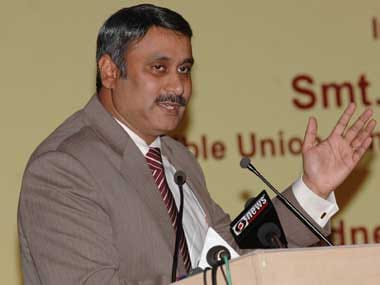 Pattali Makkal Katchi leader Anbumani Ramadoss. Image courtesy PIB[/caption] Those who proffer this argument have an intolerant, undemocratic attitude, as also a dim view of human beings – since they are incapable of choosing wisely, deny them the opportunity of making choices. In case you think I am a smoker venting my deep frustrations at the slew of anti-smoking laws and norms, you must read the utterances of Anbumani Ramadoss, the self-anointed general in the war against smoking, and whom the anti-tobacco votaries love to lavish praises on. For instance, in a recent interview to The Hindu Centre for Politics and Public Policy, an outfit of the publishers of The Hindu newspaper, Anbumani criticised the Dravidian parties of Tamil Nadu for spawning three cultures in the state. “The first is the culture of freebies, the second, alcohol culture, and the third, cinema culture… We are against all these three cultures,” he said. No doubt, Anbumani is entitled to his opinion, but the undemocratic streak in him came to the fore as he etched out the contours of what the PMK bills as its ideology of ‘New Politics, New Path’. “The first signature,” Ramadoss said, “a PMK Chief Minister is going to put on a document in 2016 is total prohibition in Tamil Nadu.” (Tamil Nadu goes to election in 2016). From this peep into his worldview, a few quick conclusions can be drawn about Anbumani. One, he believes it is he who knows what is best for people and, therefore, must decide for them. It’s this certitude of his that led him to campaign for scrubbing out smoking scenes from films altogether, until judicial intervention had the Union Ministry of Health and Family Welfare to settle for the less authoritarian but infinitely irritating measure of inserting the warning lines. Two, moderation is a word which doesn’t exist in Anbumani’s vocabulary – nothing less than a ban on alcohol would do for him. No question of weaning the people away from alcohol through persuasion; no consideration for those who enjoy a peg or two and are not alcoholics. In Anbumani’s world, there exist no shades of grey. It is divided between smokers and alcoholics and those who don’t puff or quaff. Three, in equating the culture of cinema with that of liquor and freebies, Anbumani displays a deep disdain for films – and the enjoyment they provide for the masses. He presumably believes films corrupt the viewers and undermine the society. He can’t empathise with those who desire a make-believe world as an escape from the unrelenting harsh realities of life. In hindsight, you can well understand why Anbumani wanted smoking scenes excised from films. Ironically, Anbumani embodies the argument against those who believe cinema spawns the culture of imitation. For a man who secured his MBBS degree from the Madras Medical College, it is a tad astonishing to see him sharpen the conflict between the OBC caste of Vaniyyar, which constitutes the social base of the PMK, and the Dalit supporters of Viduthalai Chiruthaikal Katchi (VCK), through theories dubious in nature, articulated in language arguably provocative. Succinctly, the PMK bosses have been campaigning in some districts of Tamil Nadu against Dalit boys marrying Vanniyar girls. The PMK theory is as follows: Dalit boys seduce Vanniyar girls into marriage and agree to return their wives to their families in lieu of substantial payments. In the outcry of PMK bosses against “love marriages”, you can, yet again, discern their contempt for choice and Anbumani’s failure to internalize the lessons of social harmony he must have been taught in his school-days. Might not teenagers remain impervious to actors enacting roles requiring them to smoke? Thus, for instance, at Mamallapuram last year, the PMK founder and Anbumani’s father, S Ramadoss, declared, “Dalit youth lure our women… They target our girls who are in the age group of 13 to 18 and elope with them. Later, they demand money in crores to the send the girls back to their parents…. Engaging in love with a girl aged between 13 years and 18 years is not love at all. It is rape or sexual abuse and should be punished.” He then went on to say love marriages are acceptable only if the girl is above 21, has completed her studies, and is in a position of employment. What does Anbumani have to say about his father’s rather bizarre definition of love? In the interview to the Hindu Centre, he said, “We are also not against the concept of ‘love marriages’. But what the VCK has been up to—we know it because we are in the field—as it happened in a village in Dharmapuri district last year, they have made love—not necessarily between a Dalit boy and an upper caste girl—into a business, allegedly extorting huge money from people depending on their social status to ‘get back’ their respective daughters home. It is such enacted love marriages that we oppose." The blueprint the PMK has for Tamil Nadu had its precedent in Anbumani’s crusade against smoking. The similarities between the two are remarkable – stigmatize those whose habits you abhor, hound them in every possibly way, and spin theories difficult to verify. It is impossible to tell whether every Vanniyar girl was seduced (or tricked) into marrying Dalits, as it is to determine the number of those who took to smoking because a tinsel hero blew smoke on the silver screen. Hounding smokers is infinitely easier than targeting Dalits, for there are provisions of the Prevention of Atrocities against SC/ST Act to contend against. In an attempt to justify his utterances against love marriages, Anbumani wants the Act amended, to prevent what he alleges is its rampant misuse. In acquiescing to his irrational crusade against smoking—and accepting the government’s rule demanding warnings against tobacco imposed on smoking scenes—we have emboldened him and the PMK to think of banning liquor and campaigning against love marriages before the girl attains the age of 21. It is time we film-buffs insist on protecting our make-believe world from violations. (The author is a Delhi-based journalist and can be reached at ashrafajaz3@gmail.com)
Killjoy Anbumani: Why anti-smoking crusader got it all wrong
FP Archives
• June 6, 2013, 18:57:40 IST
Even the non-smoking public should oppose the rule demanding that film directors insert a warning in every smoking scene they conceive.
Advertisement
 "Killjoy Anbumani: Why anti-smoking crusader got it all wrong")