

 "If BJP is serious about black money, it should re-examine tax treaties")
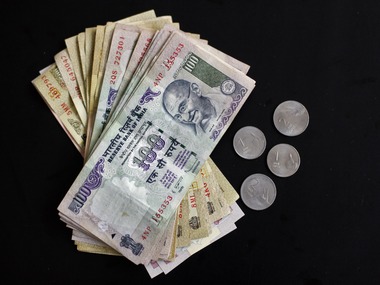
On Wednesday, when the Supreme Court accepted and handed over the sealed envelope from the government carrying the Swiss bank account details of Indians to the special investigation team, what seems to have won is the concern over the double taxation avoidance treaty (DTAT) and many such agreements that the country has signed, or going to sign, with other countries. Before the elections, under an onslaught of allegations by the BJP and other opposition parities, the UPA had expressed it helplessness in disclosing the names of alleged offshore black money holders citing these treaties, but the opposition was brutal. Give us power, we will name them and bring back the money — was what the BJP had said. [caption id=“attachment_1778663” align=“alignleft” width=“380”]  Representational image. Reuters[/caption] The BJP came to power, but started singing the same UPA tune on black money — we cannot disclose the names because DTAT, other bilateral trade and investment treaties, and some of the agreements for investments that are in the pipeline. The nation indeed called the BJP’s bluff, but the question remained why does India sign the treaties such as DTAT in forms that might ultimately harm its interests? On Wednesday, the Times of India reported that the disclosure of the names without prosecution might hamper signing of an impending agreement with the US that is important for investments — the Foreign Account Tax Compliance Act (FATCA) because it contains a confidentiality clause. “In the absence of the inter-governmental agreement related to FATCA, all remittances, including payments for exports, would face a 30% withholding tax,” the report said. There are many such treaties under operation and many more may be in the pipeline which at times of national importance such as the present case — naming of black money holders — constrain India’s interests. Till 2004, India has signed 85 bilateral tax treaties, including 70 comprehensive tax agreements and 15 limited tax agreements. The treaties differ depending on the economic status of the contracting state. The bilateral tax treaties are based on two multilateral tax conventions such as The Model Tax Convention on Income and on Capital (Organization for Economic Cooperation and Development, 1963) and the United Nations Model Double Taxation Convention between Developed and Developing Countries, 1980. Confidentiality clauses in these treaties and their supremacy to domestic law are what have prevented both the UPA and the BJP from disclosing the list. The upcoming treaty with the US, as reported by TOI, will also have a confidentiality clause. The main purpose of these treaties is to avoid double taxation and fiscal evasion while promoting foreign investment. The three players in the process are the host country, the home country and the investor. The main problem, as academic literature that analyses India’s tax treaties shows, is that the Indian domestic tax law, such as the Indian Income Tax Act, allows these treaties more importance, whenever it is subject to interpretation although according to the Indian Constitution, an international agreement comes into force only after its enactment by the Indian Parliament. But, in the case of tax treaties, it becomes law as soon as thy are signed by the other country and notified by the Centre. In short, a bilateral tax treaty supersedes Indian law when it comes to obligations of India with the partner country. How many Indians know this? This is the risk of the bilateral treaties although they are necessary for promoting business and investment. Since the Parliament is not taken into confidence while formulating and signing such treaties, there should be more transparency, information and national debate around them. A government, whether it’s the UPA or the BJP, should not be vested with all the power to negotiate with countries and sign agreements that make the domestic law irrelevant. Had they gone through the parliament, the elected representatives as well as the country would have had a chance to look at the pitfalls. The argument is not against the bilateral treaties, but for being cautious and more participatory. The point is also about political will than political rhetoric. If the BJP is serious about black money, will it take a re-look at some of the bilateral tax treaties? Or will it at least stop signing such treaties without informing the parliament? The confidentiality clause will continue to hamper India’s efforts in tracking and recovering black money held abroad. The governments of the day may like these treaties because they help them conceal the inconvenient truth such as who all hold black money in overseas banks.
The point is also about political will than political rhetoric. If the BJP is serious about black money, will it take a re-look at some of the bilateral tax treaties? Or will it at least stop signing such treaties without informing the parliament? The confidentiality clause will continue to hamper India’s efforts in tracking and recovering black money held abroad.
Advertisement
End of Article


 "Russian drones over Poland: Trump’s tepid reaction a wake-up call for Nato?")
 "As Russia pushes east, Ukraine faces mounting pressure to defend its heartland")
 "Why Mossad was not on board with Israel’s strike on Hamas in Qatar")
 "Turkey: Erdogan's police arrest opposition mayor Hasan Mutlu, dozens officials in corruption probe")
 "Russian drones over Poland: Trump’s tepid reaction a wake-up call for Nato?")
 "As Russia pushes east, Ukraine faces mounting pressure to defend its heartland")
 "Why Mossad was not on board with Israel’s strike on Hamas in Qatar")
 "Turkey: Erdogan's police arrest opposition mayor Hasan Mutlu, dozens officials in corruption probe")



](https://images.firstpost.com/wp-content/uploads/2014/10/rupee-reuters126.jpg)