By Abhishek Waghmare, IndiaSpend.org A resident of Pune, Maharashtra’s second-most developed city, uses five times as much water as her counterpart in Latur, the district most ravaged by drought in the south-central Marathwada region. That’s the extent of water inequality in Maharashtra, India’s
most developed
state, according to an IndiaSpend analysis of statewide water use, characterised by disproportionate availability and consumption of water across regions, crops and consumers. The coastal region of Konkan — occupying a tenth of the state’s landmass and home to 14 percent of its population (except Mumbai) — contains more than half of Maharashtra’s water, according to government
data
. [caption id=“attachment_2795512” align=“alignleft” width=“380”]
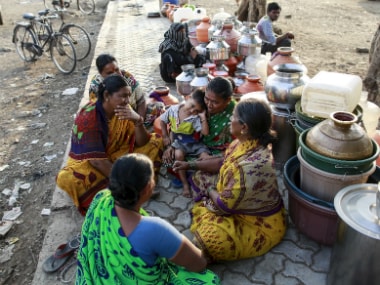 Representational image. Getty images[/caption] The populous, dry and rain-shadow regions of western, central Maharashtra, Marathwada and Vidarbha, retain the other half, clashing with each other and neighbouring states for water. But the natural imbalance of water does not make drought inevitable. That happens because water has been deliberately routed to areas where it is already plentiful and to farmers who are politically powerful. Sugarcane — which is grown on 4 percent of the state’s farms —
consumes 70 percent of water
available for irrigation, IndiaSpend
reported
earlier, although no more than 1.1 million farmers grow the lucrative cash crop. In contrast, about 10 million jowar (sorghum), pulses and oilseeds farmers get no more than 10 percent of irrigation water. “The earlier Congress – Nationalist Congress Party-led government was entrenched in sugar politics with
13 of the 30 cabinet ministers
owning or controlling sugar factories,” Parineeta Dandekar, associate coordinator of South Asian Network for Dams, Rivers and People,
wrote
in her analysis of the sugarcane situation in Maharashtra. Water inequality is a natural phenomenon There are
five river basins
in Maharashtra: Krishna, Godavari, Tapi, Narmada and a combined basin of westward flowing rivers in the coastal Konkan region. Of these, three are agriculturally important — Krishna, Godavari and Tapi. They
cover 89 percent of the state’s area
; 0.4 percent of the state falls under the Narmada river basin. The Konkan basin drains 10.9 percent of the land, while containing 55 percent of the state’s water. The
Krishna basin
drains most parts of Western Maharashtra, the prosperous districts of Kolhapur, Pune, Satara, Sangli and Solapur, and some perennially drought-plagued areas, such as eastern swathes of Sangli, Satara and Solapur districts. The
Godavari basin
covers the drought-hit regions of Marathwada and Vidarbha. Of the 125 billion cubic metres (BCM) surface water available in Maharashtra’s river basins, most of the 69 BCM in the Konkan region goes unutilised, according to this 2012 Maharashtra government
White Paper on Irrigation
. In contrast, the 17 BCM in the Krishna and 34 BCM in the Godavari basins are insufficient for the regions they water. “In Maharashtra, sugarcane cultivation, which is on (sic) less than 4 percent of the total cropped area of the state, takes away almost 70 percent of irrigation water in the state, leading to massive inequity in the use of water within the state,” said the
sugarcane price policy report
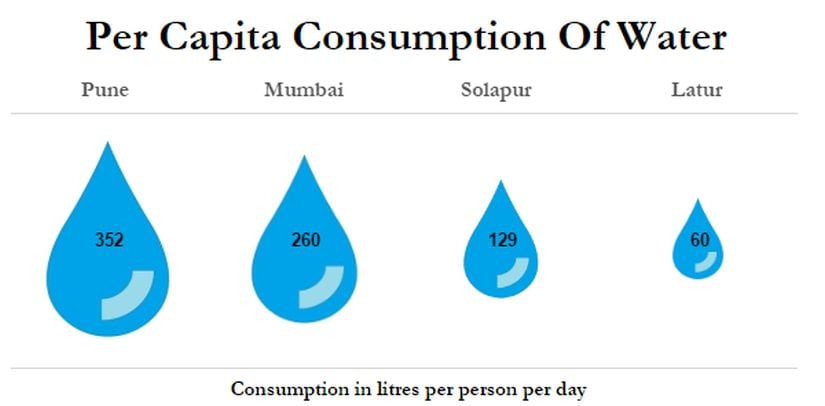
, 2014-15, issued by the Commission on Agricultural Costs and Prices (CACP). The CACP tabulates the share of irrigation water used by major crops in Maharashtra. How sugarcane corners irrigation water Sugarcane is the only crop in Maharashtra which is wholly irrigated. Irrigation water is available for no more than 9 percent of pulses and 4 percent of oilseeds. About 10 million farmers grow jowar, pulses and oilseeds — no more than a tenth of these farms are irrigated, as we said—and these crops use about 2.2 million litres of water per hectare, about 2,000 MCM of water through the year. Sugarcane’s 1.1 million farmers use 18.7 million litres per hectare and consume 18,000 MCM — nine times that of jowar, oilseeds and pulses — annually across the state. More developed the city, more the water used Urban water consumption patterns are heavily tilted towards developed cities. The city of Latur in Marathwada consumes 60 litres per person daily, while an average Mumbaikar uses around 260 litres a day. The average daily use of water per person in Pune is 352 litres, according to IndiaSpend calculations, based on daily water requirements of these cities and the latest available population figures.
Representational image. Getty images[/caption] The populous, dry and rain-shadow regions of western, central Maharashtra, Marathwada and Vidarbha, retain the other half, clashing with each other and neighbouring states for water. But the natural imbalance of water does not make drought inevitable. That happens because water has been deliberately routed to areas where it is already plentiful and to farmers who are politically powerful. Sugarcane — which is grown on 4 percent of the state’s farms —
consumes 70 percent of water
available for irrigation, IndiaSpend
reported
earlier, although no more than 1.1 million farmers grow the lucrative cash crop. In contrast, about 10 million jowar (sorghum), pulses and oilseeds farmers get no more than 10 percent of irrigation water. “The earlier Congress – Nationalist Congress Party-led government was entrenched in sugar politics with
13 of the 30 cabinet ministers
owning or controlling sugar factories,” Parineeta Dandekar, associate coordinator of South Asian Network for Dams, Rivers and People,
wrote
in her analysis of the sugarcane situation in Maharashtra. Water inequality is a natural phenomenon There are
five river basins
in Maharashtra: Krishna, Godavari, Tapi, Narmada and a combined basin of westward flowing rivers in the coastal Konkan region. Of these, three are agriculturally important — Krishna, Godavari and Tapi. They
cover 89 percent of the state’s area
; 0.4 percent of the state falls under the Narmada river basin. The Konkan basin drains 10.9 percent of the land, while containing 55 percent of the state’s water. The
Krishna basin
drains most parts of Western Maharashtra, the prosperous districts of Kolhapur, Pune, Satara, Sangli and Solapur, and some perennially drought-plagued areas, such as eastern swathes of Sangli, Satara and Solapur districts. The
Godavari basin
covers the drought-hit regions of Marathwada and Vidarbha. Of the 125 billion cubic metres (BCM) surface water available in Maharashtra’s river basins, most of the 69 BCM in the Konkan region goes unutilised, according to this 2012 Maharashtra government
White Paper on Irrigation
. In contrast, the 17 BCM in the Krishna and 34 BCM in the Godavari basins are insufficient for the regions they water. “In Maharashtra, sugarcane cultivation, which is on (sic) less than 4 percent of the total cropped area of the state, takes away almost 70 percent of irrigation water in the state, leading to massive inequity in the use of water within the state,” said the
sugarcane price policy report
, 2014-15, issued by the Commission on Agricultural Costs and Prices (CACP). The CACP tabulates the share of irrigation water used by major crops in Maharashtra. How sugarcane corners irrigation water Sugarcane is the only crop in Maharashtra which is wholly irrigated. Irrigation water is available for no more than 9 percent of pulses and 4 percent of oilseeds. About 10 million farmers grow jowar, pulses and oilseeds — no more than a tenth of these farms are irrigated, as we said—and these crops use about 2.2 million litres of water per hectare, about 2,000 MCM of water through the year. Sugarcane’s 1.1 million farmers use 18.7 million litres per hectare and consume 18,000 MCM — nine times that of jowar, oilseeds and pulses — annually across the state. More developed the city, more the water used Urban water consumption patterns are heavily tilted towards developed cities. The city of Latur in Marathwada consumes 60 litres per person daily, while an average Mumbaikar uses around 260 litres a day. The average daily use of water per person in Pune is 352 litres, according to IndiaSpend calculations, based on daily water requirements of these cities and the latest available population figures.
How water inequality governs drought-hit Maharashtra
IndiaSpend
• May 31, 2016, 11:31:14 IST
A resident of Pune, Maharashtra’s second-most developed city, uses five times as much water as her counterpart in Latur, the district most ravaged by drought in the south-central Marathwada region.
Advertisement
 "How water inequality governs drought-hit Maharashtra")
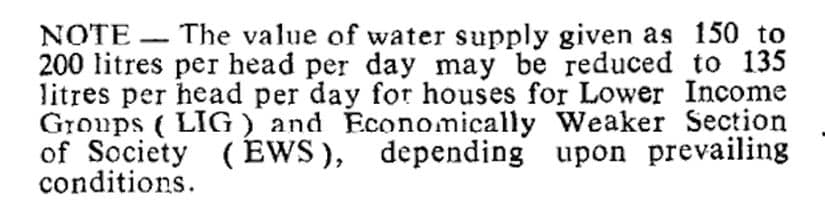
The–officially set–rural-urban water imbalance A village with less than 20,000 people should get 40 litres of water per person per day, five litres less than the water prescribed to flush a toilet in a city such as Mumbai — these are the standards set in 1993 by the Bureau of Indian Standards in its
Code of Basic Requirements
. The standards also recommend reduced water supply to poorer localities in urban areas.
In 2015, the Kelkar Committee on balanced regional development in Maharashtra recommended 140 litres per capita per day across rural and urban Maharashtra. The recommendation has not yet been included in the state’s water policy.

Indiaspend.org is a data-driven, public-interest journalism non-profit
End of Article