It is cool, inspiring and the ultimate do-it-yourself ( DIY )project. Almost four years ago, a remote village outside Delhi did the unthinkable — built a railway station on a land allotted by the railways. This is how the story goes: The villagers of Tajnagar had to travel miles to catch a train as the village just had a railway line passing through the area but no station. An article in
the HyperVocal
reported that after several requests to the railway officials since 1982, residents finally took matters in their own hand, pooled in their own resources and put forth a proposal to build their own railway station. According to villagers, commute was especially tough when they had to travel to Gurgaon or Delhi.
Hukum Chand,
another villager, was quoted by
The Times of India
as saying: “There are students who go to college. Until now we had to go to Hailimandi or Patli to catch a train. We have been raising the demand [for a station] since 1982, but the railways told us they did not have funds. So, finally we decided to craft our own destiny.” [caption id=“attachment_1831009” align=“alignleft” width=“380” class=" “]
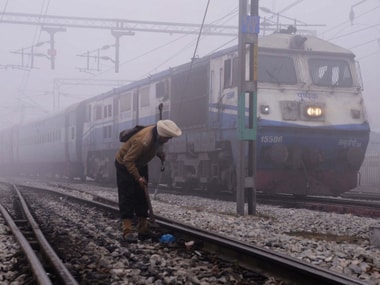 Representational image. AFP[/caption] Despite repeated requests, the railway officials would dismiss the villagers and tell them that there were bigger and better transport related issues that they had to solve.
Speaking to BBC
in 2010, a Northern Railway spokesperson Anant Swarup said: “The railways have limited resources and we have to prioritise, and it was not a matter of priority for us to build a station in Tajnagar.” But frazzled by long commutes, the villagers, mainly from agricultural background, pooled in their own money and raised Rs 2,080,786. Once the finances were in place, the residents approached the railway officials and put forth a proposal to build their own railway station. A report in
The Times of India
quoted former village sarpanch Ranjeet Singh as saying: “Most of the 3,000-plus people living in the village are agriculturists. But such was the burning desire to have a station in the village, everybody contributed according to their capacity. Ranging from Rs 3,000 to Rs 75,000 they donated money for the station and we started construction in January, 2008.” While the railway officials refused to heed to the village’s demand, they were happy to help with the specifications and helped them design a building. The officials even promised to make arrangements for the trains to stop at the Tajnagar station once the it was up and running. “The railway authorities considered their proposal and found it feasible. So it was given the go-ahead,” Swarup told BBC. In January 2010, the Tajnagar railway station was ready to receive trains. It took the villagers seven months for the construction work. The area was badly connected by roads but the officials said that the new Tajnagar station would benefit about 25,000 people.
Representational image. AFP[/caption] Despite repeated requests, the railway officials would dismiss the villagers and tell them that there were bigger and better transport related issues that they had to solve.
Speaking to BBC
in 2010, a Northern Railway spokesperson Anant Swarup said: “The railways have limited resources and we have to prioritise, and it was not a matter of priority for us to build a station in Tajnagar.” But frazzled by long commutes, the villagers, mainly from agricultural background, pooled in their own money and raised Rs 2,080,786. Once the finances were in place, the residents approached the railway officials and put forth a proposal to build their own railway station. A report in
The Times of India
quoted former village sarpanch Ranjeet Singh as saying: “Most of the 3,000-plus people living in the village are agriculturists. But such was the burning desire to have a station in the village, everybody contributed according to their capacity. Ranging from Rs 3,000 to Rs 75,000 they donated money for the station and we started construction in January, 2008.” While the railway officials refused to heed to the village’s demand, they were happy to help with the specifications and helped them design a building. The officials even promised to make arrangements for the trains to stop at the Tajnagar station once the it was up and running. “The railway authorities considered their proposal and found it feasible. So it was given the go-ahead,” Swarup told BBC. In January 2010, the Tajnagar railway station was ready to receive trains. It took the villagers seven months for the construction work. The area was badly connected by roads but the officials said that the new Tajnagar station would benefit about 25,000 people.
Do-It-Yourself: A village near Delhi that built its own railway station
FP Staff
• December 2, 2014, 17:34:34 IST
Almost 4 years ago, a remote village outside Delhi did the unthinkable — build themselves a railway station on a land allotted by the railways.
Advertisement
 "Do-It-Yourself: A village near Delhi that built its own railway station")
End of Article