

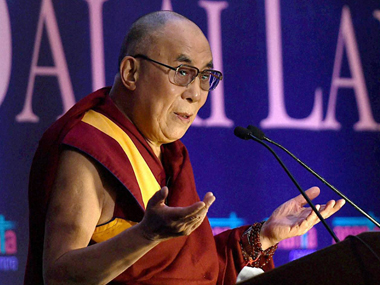
 "Dalai Lama visit: Modi govt needles China, shows India is ready to play hardball")
The cacophony of India’s rambunctious democracy and a terrible Pakistan fixation have largely drowned the fact that New Delhi, of late, has been engaged in a quieter, yet more intriguing and potentially deadlier game of one-upmanship with China. The latest being India’s
decision to allow Dalai Lama to visit Arunachal Pradesh. China has reacted
strongly to its decision to allow the exiled Tibetan spiritual leader to Arunachal Pradesh in March, warning India that New Delhi’s decision will “impact damage peace and stability of the border areas as well as the bilateral relationship between China and India”. China deems Arunachal Pradesh as a disputed territory and claims almost in entirety by calling it “South Tibet”. [caption id=“attachment_2838324” align=“alignleft” width=“380”] Dalai Lama. PTI[/caption] But to say that India has an advantage over China is slightly misleading. In terms of power matrix, the elephant is nowhere close to the dragon. China’s GDP is roughly six times ($12.4 trillion) than that of India ($2.5 trillion), it has the world’s second-largest defence budget at $141 billion — almost three-times that of India — and enjoys a massive trade surplus of $52.68 billion over us. In fact, in several indices China has left even the US behind, becoming the world’s largest trading nation in goods clocking a figure of $2276.5 billion in 2015 and holding the world’s largest foreign exchange reserves ($3.3 trillion). We are, despite our higher rate growth, at least 13 years behind the curve. To compound India’s problems, Beijing has been rapidly translating its economic growth into considerable military and strategic strength. Its aggressive assertion of geopolitical clout has alarmed all neighbours and especially India, which has been drawn into a testy relationship with Beijing despite its reputation as a pacifist force in the south Asian region. There are many dimensions to the Sino-Indian relationship. While both remain WTO signatories and enjoy increasing trade ties and robust people-to-people exchanges, diplomatically and strategically China sees India — with whom it has already fought a war and has several “live” border disputes — as a long-term rival. And in keeping with Chinese philosophy, it has employed several tools to contain India’s surge. While its usage of Pakistan as an effective lever has been well-documented, it has of late taken several other steps to increase its military-strategic depth around India, such as investing in infrastructure and doling out dollars to India’s close tactical partners. In contrast, though faced with an adversary much larger in size and aggressive in intent, India has very few levers against its enemies. Unlike Pakistan, which habitually aligns with a larger force to counter India’s influence (recall its historic ties with the Washington and currently, Beijing) New Delhi still suffers from a Cold War-era hangover to trust the US, and address the power imbalance. And as strategic affairs expert C Raja Mohan has pointed out, in areas where India could have used its own position as a hedge to bargain with China (Beijing’s entry into WTO in the 1990s, for instance), it was let down by a foreign policy that laid far greater stress on ideology than strategic needs. In this context, therefore, Narendra Modi government’s move to permit the Dalai Lama to visit Arunachal Pradesh early next year is the equivalent of India lighting a torch inside a gas station. Close on the heels of US Ambassador Richard Verma’s visit to the annual Tawang Festival in the north-eastern state, this move amounts to needling China with a sharp instrument. Among the very few levers that India still enjoys over China, the Dalai Lama is the most potent one. His visit to Arunachal Pradesh is sure to raise the hackles in Beijing. At the same time, India’s manouvre exposes China’s double standards on issues of national security and sovereignty. While Beijing refuses to consider Kashmir as an integral part of India, wants the world at large to be sympathetic to Pakistan’s position and is even building a “China Pakistan Economic Corridor” cutting through Gilgit-Baltistan (part of Pakistan-occupied-Kashmir which technically belongs to India), China bristles in rage when it comes to even a feeble threat to its sovereignty. It disregards the legality of India’s claim over Kashmir, and tacitly encourages Pakistan to use terrorism as an instrument of foreign policy. China also refuses to let India blacklist terrorist masterminds such as Masood Azhar at the United Nations, and openly talks about supporting a terror-sponsoring nation at each global forum, yet the very mention of Dalai Lama sends Chinese leaders and policymakers into a fit of violent rage. It sees the Tibetan spiritual leader as a threat to its One-China policy, and uses heavy handed ways — from trying to install a puppet Panchen Lama in Tibet to throwing around its economic heft to bend the world opinion in its favour — to suppress the independence movement in Tibet, which it claims to have “peacefully liberated” in 1950 by using coercive state power. [caption id=“attachment_2244514” align=“alignright” width=“380”]
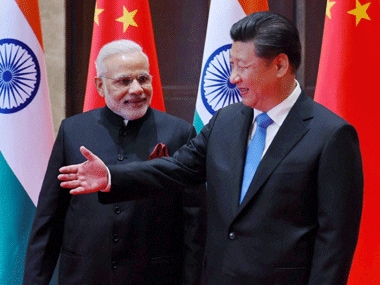 Prime Minister Narendra Modi with Chinese President Xi Jinping . PTI[/caption] As Foreign Policy
reported on Thursday, China prevented the Czech Republic, a vocal backer of the Tibetan independence movement, from honoring a holocaust survivor because the survivor’s uncle, a minister in the Czech government Cabinet, went ahead and met the Dalai Lama. Beijing has also issued an open threat against another European nation when its President met the 80-year-old Nobel Peace Prize winner. According to Reuters, China’s foreign ministry said it would retaliate after Slovakia president Andrej Kiska met visiting exiled Tibetan spiritual leader this month. Going by the prevalent mood, however, India appears disinterested in pandering to Chinese sentiments and is showing no nervousness about it. On the Dalai Lama’s upcoming visit, Ministry of External Affairs spokesperson Vikas Swarup
said the Buddhist leader was a “guest of India” and was free to travel across the country. “The Dalai Lama is a revered spiritual figure… He has a sizeable following among Buddhists in Arunachal Pradesh, who would like to seek his blessings. He has visited the state in the past as well and we see nothing unusual if he visits again,” Swarup said. The desire to play hardball is sign of a new, retaliatory foreign policy that is fast becoming the hallmark of Modi regime. India obviously hasn’t taken kindly to Chinese snubs over Masood Azhar or a seat in Nuclear Suppliers’ Group. By pulling the strings of existing (anti-China) levers, it wants to send a message to China that the dragon cannot continue to take the elephant for granted. There is nothing wrong with the strategy but India must not blink when faced with reciprocal reactions from China.
Prime Minister Narendra Modi with Chinese President Xi Jinping . PTI[/caption] As Foreign Policy
reported on Thursday, China prevented the Czech Republic, a vocal backer of the Tibetan independence movement, from honoring a holocaust survivor because the survivor’s uncle, a minister in the Czech government Cabinet, went ahead and met the Dalai Lama. Beijing has also issued an open threat against another European nation when its President met the 80-year-old Nobel Peace Prize winner. According to Reuters, China’s foreign ministry said it would retaliate after Slovakia president Andrej Kiska met visiting exiled Tibetan spiritual leader this month. Going by the prevalent mood, however, India appears disinterested in pandering to Chinese sentiments and is showing no nervousness about it. On the Dalai Lama’s upcoming visit, Ministry of External Affairs spokesperson Vikas Swarup
said the Buddhist leader was a “guest of India” and was free to travel across the country. “The Dalai Lama is a revered spiritual figure… He has a sizeable following among Buddhists in Arunachal Pradesh, who would like to seek his blessings. He has visited the state in the past as well and we see nothing unusual if he visits again,” Swarup said. The desire to play hardball is sign of a new, retaliatory foreign policy that is fast becoming the hallmark of Modi regime. India obviously hasn’t taken kindly to Chinese snubs over Masood Azhar or a seat in Nuclear Suppliers’ Group. By pulling the strings of existing (anti-China) levers, it wants to send a message to China that the dragon cannot continue to take the elephant for granted. There is nothing wrong with the strategy but India must not blink when faced with reciprocal reactions from China.
Close on the heels of India’s decision to allow Dalai Lama to visit Arunachal Pradesh, it would be wiser of the Modi government to retain its stand when met with reciprocal reactions in this potentially deadlier game of one-upmanship with China
Advertisement
End of Article


 "Charlie Kirk, shot dead in Utah, once said gun deaths are 'worth it' to save Second Amendment")
 "From governance to tourism, how Gen-Z protests have damaged Nepal")
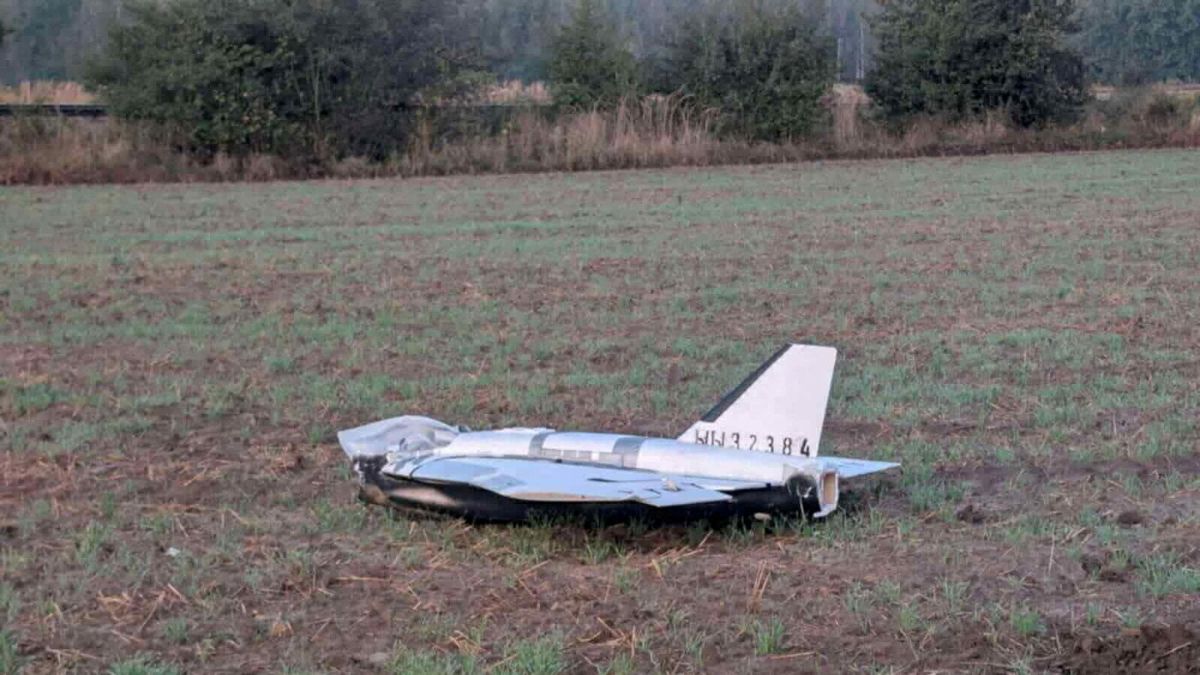 "Did Russia deliberately send drones into Poland’s airspace?")
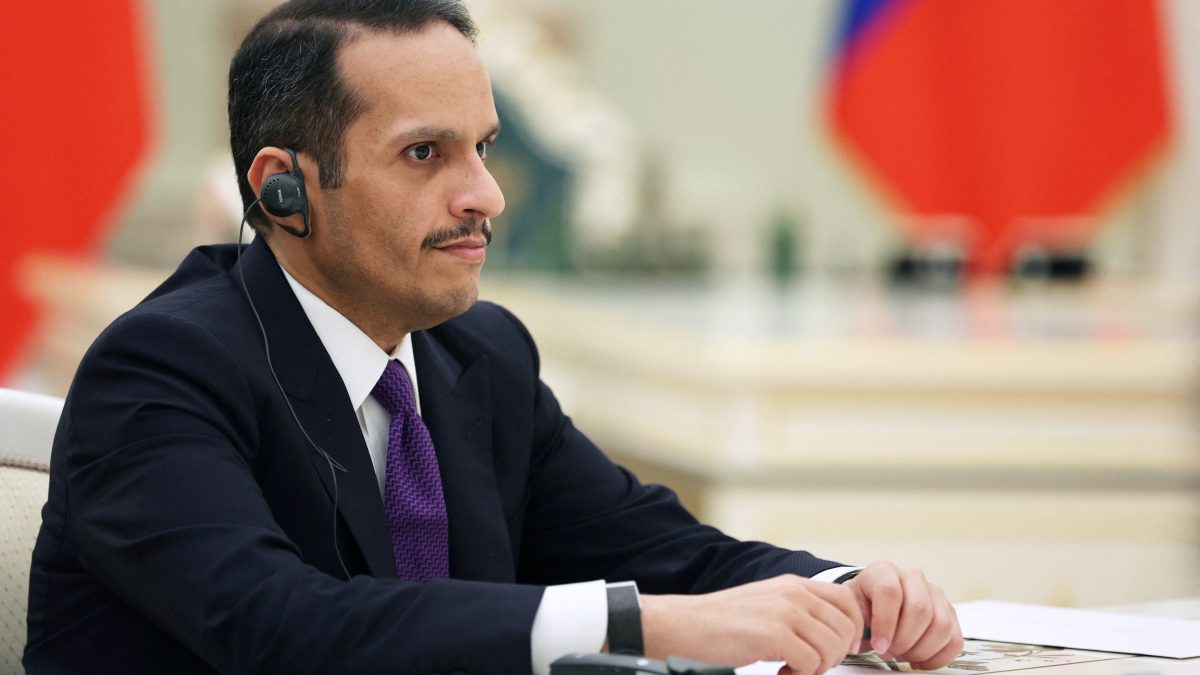 "Netanyahu ‘killed any hope’ for Israeli hostages: Qatar PM after Doha strike")
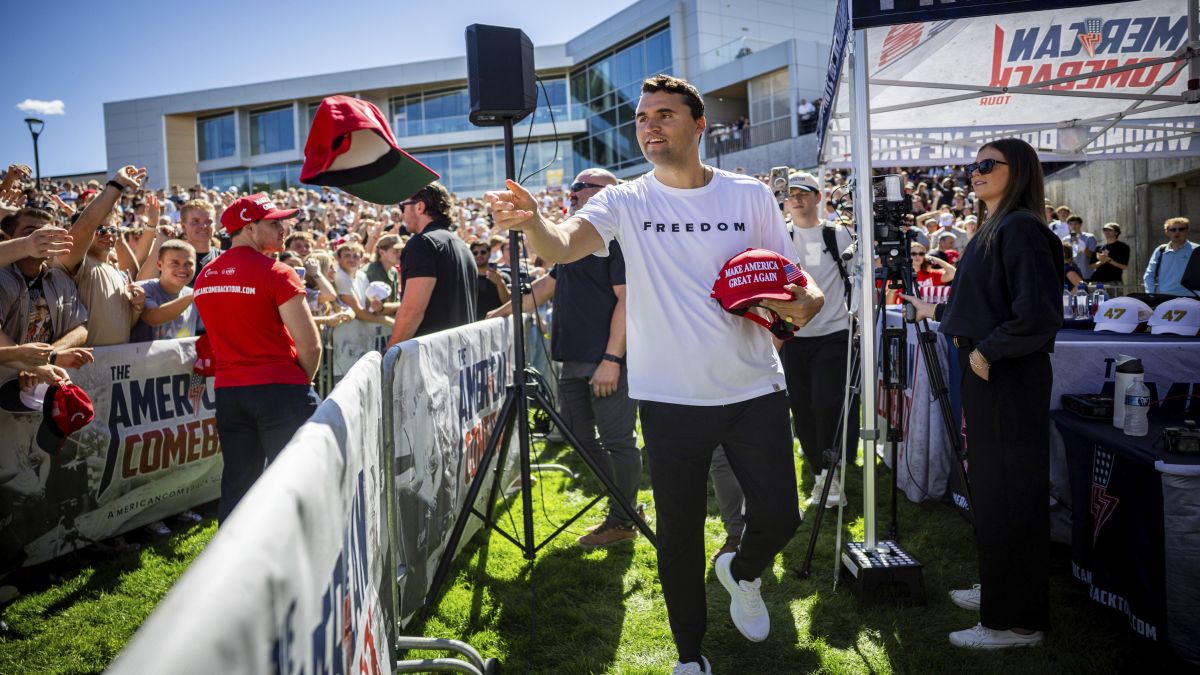 "Charlie Kirk, shot dead in Utah, once said gun deaths are 'worth it' to save Second Amendment")
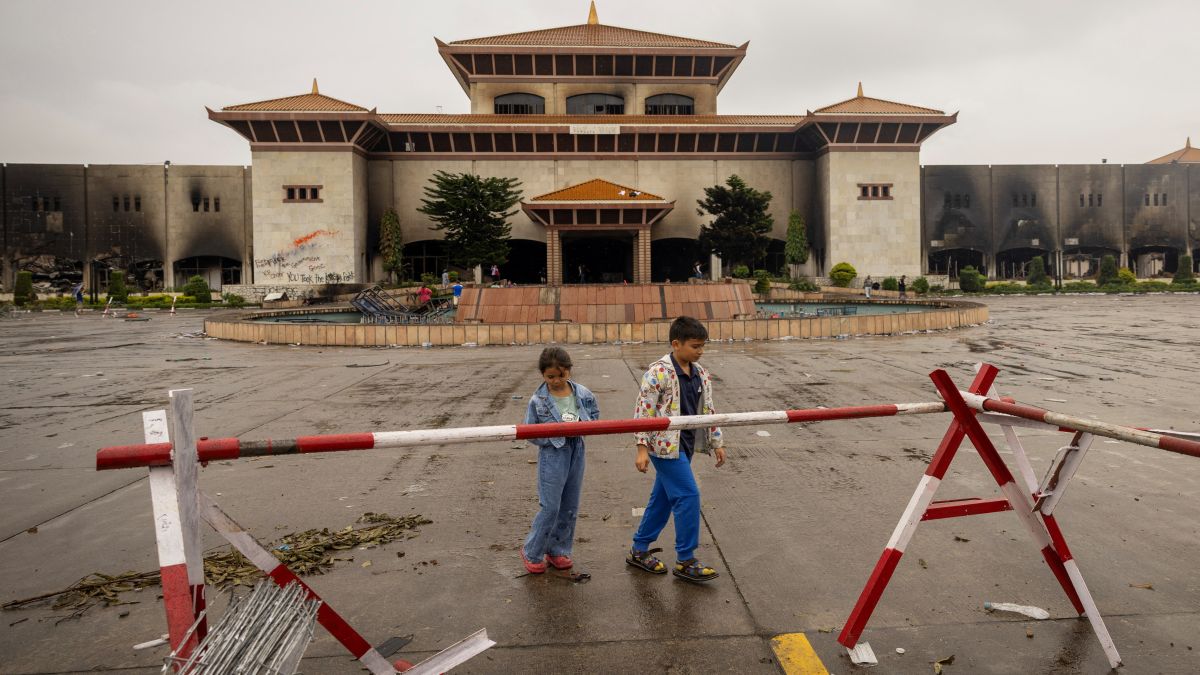 "From governance to tourism, how Gen-Z protests have damaged Nepal")
 "Did Russia deliberately send drones into Poland’s airspace?")
 "Netanyahu ‘killed any hope’ for Israeli hostages: Qatar PM after Doha strike")



