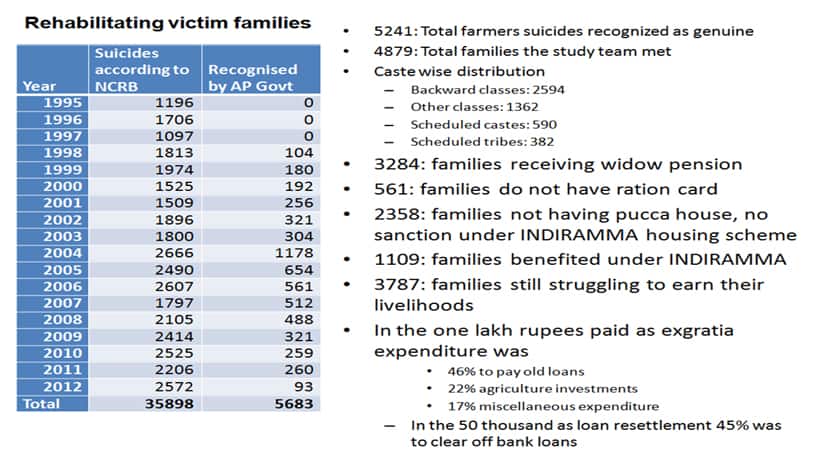
A total of 37,912 farmers committed in Andhra Pradesh and Telangana in the last 19 years. Telangana’s agrarian crisis is real, with heart wrenching stories that underlie these statistics.
According to data compiled by the Rythu Swarajyam Vedika, in the last one year there have been 1844 ‘farmer suicides’ in Telangana. A total of 37,912 farmers committed in Andhra Pradesh and Telangana in the last 19 years. Telangana’s agrarian crisis is real, with debilitating stories that underlie these statistics. According to NCRB data, India’s agrarian population is 48.9 percent — however, this does not mean that nearly half of the country’s people are farmers, but that over 600 million Indians are deployed in a wide variety of related farm activity. [caption id=“attachment_2564196” align=“alignleft” width=“380”]
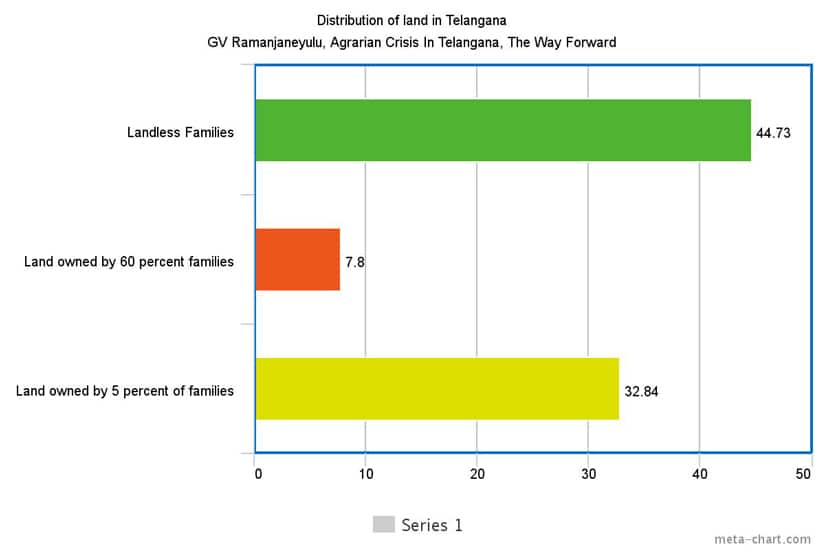
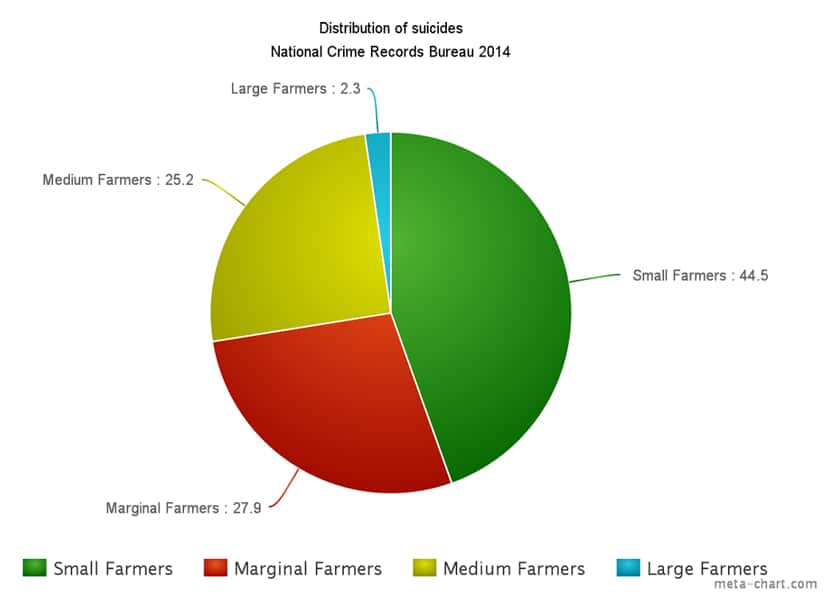
Representational image. Reuters[/caption] Drought and Telangana Telangana is mainly dependent on rainfall for crop production — change in climate has severe impact on farming, shortage of rains greatly reduces yields and profitability. The deccan plateau in general has prolonged dry spells, high incidences of rainwater run-offs causing soil erosion. The area receives most of the rainfall from the south-west monsoon during June to September. October to December are dry. Simply put, the physical terrain of Telangana region is such that it needs adequate rainfall in order to be agriculturally sustainable. The agrarian make-up of Telangana Most farmers in the state do not own the land they cultivate. According to NCRB reports, a majority of those who committed suicide were small and marginal farmers. Together, they account for 72.4 percent of total farmer suicides. According to the
Reserve Bank of India
, farmers with landholding of up to 1 hectare are considered as marginal, those with more than 1 hectare and less than 2 hectares are considered small farmers. Landless agricultural labourers (cultivators who take the land on lease), tenant farmers, oral lessees and share-croppers are also defined under this.
What are farmer suicides? Farmer suicides are a socio-economic phenomenon. Up until the 1990s, the government of India did not recognise farmer suicides as a social epidemic plaguing rural India. Farmer suicides/farm suicides are those that occur due to crushing debts that farmers/agricultural labourers incur due to the problems they face in continuing with agriculture — low yield, lack of rains, loans (they take for agricultural upgradation of their land/farm) etc.
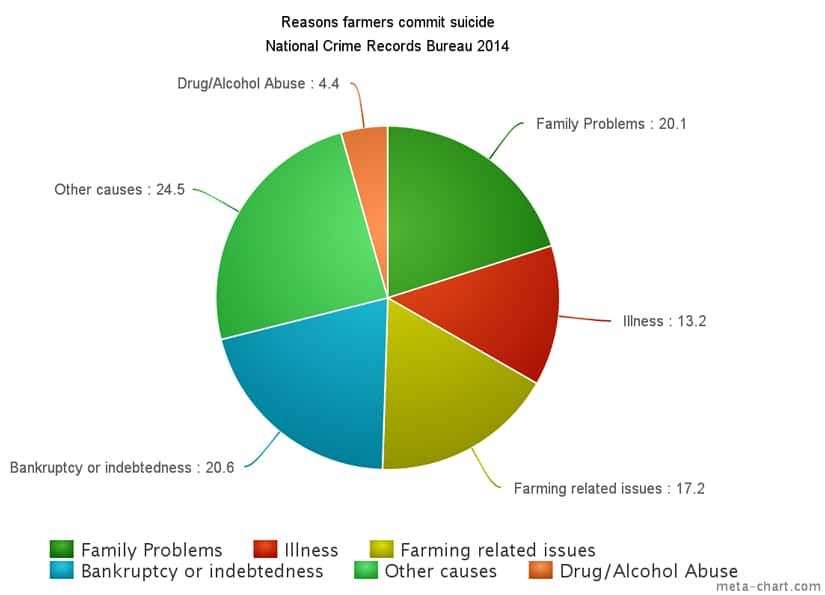
Why do farmers commit suicide? According to the
National Crime Records Bureau
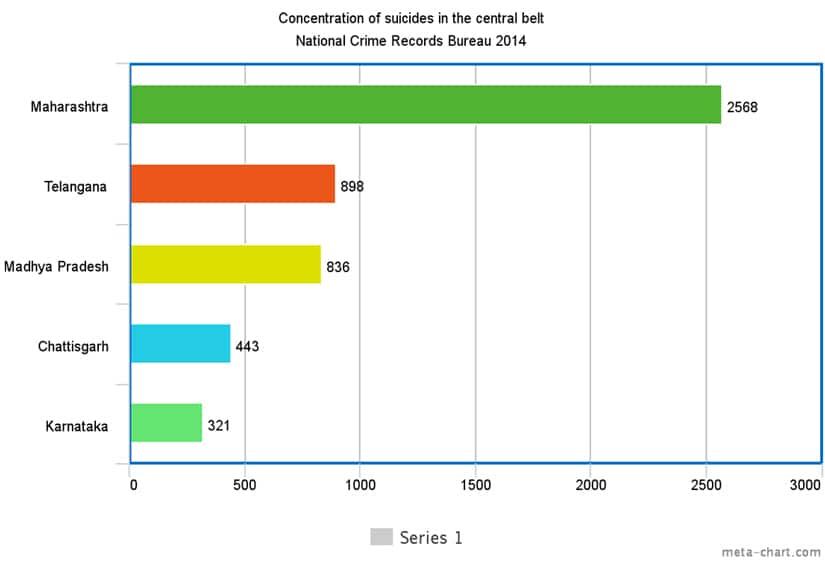
, a total of 5,650 farmers committed suicide in India in 2014, accounting for 4.3 percent of total suicide victims in the country. Two of the major causes for farmer suicides are: Bankruptcy or indebtedness and family problems. The farmer suicide phenomenon is concentrated in five states: Maharashtra, Telangana, Karnataka, Chattisgarh and Madhya Pradesh. Maharashtra has the highest incidences, with NCRB pegging the number at 2568 in 2014, followed by by 898 victims from Telangana.
According to GV Ramanjaneyulu
, Executive Director of Centre for Sustainable Agriculture in Hyderabad, some of the reasons for suicides are mounting debts, increasing costs of cultivation. Subsidies are decreasing and costs of inputs are increasing with reduced access to means of production. Environmentally, the soil conditions are incompatible with cropping patterns, leading to infertility of the soil. Dependence on water intensive crops is placing high pressure on irrigation systems, causing breakdowns.
What schemes does the government of India have in place to protect the nation’s agriculturalists? On paper, many. In implementation, a few. The government instituted a debt waiver/relief scheme in 2008. This was to bring relief to over 36 million farmers. In addition to this, there is a programme called
Kisan Credit Card
, which should provide need based and timely credit support to the farmers/agricultural labourers for their cultivation and non-farm activities. There are multiple awareness programmes, meant to educate farmers about cropping patterns, feasibility and fertility of the soil to help them maximise their yield. Though institutional credit exists, it is availed by a select few, according to a Rythu Swarajya Vedika activist. Private lenders charge heavy interest rates, the agricultural labourers and farmers do not have options but to take money as loans at those high rates.
 "Crushed by negligence: All you need to know about the drought and agrarian crisis in Telangana")
 Representational image. Reuters[/caption] Drought and Telangana Telangana is mainly dependent on rainfall for crop production — change in climate has severe impact on farming, shortage of rains greatly reduces yields and profitability. The deccan plateau in general has prolonged dry spells, high incidences of rainwater run-offs causing soil erosion. The area receives most of the rainfall from the south-west monsoon during June to September. October to December are dry. Simply put, the physical terrain of Telangana region is such that it needs adequate rainfall in order to be agriculturally sustainable. The agrarian make-up of Telangana Most farmers in the state do not own the land they cultivate. According to NCRB reports, a majority of those who committed suicide were small and marginal farmers. Together, they account for 72.4 percent of total farmer suicides. According to the
Reserve Bank of India
, farmers with landholding of up to 1 hectare are considered as marginal, those with more than 1 hectare and less than 2 hectares are considered small farmers. Landless agricultural labourers (cultivators who take the land on lease), tenant farmers, oral lessees and share-croppers are also defined under this.
Representational image. Reuters[/caption] Drought and Telangana Telangana is mainly dependent on rainfall for crop production — change in climate has severe impact on farming, shortage of rains greatly reduces yields and profitability. The deccan plateau in general has prolonged dry spells, high incidences of rainwater run-offs causing soil erosion. The area receives most of the rainfall from the south-west monsoon during June to September. October to December are dry. Simply put, the physical terrain of Telangana region is such that it needs adequate rainfall in order to be agriculturally sustainable. The agrarian make-up of Telangana Most farmers in the state do not own the land they cultivate. According to NCRB reports, a majority of those who committed suicide were small and marginal farmers. Together, they account for 72.4 percent of total farmer suicides. According to the
Reserve Bank of India
, farmers with landholding of up to 1 hectare are considered as marginal, those with more than 1 hectare and less than 2 hectares are considered small farmers. Landless agricultural labourers (cultivators who take the land on lease), tenant farmers, oral lessees and share-croppers are also defined under this.