

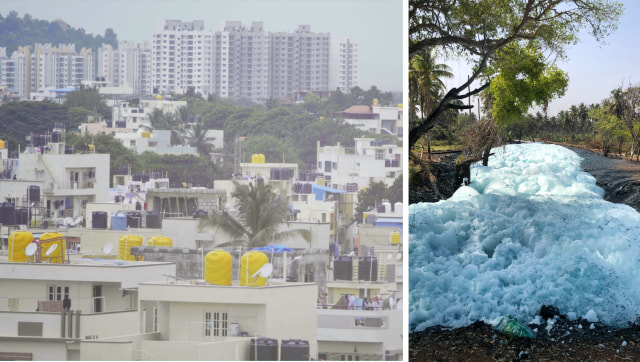
 "At Bengaluru's Byramangala lake, amid pollution and lack of structural support, a novel farming system flourishes")
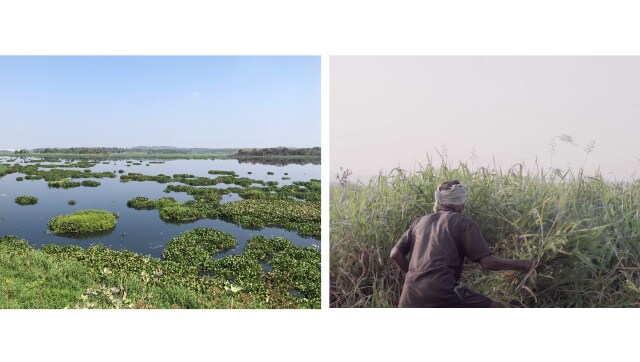
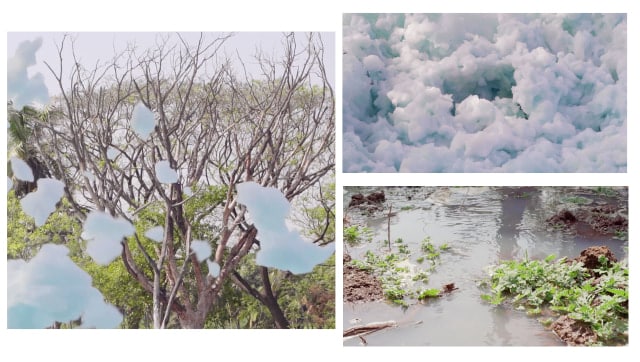
In 2017, images of a frothing Bellandur lake — Bengaluru’s largest water body — were widely broadcast. Incredulous viewers saw giant clouds of foam drifting and accumulating through the city. As citizens complained of the unbearable stench rising from the water, environmental groups came down hard on the industries responsible, even taking the matter to the National Green Tribunal (NGT), which initiated a rejuvenation process. It is a different matter that the approach towards the revival of the lake faces severe criticism from environmentalists, activists, and academics alike. A couple of years on, with the desilting of Bellandur lake underway, tucked some 50 kilometers away in Bidadi Taluk, Byramangala lake confronts a similar reality. However, removed from the oft simplistic urban dialogue on climate change as well as the media gaze, farmers and herders from neighbouring villages push on even as toxic froth from the 1018-acre reservoir spills along the shoreline, impacting their drinking water sources and exposing them to vector-borne issues. In the midst of all this though, filmmaker Bharat Mirle and Quicksand Studio’s six-minute short film, Stories of Resilience, puts forth glimpses of their incredible adaptability. Every winter as pastures go dry, local farmers throng the lake to secure fodder for their animals. How they totter down the wetland, while balancing bundles of grass weighing 30 to 40 kg, is explained by one such farmer: “The water has great manure in it, so the grass grows well. The grass has formed a thick layer and floats on the surface of the water. You can walk on it. We reel in using a rope that’s tied down [to a rock; sic].” And while experts say that the grass from the wetland may not be completely devoid of heavy metals, the way in which it’s accessed is still a fully thought-out process. “The farmers have, on their own, adopted a risk management approach which gives them multiple solutions to work around the issue. They may not be ideal but they are practical and doable. So even though there is a risk, it’s managed appropriately — the cows eat that fodder only during the coldest months,” notes urban planner, civil engineer, and member of the Bengaluru Sustainability Forum S Vishwanath.
While 85 percent of Bengaluru’s water bodies are
severely polluted, the contamination of Byramangala lake has meant a greater shift in the lives who probably contributed least to it – the farmers. The biggest task has come as reorienting cropping patterns based on irrigational potential, made possible with the Indian agricultural sector’s 2000 years’ experience in managing soil. “It’s been a tremendous change to adapt to, and that’s what they have done. 40 percent of the farmers in the area are growing mulberry leaves now, for silk,” adds Vishwanath. Interestingly, the film too is careful to counterbalance troubling images of a frothing source of water by the humanisation of the experience of living near one. “The camaraderie among the farmers was something that struck us and we wanted to capture their idiosyncrasies just as much. It was almost as if the lake had brought them together,” recounts Mirle. Similarly, Babitha George, partner at Quicksand, remembers meeting the farmers on a trip last year, and coming back later to hear more of their stories. “There are more nuances to this debate than just pollution — such as nature and humans’ relationship with it — which are pushed to the back of our minds to make space for the images and statistics thrown our way.”


 "Charlie Kirk, shot dead in Utah, once said gun deaths are 'worth it' to save Second Amendment")
 "From governance to tourism, how Gen-Z protests have damaged Nepal")
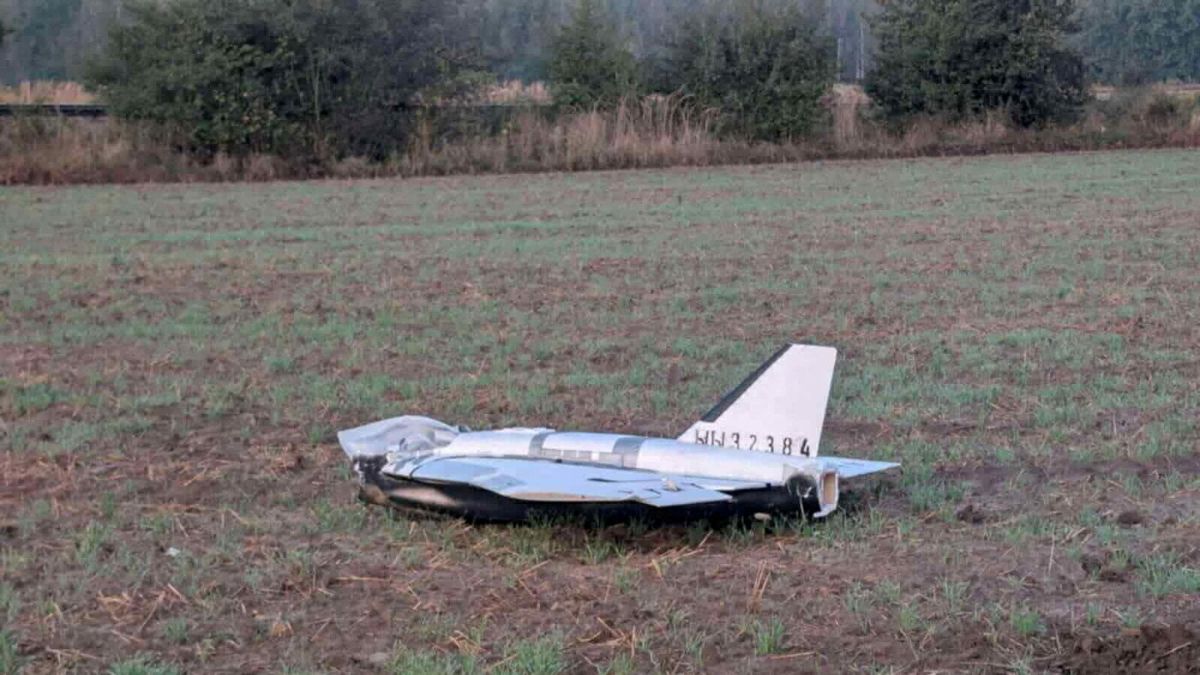 "Did Russia deliberately send drones into Poland’s airspace?")
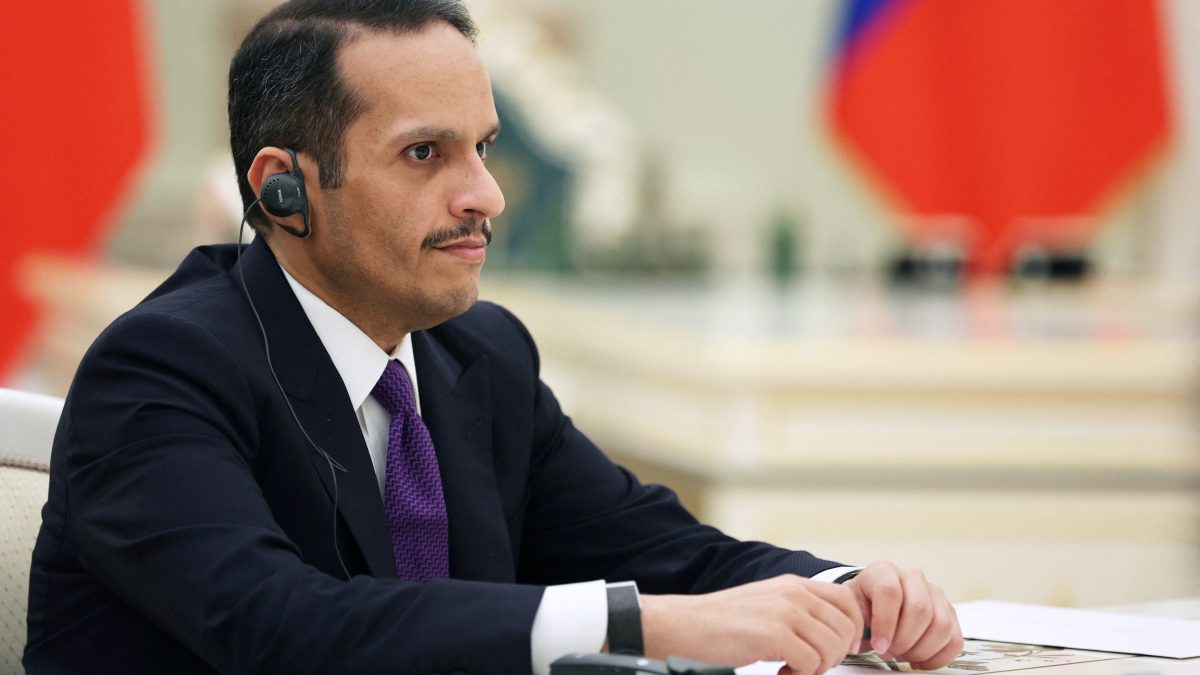 "Netanyahu ‘killed any hope’ for Israeli hostages: Qatar PM after Doha strike")
 "Charlie Kirk, shot dead in Utah, once said gun deaths are 'worth it' to save Second Amendment")
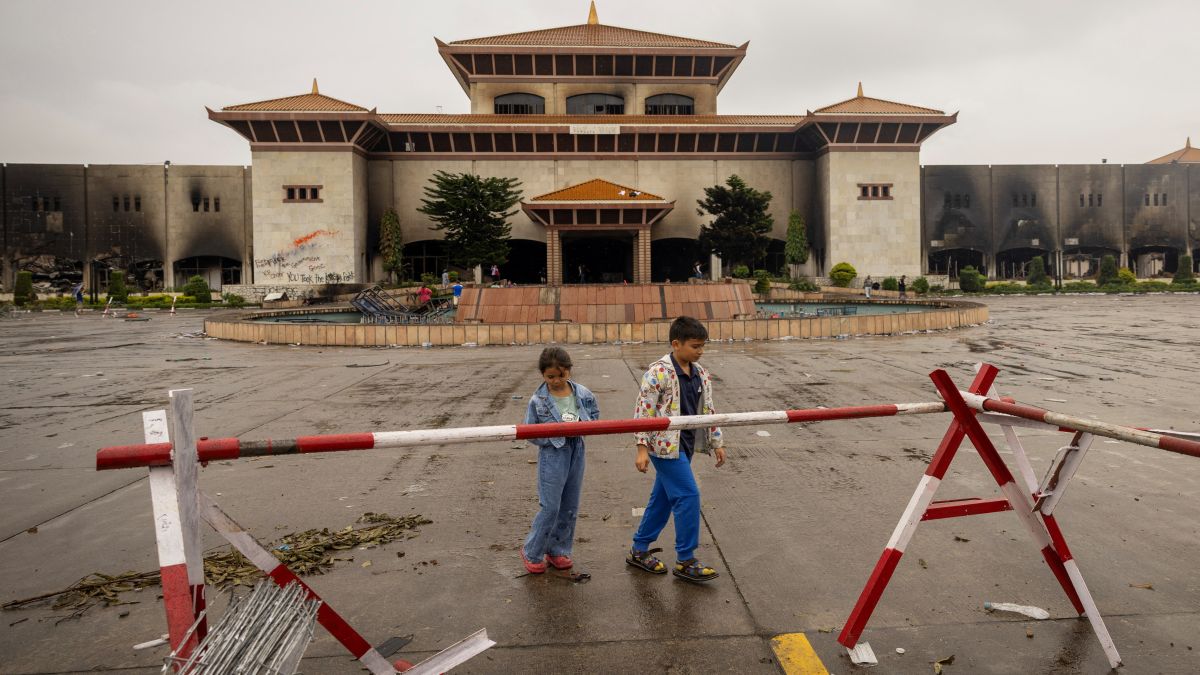 "From governance to tourism, how Gen-Z protests have damaged Nepal")
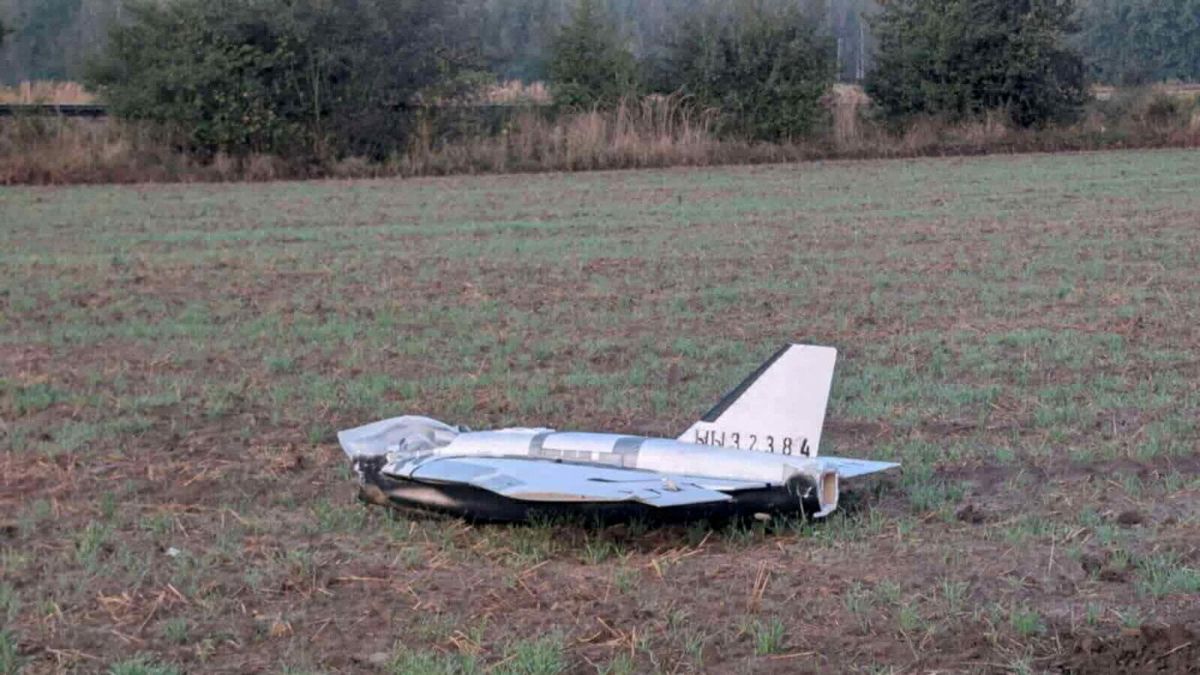 "Did Russia deliberately send drones into Poland’s airspace?")
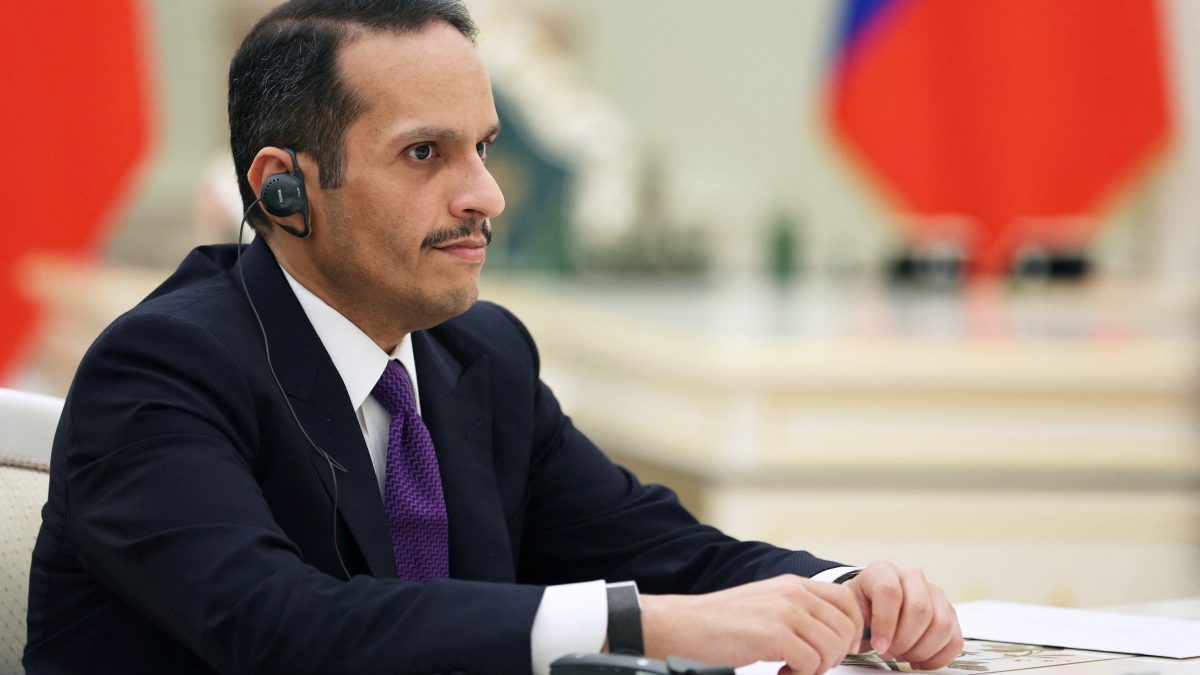 "Netanyahu ‘killed any hope’ for Israeli hostages: Qatar PM after Doha strike")



