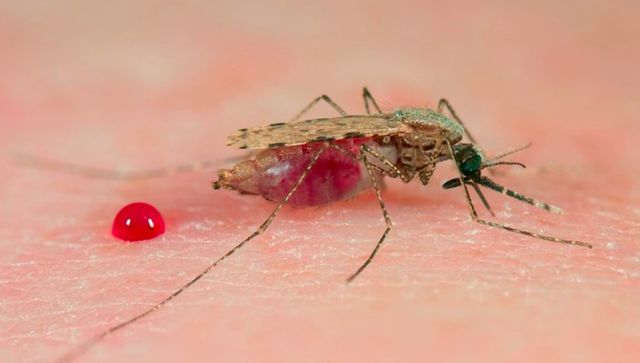
 "Genetically modified mosquitoes by scientists can't spread malaria")
A technological advance that could aid in preventing the spread of the disease to humans is the ability of genetically modified mosquitoes to inhibit the growth of the parasites that cause malaria in their guts. As a result, it is unlikely that malaria-causing parasites will develop enough to enter the salivary glands of these engineered mosquitoes and be transmitted through a bite before the insects die.
A model created by researchers at the Bill and Melinda Gates Foundation’s Institute for Disease Modeling can be used to evaluate the effects of such modifications in various African settings. They discovered that the modification in question could be useful even in areas with high transmission. Although the method is described in a paper that was published in the Science Advances journal, it has been demonstrated to significantly lower the likelihood of malaria spreading in a lab setting. If it is found to be secure and efficient in actual settings, it could provide a potent new tool to aid in the eradication of malaria.
The disease is transmitted between people through a female mosquito after it bites someone infected with the malaria parasite. The parasite then develops into its next stage in the mosquito’s gut and travels to its salivary glands, ready to infect the next person the mosquito bites. However, only around 10 per cent of mosquitoes live long enough for the parasite to develop far enough to be infectious. The team aimed to lengthen the odds even further, by extending the time it takes for the parasite to develop in the gut.
Researchers from the Transmission: Zero team at Imperial College London, UK, genetically modified the main malaria-carrying species of mosquito in sub-Saharan Africa, Anopheles gambiae, such that the mosquito produces antimicrobial peptides in its guts when it takes a blood meal. These peptides impair the malarial parasite’s development by interfering with the energy metabolism of the parasite and also, causing the mosquitoes to have a shorter lifespan and further hampering their ability to pass on the parasite. By the time, the next parasite stage could reach the mosquito salivary glands, most mosquitoes in nature are expected to die. “We need to develop innovative new tools because mosquitoes and the parasites they carry are becoming resistant to available interventions such as insecticides and treatments, and funding has plateaued,” said the co-first author of the study, Tibebu Habtewold.
“Delaying the parasite’s growth in the mosquito has opened many more opportunities to block malaria transmission from mosquitoes to humans,” said study co-first author, Astrid Hoermann. To use genetic modification to prevent malaria spread in the real world, it needs to be spread from lab-bred mosquitoes to wild ones. The innovation is so designed that it can be coupled with existing gene drive technology to spread the modification and drastically cut malaria transmission. “Gene drive is one such powerful weapon that in combination with drugs, vaccines and mosquito control can help stop the spread of malaria and save human lives,” study co-lead author Professor George Christophides said.
Quick Reads
View AllGene drive can be added to mosquitoes that would cause the anti-parasite genetic modification to be preferentially inherited, making it spread more widely among any natural population.
Being new, it would, however, require extremely careful planning to minimise risks before any field trials.
The Transmission: Zero team is, therefore, creating two separate but compatible strains of modified mosquitoes one with the anti-parasite modification and one with the gene drive. They can then test the anti-parasite modification on its own first, only adding in the gene drive once it has been shown to be effective.
With partners in Tanzania, the team set up a facility to generate and handle genetically modified mosquitoes and conduct some first tests. These include collecting parasites from locally infected schoolchildren, to ensure the modification works against the parasites circulating in relevant communities.
They are also fully risking assessing any potential releases of modified mosquitoes, taking into account any potential hazards and making sure they have buy-in from the local community. But they are hopeful that their intervention can ultimately help in eradicating malaria.
Malaria remains one of the most devastating diseases globally, putting at risk about half of the world’s population. In 2021 alone, it infected 241 million and killed 627,000 people, mostly children aged below five years old in sub-Saharan Africa, the researchers said.
Read all the **_Latest News_**_, _ **_Trending News_**_, _ **_Cricket News_**_, _ **_Bollywood News_**_, _ **_India News_** and **_Entertainment News_** here. Follow us on Facebook_, _ Twitter and Instagram_._


 "EU–India free trade deal a 'geopolitical stabiliser,' largest in world and boosts economy and security: Costa")
 "At least 7 killed, one critically injured as private jet crashes in Maine snowstorm")
 "India, EU conclude talks on ‘mother of all deals’, formal announcement likely on Tuesday")
 "In Republic Day parade, India flies Rafale BS-022 Pakistan claimed to have shot down during Op Sindoor")
 "EU–India free trade deal a 'geopolitical stabiliser,' largest in world and boosts economy and security: Costa")
 "At least 7 killed, one critically injured as private jet crashes in Maine snowstorm")
 "India, EU conclude talks on ‘mother of all deals’, formal announcement likely on Tuesday")
 "In Republic Day parade, India flies Rafale BS-022 Pakistan claimed to have shot down during Op Sindoor")