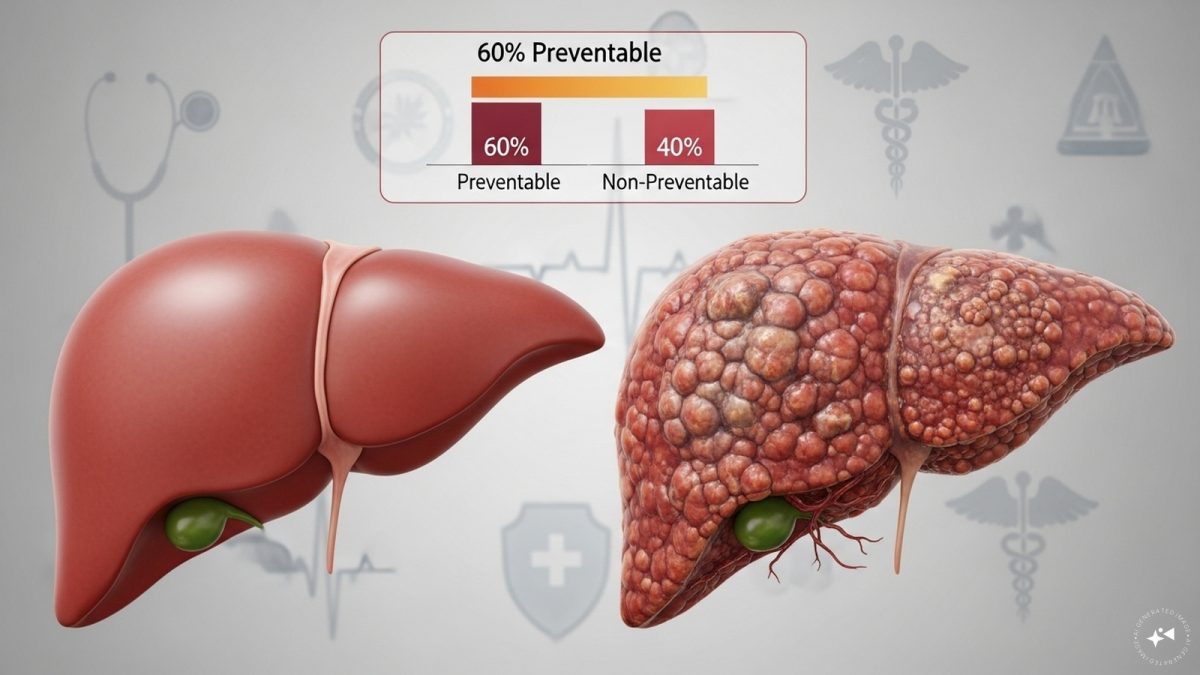
 "Dr explains: Why 60% of liver cancers are preventable and how early action can save lives")
Liver cancer remains one of the world’s most lethal cancers, ranked sixth in incidence but fourth in cancer-related mortality globally, according to the World Health Organization (WHO). Alarmingly, nearly 60% of liver cancer cases are preventable, as highlighted in a recent Lancet Commission report.
Factors such as hepatitis B (HBV) and C virus (HCV) infections, excessive alcohol intake and the growing burden of metabolic-associated steatotic liver disease (MASLD) are major contributors to the rising disease rate.
In India, the Health Ministry reports that MASLD affects approximately 20–30% of the adult population, correlating with escalating rates of obesity and diabetes. With projections indicating that unless strategic action is taken, MASLD-related liver cancer could surge by 35% by 2050, the need for early intervention is urgent.
Dr. Ghassan Abou-Alfa, a leading Gastrointestinal Medical Oncologist at Memorial Sloan Kettering Cancer Center (MSK) spoke with Firstpost to understand where prevention, early detection and innovation in liver cancer stand today.
Excerpts:
The Lancet Commission’s recent analysis estimates that nearly 60% of liver cancer cases are preventable. In your view, which risk factors demand the most urgent global action to reduce this disease burden?
Dr. Ghassan: Liver cancer is largely preventable, and tackling the main risk factors could stop nearly three out of every five cases. That means improving hepatitis B vaccination rates, screening and treating hepatitis C, reducing alcohol consumption, and addressing obesity and metabolic dysfunction-associated steatotic liver disease (MASLD). MASLD is becoming a major driver, especially with rising obesity and diabetes rates. The good news is, lifestyle changes, balanced diet, regular activity, even modest weight loss can make a real difference. If we manage even a 2–5% annual reduction in new cases globally, we could save up to 15 million lives by 2050. So, prevention really is our best weapon here.
The study predicts a sharp rise in MASLD-related liver cancer by 2050.What are the key factors driving this trend, and how can healthcare systems intervene earlier to curb it?
Dr. Ghassan: The big driver here is the global rise in obesity, diabetes, and other metabolic risk factors, all of which fuel MASLD, or fatty liver disease. The concern is that MASLD can quietly progress to MASH, a more severe form that damages the liver and significantly increases cancer risk. By 2050, the share of liver cancers linked to MASLD is projected to rise by about 35%. The challenge for many patients is presenting with no symptoms. Thus the disease is caught late. This is why earlier intervention is key, screening high-risk groups like those with obesity, diabetes, or cardiovascular disease, checking liver enzymes, and using non-invasive fibrosis tests. Pair that with lifestyle counselling in routine care and supportive policies. If healthcare systems make early detection and prevention part of standard practice, this will serve as a ripple effect preventing a bigger crisis for continued increased incidence if liver cancer.
Quick Reads
View AllPublic health measures like HBV vaccination, alcohol taxation, and sugar reduction policies have been highlighted as tools for prevention. Which of these strategies do you believe will deliver the most immediate impact, and why?
Dr. Ghassan: Hepatitis B vaccination and screening is a quick win. HBV still accounts for nearly 40% of liver cancer cases globally, and we have a safe, effective vaccine that works. Increasing vaccine coverage, especially in high-burden regions like parts of Asia and Africa, could prevent millions of future cases almost instantly in public health terms. One must also need to acknowledge the effort of the Egyptian government in preventing hepatitis C. Effort to reduce alcohol-related liver disease and MASLD is more challenging for societies worldwide. Such benefits tend to accumulate over years as behaviors shift.
Liver cancer remains one of the most difficult cancers to treat, often diagnosed late with poor survival outcomes. What steps can be taken to enhance early detection—particularly in high-risk groups such as patients with MASLD?
Dr. Ghassan: Liver cancer often develops silently, especially in patients with MASLD, and up to 40% of them may not even have cirrhosis when cancer is noted. Relying solely on traditional cirrhosis-based screening may miss a lot of cases. For high-risk groups, people with obesity, diabetes, or metabolic syndrome, a proactive screening built into routine care is needed. This may mean regular liver enzyme checks, non-invasive fibrosis assessments, and, when indicated, imaging like ultrasound, add to novel approaches still in development. Educating both patients and healthcare providers about MASLD’s risks is crucial, so it’s not overlooked at medical evaluation appointments. Integrating lifestyle counselling, healthy diet, physical activity, weight management into chronic disease management can lower risk before damage occurs. The key is shifting from reactive to preventive care, so we identify liver damage early, long before cancer has the chance to develop.
How is research and innovation shaping the prevention, early detection and treatment of liver cancer?
Dr. Ghassan: Research in liver cancer is increasingly focused on catching the disease earlier, improving prevention strategies, and expanding treatment options. Precision medicine programmes now make it possible to identify people at higher risk and intervene before cancer develops. On the treatment side, advances in surgical techniques and interventional radiology—such as ablation, different forms of embolization including radioembolization, and other image-guided therapies—are opening options for patients who might otherwise be considered inoperable.
Large clinical trial programmes are also testing newer imaging technologies, including volumetric CT, contrast-enhanced MRI, and nuclear imaging, to improve diagnosis and staging. Alongside this, integrating expertise across oncology, surgery, hepatology, radiation oncology, and radiology is helping ensure patients receive earlier detection, access to the latest therapies, and opportunities to join clinical trials that may significantly improve outcomes.
How does a multidisciplinary model improve care for patients with complex liver cancer diagnoses?
Dr. Ghassan: A multidisciplinary model brings together specialists such as oncologists, hepatologists, surgeons, radiologists, and radiation oncologists to approach each case collectively. Gastroenterology and hepatology teams, for example, play a key role in identifying chronic liver disease early and supporting surveillance programmes that can detect cancer at an earlier stage.
When it comes to treatment, collaboration allows teams to design personalised plans that might include complex surgeries or minimally invasive techniques like NanoKnife, ablation, or embolisation. Regular tumour board discussions also ensure that every patient benefits from multiple perspectives when decisions are made.
This coordinated approach not only gives patients access to the most advanced therapies available but also ensures their care is comprehensive, addressing both the cancer itself and related health concerns.

 "'PM Modi a fantastic man... we're going to have a good deal': Trump tells Moneycontrol | Watch")
 "Is Canada preparing for a US invasion as Trump unsettles allies? Report says...")
 "‘Rules-based order is fading’: When Carney responded to Trump challenge in Davos | Full text")
 "Davos 2026 Live Updates: Trump says he won’t use force to take Greenland, warns Europe is ‘not heading in the right direction’")
 "'PM Modi a fantastic man... we're going to have a good deal': Trump tells Moneycontrol | Watch")
 "Is Canada preparing for a US invasion as Trump unsettles allies? Report says...")
 "‘Rules-based order is fading’: When Carney responded to Trump challenge in Davos | Full text")
 "Davos 2026 Live Updates: Trump says he won’t use force to take Greenland, warns Europe is ‘not heading in the right direction’")