Firstpost
  • Video Shows
    Vantage Firstpost America Firstpost Africa First Sports
  • World
    US News
  • Explainers
  • News
    India Opinion Cricket Tech Entertainment Sports Health Photostories
  • Lifestyle
  • India-EU Summit
Trending Donald Trump Narendra Modi Elon Musk United States Joe Biden

Sections

  • Home
  • Live TV
  • Videos
  • Shows
  • World
  • Entertainment
  • India
  • Explainers
  • Opinion
  • Sports
  • Cricket
  • Lifestyle
  • Health
  • Tech/Auto
  • Web Stories
  • Business
  • Impact Shorts

Shows

  • Vantage
  • Firstpost America
  • Firstpost Africa
  • First Sports
  • Fast and Factual
  • Between The Lines
  • Flashback
  • Live TV

Events

  • Putin in India
  • Bihar Election
  • Raisina Dialogue
  • Independence Day
  • Champions Trophy
  • Delhi Elections 2025
  • Budget 2025
  • Firstpost Defence Summit
Trending:
  • India-EU FTA
  • Minneapolis shooting
  • China military purge
  • UGC equity rules
  • Bangladesh T20 WC row
  • Border 2
fp-logo
Why doctors are warning against the use of menstrual cups
Whatsapp Facebook Twitter
Trending

Sections

  • Home
  • Live TV
  • Videos
  • Shows
  • World
  • Entertainment
  • India
  • Explainers
  • Opinion
  • Sports
  • Cricket
  • Lifestyle
  • Health
  • Tech/Auto
  • Web Stories
  • Business
  • Impact Shorts

Shows

  • Vantage
  • Firstpost America
  • Firstpost Africa
  • First Sports
  • Fast and Factual
  • Between The Lines
  • Flashback
  • Live TV

Events

  • Putin in India
  • Bihar Election
  • Raisina Dialogue
  • Independence Day
  • Champions Trophy
  • Delhi Elections 2025
  • Budget 2025
  • Firstpost Defence Summit

Why doctors are warning against the use of menstrual cups

FP Explainers • February 11, 2025, 16:17:27 IST
Whatsapp Facebook Twitter

Doctors have urged women to ensure that they position menstrual cups correctly after one woman developed kidney complications. This warning comes as a study revealed how a 30-year-old woman was diagnosed with uterohydronephrosis — a swollen kidney caused by blocked urine flow into the bladder — owing to the misplacement of the cup

Advertisement
Subscribe Join Us
+ Follow us On Google
Choose
Firstpost on Google
Why doctors are warning against the use of menstrual cups
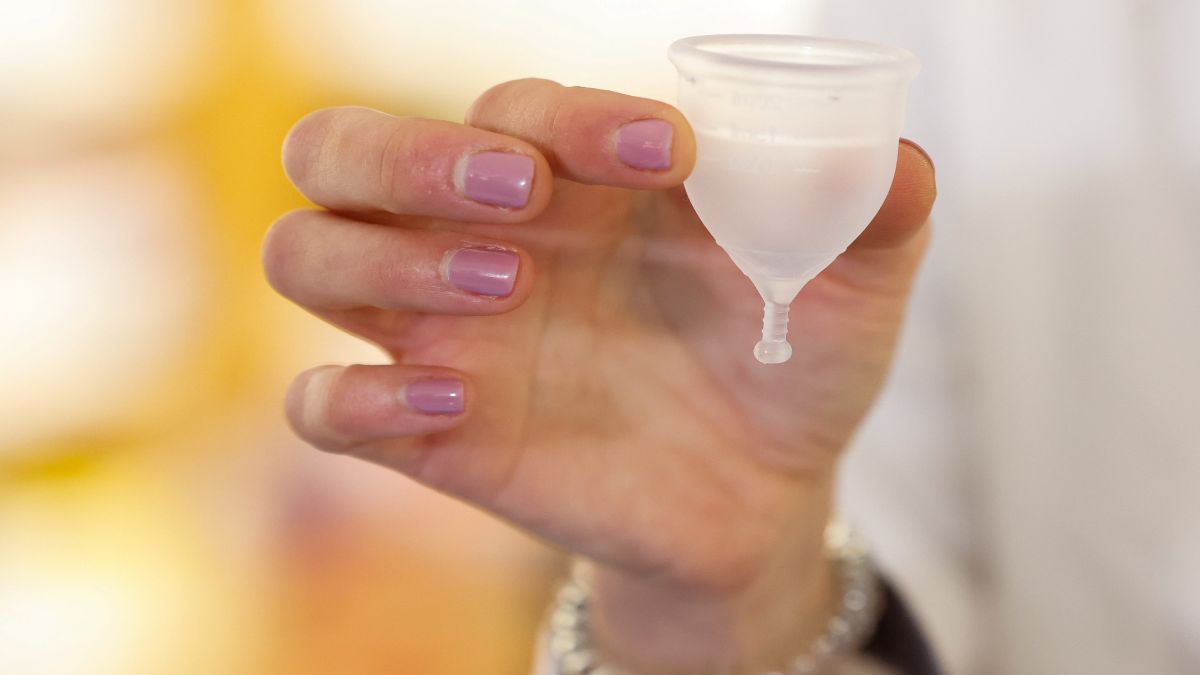
Doctors have documented a rare complication linked to menstrual cups. Representational image/Reuters

For many women, the use of menstrual cups has become a regular phenomenon. Seen as an eco-friendly alternative to tampons and sanitary pads, an increasing number of women across the world are using them.

However, medical experts are now warning against their use — a new study reveals that a poorly positioned menstrual cup may lead to more serious complications such as kidney problems than leakage alone.

What exactly has the research revealed? How harmful can they be? We get you the answers you are looking for.

STORY CONTINUES BELOW THIS AD

What did the study reveal about menstrual cups?

Doctors in the British Medical Journal highlight how an ill-fitting menstrual cup led to one woman suffering from uterohydronephrosis — a swollen kidney caused by blocked urine flow into the bladder.

More from Health
Omega-3 deficiency emerging as a major risk to heart and metabolic health: Experts Omega-3 deficiency emerging as a major risk to heart and metabolic health: Experts Planning a baby? Experts explain how antenatal care helps prevent and detect birth defects Planning a baby? Experts explain how antenatal care helps prevent and detect birth defects

The medical paper reveals that a 30-year-old patient had sought medical care due to intermittent pain in her side and blood in her urine for six months. Unable to bear the pain, she had gone to medical experts, who carried out a battery of tests on her.

Scans showed a swollen right kidney and ureter — the tube that carries urine away from the kidneys. The scans also showed that the woman’s menstrual cup was placed next to the opening of the ureter into the bladder.

Owing to this, the doctors asked her not to wear a cup for a month and asked her to return for tests later. When she returned for her second round of tests, the swelling had reduced and she didn’t complain of pain or blood. Moreover, her urine function was normal.

Editor’s Picks
1
Seeing Red: How sanitary pads, menstrual waste add to India’s environmental burden
2
Kerala's Kumbalangi becomes country's first sanitary-napkin free village: Why this is a milestone for Indian women

Doctors then surmised that the positioning of the menstrual cup had obstructed the flow of urine, as a result of ureterohydronephrosis.

Six months later when the woman returned for tests and follow-up check-ups, she had become wary of using the menstrual cup, fearing possible complications.

Menstrual cups are an alternative to pads and tampons. They are made from silicone and work by collecting blood, rather than absorbing it like other period products. Representational image/Pixabay

The authors of the paper wrote, “To our knowledge, only a few similar cases have previously been reported. [These] cases were similar to our case.

STORY CONTINUES BELOW THIS AD

“In all cases except one, a follow-up [computed tomography scan] or ultrasound was performed which showed regression of the ureterohydronephrosis. In three cases, the women resumed use of the menstrual cup, and none of them experienced resumption of symptoms (unknown follow-up periods). One of them chose a smaller-sized cup.”

The doctors later explained that correct positioning along with choosing the correct cup shape and size is necessary to prevent any side effects on the upper urinary tract.

“Presently, menstrual cups can be bought and used without clinical advice from a health professional, which emphasises the importance of detailed and clear patient information material,” they said.

Are there risks related to the use of menstrual cups?

Menstrual cups, made from silicone, have become widely accepted in recent years. Those who use menstrual cups have hailed the product as they are reusable and sustainable. They are also long-lasting — they can be used for up to 12 hours before being emptied.

But are they safe? A previous report published in The Lancet Public Health found that menstrual cups are safe to use and may be just as effective as other sanitary products in preventing leaks. The paper also said that the cup could be a viable option in poor countries, where access to menstrual products might be limited and costly in remote areas.

STORY CONTINUES BELOW THIS AD

Researchers also found that there were no increased health risks associated with the use of the menstrual cup. According to them, menstrual cups did not have negative effects on the vaginal flora — the bacteria that live inside the vagina — that could lead to infections or vaginal discharge.

Studies show that menstrual cups are safe to use and there are no increased health risks associated with the use of the menstrual cup. Representational image/Reuters

The study also dispelled worries and concerns regarding toxic shock syndrome (TSS). For the unaware, TSS is caused by the bacteria called staphylococcus aureus or Staph and typically occurs if proper hygiene, such as handwashing before removing and inserting the menstrual cup, is not followed. In extreme cases of TSS, it can cause dizziness.

However, the study showed that there was little to prove that the use of menstrual cups could cause TSS.

Other medical experts also found that when used properly, the risk of severe side effects is extremely rare with menstrual cups.

What’s the right way to wear a menstrual cup?

Across the world, menstrual cups have become widely acceptable. However, first-time users and younger people do find it tricky to use it, especially it comes to removal. One recent survey of 530 young women reported that many found it difficult to remove the menstrual cup on their first try.

STORY CONTINUES BELOW THIS AD

So, how should it be worn? Start with clean hands and then fold the menstrual cup and insert it, aiming it towards the base of one’s spine. Once inserted, ensure the cup opens up completely. You can do this by gently twisting or adjusting its position. Experts note that the cup should sit lower than a tampon.

And on removal, don’t pull on the stem. Instead, squeeze the bottom of the cup to break the seal and wiggle it off. As physiotherapist Dr Kate Lough, an expert in pelvic health, told the BBC, “When it’s in correctly, you shouldn’t feel it.”

With inputs from agencies

Tags
Menstruation
  • Home
  • Health
  • Why doctors are warning against the use of menstrual cups
End of Article
Latest News
Find us on YouTube
Subscribe
  • Home
  • Health
  • Why doctors are warning against the use of menstrual cups
End of Article

Quick Reads

Decades of nuclear tests linked to 4 mn premature deaths globally, report says

Decades of nuclear tests linked to 4 mn premature deaths globally, report says

A new report by Norwegian People’s Aid links over four million premature deaths to radioactive fallout from more than 2,400 nuclear tests conducted between 1945 and 2017. Radioactive contamination from nuclear testing continues to affect people worldwide, with survivors reporting cancers and other illnesses decades after exposure. The report urges greater transparency, support for affected communities, and stronger global action to prevent future nuclear testing.

More Quick Reads

Top Stories

India–EU FTA to benefit Rs 6.4 lakh crore exports across key states and sectors, says Piyush Goyal

India–EU FTA to benefit Rs 6.4 lakh crore exports across key states and sectors, says Piyush Goyal

Minnesota judge orders ICE chief to appear in court, warns of contempt over ignored orders

Minnesota judge orders ICE chief to appear in court, warns of contempt over ignored orders

Will reset in Indo-Canada ties be complete with Carney's visit?

Will reset in Indo-Canada ties be complete with Carney's visit?

Zelenskyy sets 2027 target for Ukraine’s EU accession, stresses security guarantees

Zelenskyy sets 2027 target for Ukraine’s EU accession, stresses security guarantees

India–EU FTA to benefit Rs 6.4 lakh crore exports across key states and sectors, says Piyush Goyal

India–EU FTA to benefit Rs 6.4 lakh crore exports across key states and sectors, says Piyush Goyal

Minnesota judge orders ICE chief to appear in court, warns of contempt over ignored orders

Minnesota judge orders ICE chief to appear in court, warns of contempt over ignored orders

Will reset in Indo-Canada ties be complete with Carney's visit?

Will reset in Indo-Canada ties be complete with Carney's visit?

Zelenskyy sets 2027 target for Ukraine’s EU accession, stresses security guarantees

Zelenskyy sets 2027 target for Ukraine’s EU accession, stresses security guarantees

Top Shows

Vantage Firstpost America Firstpost Africa First Sports
Enjoying the news?

Get the latest stories delivered straight to your inbox.

Subscribe
Latest News About Firstpost
Most Searched Categories
  • Web Stories
  • World
  • India
  • Explainers
  • Opinion
  • Sports
  • Cricket
  • Tech/Auto
  • Entertainment
  • Photostories
  • Lifestyle
NETWORK18 SITES
  • News18
  • Money Control
  • CNBC TV18
  • Forbes India
  • Advertise with us
  • Sitemap
Firstpost Logo

is on YouTube

Subscribe Now

Copyright @ 2024. Firstpost - All Rights Reserved

About Us Contact Us Privacy Policy Cookie Policy Terms Of Use
Home Video Quick Reads Shorts Live TV