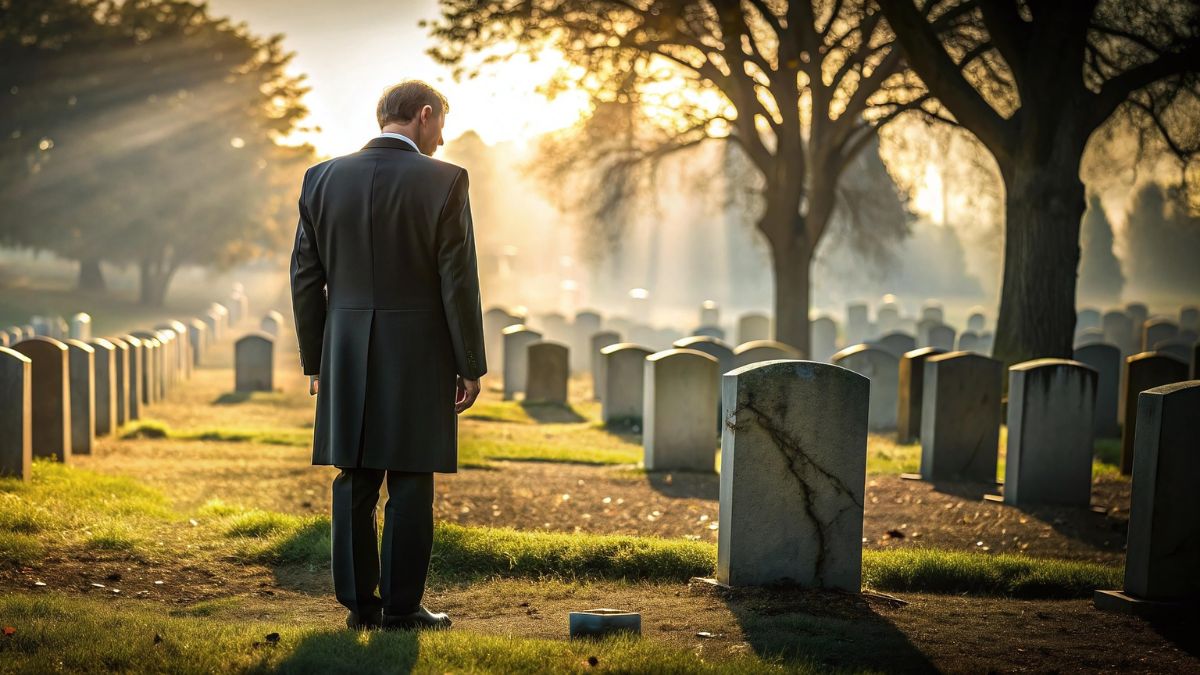
 "Can a broken heart really kill you? Science says yes — here’s why")
The death of someone deeply loved is one of life’s most painful experiences.
But beyond the emotional toll, new research suggests that grief can actually shorten lives.
A decade-long study from Denmark has found that people enduring the most severe and unrelenting grief were far more likely to die within 10 years of their bereavement than those who coped with it more mildly.
Published in the journal Frontiers in Public Health, the research tracked the health of more than 1,700 bereaved individuals for a decade and concluded that grief isn’t just an emotional wound — it can trigger a cascade of physical consequences that may ultimately be fatal.
Tracking grief over a decade
Beginning in 2012, researchers at Aarhus University in Denmark recruited 1,735 people who had recently lost a loved one — most were women, and their average age was 62.
Nearly two-thirds of participants had lost a partner, 27 per cent had lost a parent, and about seven percent had experienced the death of another close relative.
The participants were asked to complete detailed surveys on their grief when they enrolled, then again after six months, and once more after three years.
These questionnaires helped scientists categorise the severity of their grief over time and to observe how their symptoms evolved or persisted.
The researchers identified five distinct grief patterns, or “trajectories”:
- Persistently low symptoms – 38 per cent of participants displayed relatively mild grief responses that didn’t disrupt daily life significantly.
- High but easing symptoms – 18 per cent started with intense grief that gradually diminished.
- Moderate but easing symptoms – 29 per cent had mid-range symptoms that lessened over time.
- Delayed peak symptoms – 9 per cent began with lower levels of grief, which spiked about six months after the loss before tapering off.
- Persistent high symptoms – 6 per cent remained at consistently elevated levels of grief with little or no relief.
It was this last group that faced the gravest risks.
The numbers paint a stark picture
Over the 10-year follow-up, researchers found that 26.5 per cent of those in the “high grief” group had died, compared to just 7.3 per cent in the group with the lowest grief symptoms.
Those with the most unrelenting sorrow had an 88 per cent higher mortality risk than those with milder grief.
The study also found that participants suffering from persistent grief were far more likely to be prescribed antidepressants and to continue mental health therapy years after their loss.
Their reliance on primary care and psychiatric services was notably higher in the first three years — though by year seven, these differences began to level off.
Researchers stressed that the study didn’t determine the exact causes of death among the bereaved. But it strongly reinforces previous evidence that intense emotional distress can lead to serious health consequences.
“We have previously found a connection between high grief symptom levels and higher rates of cardiovascular disease, mental health problems, and even suicide. But the association with mortality should be further investigated,” said Dr. Mette Kjærgaard Nielsen, a postdoctoral researcher at Aarhus University and a coauthor of the study, said in a statement.
How grief impacts the body
Grief triggers stress responses that can damage the body over time. One well-documented condition, broken heart syndrome — also called stress-induced cardiomyopathy or Takotsubo cardiomyopathy — can appear suddenly after an intense emotional event, such as the loss of a loved one.
In this condition, the heart temporarily enlarges and struggles to pump blood efficiently, creating symptoms that can be mistaken for a heart attack.
While broken heart syndrome is more commonly diagnosed in women, men who experience it have a higher likelihood of dying from the condition, according to a separate study published earlier this year in the Journal of the American Heart Association.
But the effects of grief are not limited to acute heart failure. Prolonged sorrow can lead to elevated blood pressure, chronic inflammation, disrupted hormone levels such as cortisol, and a weakened immune system.
Previous research has shown that bereaved spouses and partners face higher risks of dying from heart disease or suicide in the first three years after their loss. For men, there is also an elevated risk of fatal respiratory or digestive issues.
Identifying those most vulnerable
The research also shed light on who might be at greatest risk.
Many in the “high grief” category already showed signs of mental health fragility before their loss, with a higher likelihood of having been prescribed psychiatric medications.
“That suggests that they had signs of mental vulnerability which may cause greater distress on bereavement,” Nielsen explained.
This insight could help doctors intervene earlier. “A GP could look for previous signs of depression and other severe mental health conditions,” Nielsen said.
“They can then offer these patients tailored follow-up in general practice, or refer them to a private practice psychologist or secondary care. The GP may also suggest a bereavement follow-up appointment focusing on mental health.”
Can therapy change the outcome?
The study did not evaluate whether therapy or counselling reduced the likelihood of early death among the most grief-stricken participants.
But Nielsen believes there is value in seeking help: “I would say that they may benefit from specific grief therapy.”
Grief therapy, support groups, and structured bereavement follow-ups may help blunt the long-term harm that chronic grief inflicts.
Researchers say this is an area that warrants further investigation.
Also Watch:
With inputs from agencies

 "'PM Modi a fantastic man... we're going to have a good deal': Trump tells Moneycontrol | Watch")
 "Greenland unveils 'crisis' guidelines as Trump renews call for talks on taking island")
 "Is Canada preparing for a US invasion as Trump unsettles allies? Report says...")
 "Trump says Ukraine war deal ‘reasonably close’, plans Zelenskyy meeting in Switzerland")
 "'PM Modi a fantastic man... we're going to have a good deal': Trump tells Moneycontrol | Watch")
 "Greenland unveils 'crisis' guidelines as Trump renews call for talks on taking island")
 "Is Canada preparing for a US invasion as Trump unsettles allies? Report says...")
 "Trump says Ukraine war deal ‘reasonably close’, plans Zelenskyy meeting in Switzerland")