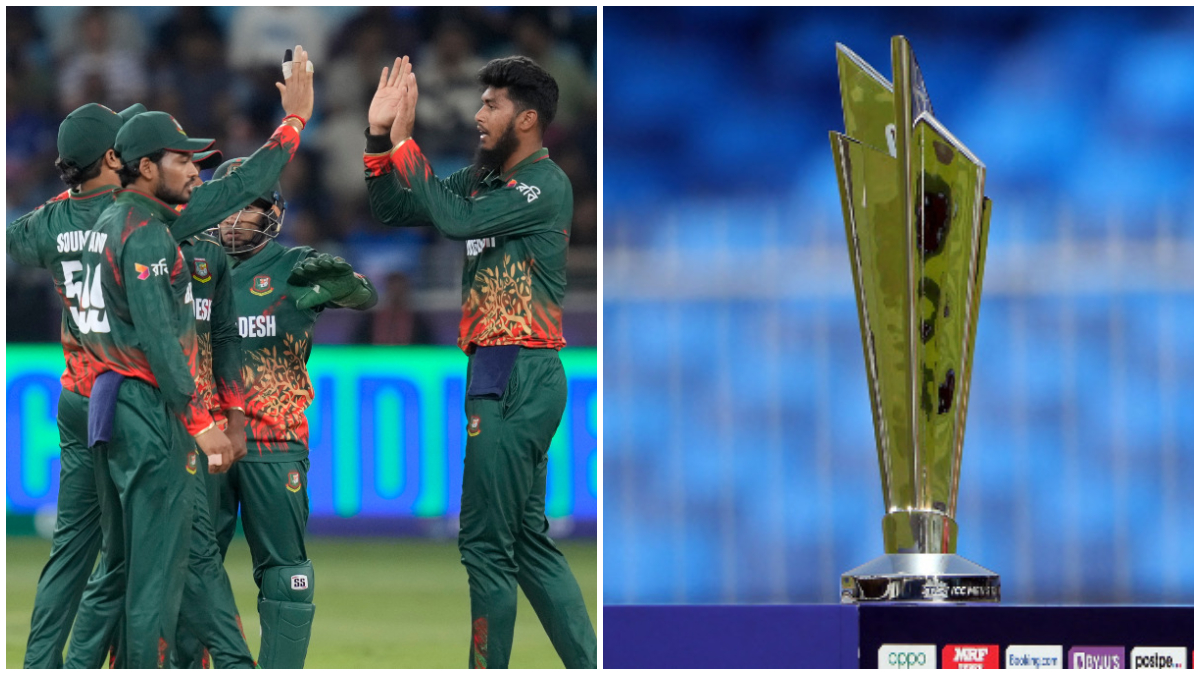
 "Will Bangladesh's refusal to travel to India for T20 World Cup affect ICC and BCCI financially?")
Kolkata Knight Riders' decision to release Mustafizur Rahman from their squad after being advised to do so by the Board of Control for Cricket in India has not gone down well on the other side of the border. The Bangladesh Cricket Board immediate response was to revoke the left-arm pacer’s No Objection Certificate for the 19th season of the Indian Premier League, meaning ‘Fizz’ will not be eligible to play even if the BCCI and KKR reverse their decision.
As if that’s not enough, the BCB has now refused to send the senior men's team to India for the T20 World Cup that gets underway next month, citing security and safety concerns in an official release on Sunday. The fallout from Mustafizur’s removal further escalated on Monday with the Muhammad Yunus-led interim Bangladesh government ordering a complete ban on the IPL in the country.
As per latest reports, the BCCI currently is in talks with the International Cricket Council regarding Bangladesh’s refusal to play on Indian soil, with the latter yet to officially give its nod for Bangladesh’s sudden change of stance.
How will such a move affect the ICC and the BCCI with regards to the upcoming tournament, especially taking the financial perspective into account?
Where Bangladesh’s stance could hurt India
The Bangla Tigers were initially scheduled to play their first three Group C fixtures at Kolkata’s Eden Gardens and later face Nepal at Mumbai’s Wankhede Stadium, but are now likely to join Pakistan in playing all of their fixtures in Sri Lanka, who are co-hosts for the tournament.
The capacity of Eden Gardens (63,000) and the Wankhede Stadium (33,000) translates to a total inventory of 200,000 seats over the course of Bangladesh’s four group matches, with ticket prices as low as INR 100.
Quick Reads
View AllSince it’s an ICC event, the BCCI will not be taking home the entire gate revenue for matches hosted in India but will be getting a cut as per its agreement with the Dubai-based global governing body for the sport.
And that is where the BCCI primarily stands to lose if Bangladesh’s matches are moved out of India, which in turn could affect local sponsorship and hospitality demand though their broadcast revenue is likely to remain unaffected.
That too could be mitigated to a great extent if the ICC arranges for a swap of matches hosted by India and Sri Lanka. The BCCI could lose crores if they aren’t compensated for the loss of fixtures due to Bangladesh’s sudden boycott, but will likely recover that amount – whether fully or in part – so long as other fixtures taking place in Sri Lanka are moved to India to fill the void.
The ICC isn’t likely to move matches involving co-hosts Sri Lanka out of the island nation, or those involving Pakistan or Bangladesh for that matter. Instead, they could look at other fixtures such as Australia vs Zimbabwe (13 February, Colombo) or Ireland vs Zimbabwe (17 February in Pallekele).
In such a scenario, the BCCI’s losses will be related to logistics and re-planning more than anything else.

 "US-Venezuela tensions LIVE: Maduro arrives at NY federal court, loyalists send mixed signals from Caracas")
 "Why is China calling Trump’s Venezuela strike a strategic gift?")
 "What happened at JD Vance’s Ohio home? Secret Service detains suspect after intrusion")
 "‘One for all, and all for one’: Poland’s Tusk warns Europe must unite or it’s ‘finished’ as Trump eyes Greenland")
 "US-Venezuela tensions LIVE: Maduro arrives at NY federal court, loyalists send mixed signals from Caracas")
 "Why is China calling Trump’s Venezuela strike a strategic gift?")
 "What happened at JD Vance’s Ohio home? Secret Service detains suspect after intrusion")
 "‘One for all, and all for one’: Poland’s Tusk warns Europe must unite or it’s ‘finished’ as Trump eyes Greenland")