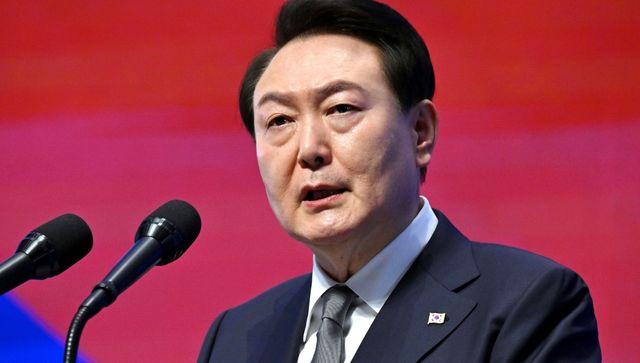
 "Why ‘overworked’ South Korea is adding more hours to its work week")
The South Korean government on Monday announced plans to overhaul its 52-hour work week. Though the government claimed the new system will afford workers more flexibility, some remain sceptical of the plan Let’s take a closer look: South Korea’s work week In South Korea, employees can currently work a maximum of 52 hours per week – 40 regular hours and another 12 hours of overtime. According to HCAMag.com, this is laid out in the South Korean Labour Standards Act, which went into force in 2018. The Korea Herald quoted Labour Minister Lee Jung-sik as saying that this law, which punished companies for workers who put in more than 52 hours a week, had negative side effects.
Employees who worked in excess of 52 hours did so without being paid, the minister added.
The labour minister also claimed companies may have urged employees to falsify working hours to sidestep penalties, as per The Straits Times. How will the new system work? Under the new plan, being pushed by the administration of President Yoon Suk Yeol, employees will be allowed to work up to 69 hours a week. The government says employees will be allowed to exchange the hours of overtime put in for time off. This, they hope, will boost productivity and promote family growth. The proposal would allow employers and workers to agree on whether to count overtime by
- The week with 12 hours allowed
- The month with 52 hours allowed
- The quarter with 140 hours allowed
- A half year with 250 hours allowed
- A full year with 440 hours of overtime allowed.
For counting periods of a month or longer, up to 29 hours a week of overtime would be allowed, for a total of 69 work hours in one week. As per The Korea Herald, under the new system employees must have 11 straight hours of rest between shifts every day. Working hours must, on average, also be kept under 64 hours a week. As per the newspaper, employees will be given even more leeway to choose when they want to come into work. Currently, such details must be planned out in advance. “The plan will benefit workers with various working hour systems, such as a four-day workweek and a sabbatical month, while help companies in managing their workforce,” Lee was quoted as saying bt the newspaper.
Overtime could be exchanged later for time off at a rate that has not been announced.
“If you are working at ice cream factories for example, you can work overtime seasonally, then save the hours of work and use later to go on a longer holiday,” the ministry said of the reform. The Korea Herald quoted business group the Korea Enterprise Federation as saying the plan would add more flexibility to both workers and companies. Officials say people would work less as a whole, encouraging them to have families and shore up a fertility rate that is projected to hit a global-low 0.7 in 2024. Only 14 per cent of South Koreans were in trade unions in 2021, data show, which could limit how much workers can negotiate. More than 18 per cent of South Koreans worked more than 50 hours a week in the world’s 10th-largest economy in 2021, according to unpublished data from the Organisation for Economic Co-operation and Development - the fifth-highest after Turkey, Mexico, Colombia and Costa Rica. But many remain sceptical. The Korean Confederation of Trade Unions came out against the plan, as per The Straits Times.
The major labour group said this was because employees will have to work longer hours.
In a statement, the Korean Women’s Associations United said “only regulations like the 52-hour workweek and pressure from labour unions can protect workers from long working hours”. “The beauty of introducing a 52-hour workweek was that you gave a signal to employers, unions and workers saying, ‘Listen, you really have to do something about the long working hours culture in your country,’” said Willem Adema, a senior economist at the social policy division of the OECD. “If the current legislation is all about giving flexibility then that’s fine. But it doesn’t seem to be interpreted as such.” The government argued allowing workers to spend accrued overtime hours on vacations will mean people who want to work less, such as parents or caregivers, will be able to do so. Extending working hours, even temporarily, affects women more than men, said Lee Min-Ah, Professor of Sociology at Chung-Ang University. “When male partners work more, women’s economic activity will be discouraged and their responsibility of childcare will only increase," Lee said. The country already has the lowest fertility rate in the world, and a rapidly ageing population. The working-age population peaked at 38 million in 2019 and is set to drop by more than 9 million by 2040, government data show. Lee Yoon-sun, a 29-year-old office worker, said working high-intensity hours and then taking time off would be disruptive. “Working long hours when you have a heavy workload and then resting when you are less busy seems like a pattern that will lead to an irregular life, affecting having children and taking care of them,” said Lee, who does not have children.
Other workers say the new plan ignores a lot of the cultural and social nuances of work in South Korea.
“If it’s 6 pm, you don’t just run out the door, you carefully put on your clothes and make sure you watch what your co-workers are doing so you are not the one leaving while everyone else is still working,” said Albert Kim, a 27-year-old living in Seoul, who also does not have children. “There are a lot of grey areas I wish the proposal would have addressed.” The law must be passed by the National Assembly, where Yoon’s political opponents hold the majority. Opposition politicians have said they oppose the plan, with Rep. Park Yong-jin of the main Opposition Democratic Party of Korea calling it a “shortcut to population extinction”. The labour ministry has brushed off such criticisms, saying the proposal would “only add more choice”.
With inputs from agencies Read all the Latest News , Trending News , Cricket News , Bollywood News , India News and Entertainment News here. Follow us on Facebook , Twitter and Instagram .