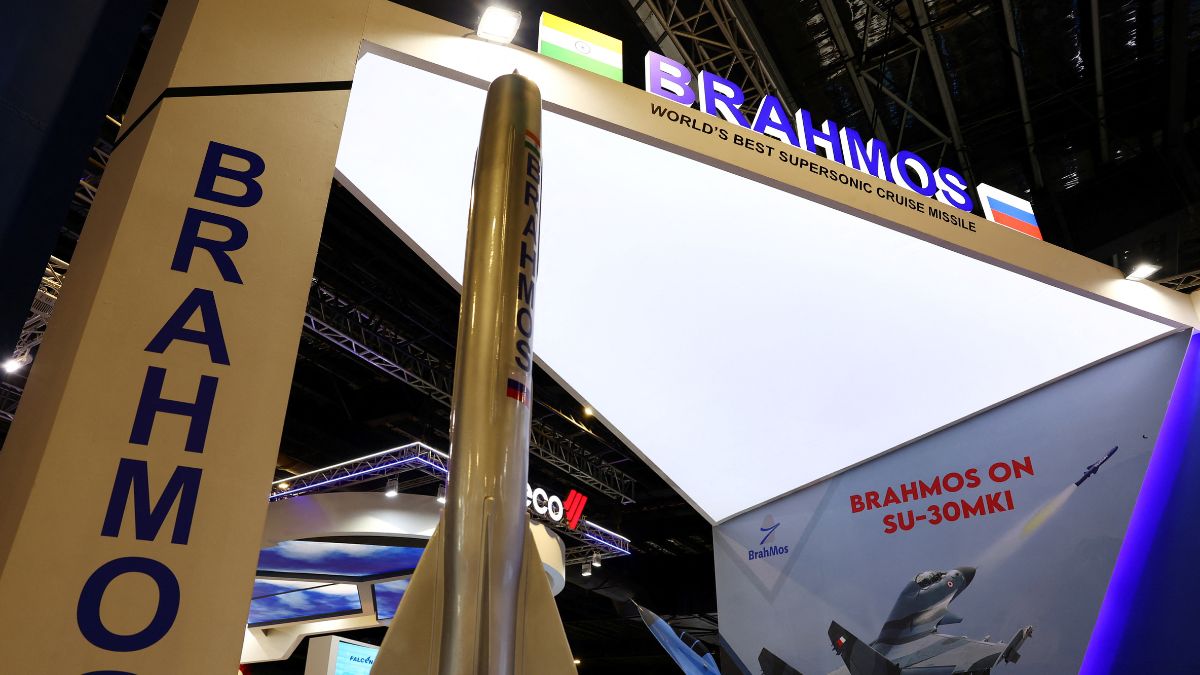
 "Why Indonesia needs India’s BrahMos missile system")
Indonesia has moved closer to acquiring India’s BrahMos supersonic missile. The decision represents a significant step in Jakarta’s defence modernisation efforts as well as highlights its growing focus on maritime security in an increasingly contested Indo-Pacific region.
The deal will make Indonesia the second foreign customer for the missile after the Philippines, which signed a landmark agreement for the system in 2022.
Indonesia’s defence ministry spokesperson Rico Ricardo Sirait confirmed the agreement to Reuters, explaining that the purchase forms a part of Jakarta’s military modernisation agenda.
He said the acquisition was “part of the modernisation of military hardware and defence capabilities, especially in the maritime sector.”
While Indonesian authorities have not publicly disclosed the exact cost of the agreement, estimates suggest the value could range between $300 million and $450 million.
Earlier discussions between Jakarta and BrahMos Aerospace had suggested a deal in the range of $200 million to $350 million, but the final structure appears to reflect expanded capabilities and additional systems.
What is the BrahMos missile system?
The BrahMos missile is a supersonic cruise missile jointly developed by India and Russia. It is produced by BrahMos Aerospace, a joint venture involving India’s Defence Research and Development Organisation (DRDO) and Russia’s NPO Mashinostroyenia.
The name BrahMos reflects the partnership between the two countries, combining the Brahmaputra River in India with the Moskva River in Russia.
Among cruise missiles currently in operational service, BrahMos is widely regarded as one of the fastest. The missile can travel at speeds ranging from Mach 2.8 to Mach 3, making it significantly faster than many conventional cruise missiles used by naval forces around the world.
The system was originally developed with a range of around 290 kilometres. However, more recent versions have extended operational ranges exceeding 400 kilometres.
Another defining characteristic of the BrahMos is its multi-platform capability. The missile can be launched from land-based mobile launchers, naval vessels, submarines and aircraft. In the Indian military, it is deployed across the army, navy and air force.
Air-launched versions of the missile are integrated with the Sukhoi Su-30MKI fighter jet, which forms a key part of the Indian Air Force’s strike capability.
Beyond its speed and flexibility, the missile is designed to maintain a low-altitude trajectory during the final phase of its flight, allowing it to skim close to the sea surface and reduce the likelihood of detection by radar systems.
This capability, combined with high precision targeting, makes it an effective anti-ship and land attack weapon.
Why is Indonesia turning to BrahMos?
Indonesia’s decision to acquire the BrahMos missile is closely connected to evolving security concerns in its surrounding waters, particularly the North Natuna Sea.
Although Indonesia is not formally involved in the territorial disputes that define much of the South China Sea conflict, its Exclusive Economic Zone around the Natuna Islands overlaps with the area encompassed by China’s “Nine-Dash Line”.
This overlap has led to recurring tensions, particularly when Chinese vessels operate in waters that Indonesia considers part of its sovereign maritime zone.
One of the recurring challenges has been the presence of Chinese coast guard ships and maritime militia vessels. These ships are frequently used to exert pressure in disputed waters without triggering open military confrontation.
In the North Natuna Sea, such vessels have been reported to disrupt Indonesian energy exploration activities and seismic surveys conducted by the state-owned company Pertamina. For Jakarta, the ability to deter surface vessels operating in contested waters has therefore become an important priority.
The BrahMos missile is viewed as a potential solution to this challenge. Deploying shore-based anti-ship missile batteries in key locations would enable Indonesia to create powerful defensive zones around critical maritime areas.
Because of the missile’s supersonic speed and low-altitude flight profile, it is extremely difficult for ship-based air defence systems to intercept it once launched. This makes it a potent deterrent against hostile naval forces operating near Indonesia’s coastline.
In effect, placing these systems in strategic locations could enable Jakarta to establish a “no-go zone” for hostile surface combatants.
How else can Indonesia “use” BrahMos?
Indonesia is composed of more than 17,000 islands spread across a vast archipelago connecting the Indian Ocean and the Pacific Ocean. Within this region lie several of the world’s most important maritime choke points.
The Malacca Strait, the Sunda Strait, the Lombok Strait and the Makassar Strait all run through Indonesian waters. These sea lanes are among the busiest shipping routes on the planet.
Approximately 40 per cent of global maritime trade moves through these corridors, making them critical arteries for international commerce. The routes connect major economies across Asia, Europe and Africa, carrying energy shipments, manufactured goods and raw materials that sustain global trade networks.
For Indonesia, ensuring the security of these waterways is not only a matter of national defence but also an economic imperative. A disruption in these sea lanes could have major consequences for the global economy.
Deploying land-based missile systems across the archipelago offers one way to reinforce maritime defence without relying solely on expensive naval deployments.
Why does Indonesia need BrahMos now?
Indonesia already operates several anti-ship missile systems across its armed forces. These include the French Exocet MM40 Block 3 missile, the Russian P-800 Oniks — also known as the Yakhont — and Chinese C-705 missiles.
While these weapons provide anti-ship strike capabilities, most of them are subsonic systems, travelling at speeds of roughly Mach 0.9.
Subsonic missiles are slower and therefore easier for modern naval air defence systems to intercept. The reaction time available to defending ships is significantly higher compared to supersonic missiles.
By contrast, the BrahMos travels nearly three times faster than the speed of sound. Its supersonic velocity significantly reduces the time available for defensive systems to respond.
The result is a much stronger “hard kill” capability. In practical terms, the destructive kinetic energy generated by a supersonic missile travelling at high speed can inflict devastating damage on a target.
How did BrahMos catch Indonesia’s interest?
Another factor influencing Indonesia’s decision was the missile’s performance during Operation Sindoor in May 2025. India at the time reportedly used the BrahMos missile to strike hardened targets and air defence systems.
Among the systems targeted were Chinese-made HQ-9B air defence batteries. The missile’s ability to penetrate sophisticated air defence networks and strike with high precision reinforced its reputation as a highly effective weapon system.
Another important factor behind Indonesia’s interest in the BrahMos system is the route of defence procurement. Countries purchasing major Russian defence systems can potentially face sanctions under the United States’ Countering America’s Adversaries Through Sanctions Act, commonly known as CAATSA.
Indonesia has historically purchased equipment from both Western and Russian suppliers. Balancing these relationships while avoiding sanctions risks has become an increasingly complex challenge.
The BrahMos missile offers a partial solution.
Although the system incorporates Russian technology, it is produced through a joint venture between India and Russia and includes a large proportion of Indian components.
Because the missile is being acquired through India rather than directly from Russia, Indonesia can strengthen its military capabilities without triggering sanctions that might accompany direct purchases of Russian hardware.
This arrangement also aligns with Jakarta’s long-standing policy of maintaining strategic autonomy in foreign affairs.
How is Indonesia diversifying its defence?
For years, Indonesia’s defence planning revolved around the concept of the Minimum Essential Force (MEF). This framework aimed to establish a baseline level of military readiness and ensure that the armed forces possessed the basic capabilities required for national defence.
However, as the security environment in the Indo-Pacific region has evolved, Indonesian leaders have concluded that the earlier approach is no longer sufficient.
In particular, the growing use of “grey-zone” tactics — activities that fall short of open warfare but still challenge sovereignty — has highlighted the need for stronger deterrence capabilities.
Under the presidency of Prabowo Subianto, Indonesia’s defence strategy has shifted toward a more assertive approach focused on strengthening archipelagic defence. Indonesia’s 2026 defence budget has been increased to Rp187.1 trillion, which is roughly equivalent to $12 billion.
France has emerged as an important defence partner in Indonesia’s diversified procurement strategy. In January, Indonesia received the first batch of three Dassault Rafale fighter jets. Over time, the Indonesian Air Force is expected to operate a fleet of 42 Rafale aircraft.
Indonesia has also explored partnerships with Turkey, including an agreement for 48 KAAN stealth fighter jets as well as the acquisition of Turkish unmanned combat aerial vehicles.
These systems are intended to leverage the increasing importance of drones in modern warfare, a trend that has been highlighted by conflicts in Ukraine and the Caucasus.
Meanwhile, Indonesia continues to collaborate with South Korea on the KF-21 Boramae fighter development programme. Although the project has undergone several rounds of renegotiation regarding funding, Jakarta still views it as a cornerstone of its long-term ambition to develop indigenous fighter aircraft capabilities.
At the Singapore Airshow last month, Boeing confirmed that a proposed deal for the F-15EX fighter jet would not proceed. The decision reflected Jakarta’s reluctance to rely heavily on a single supplier for critical defence platforms.
Indonesian policymakers have argued that overdependence on one country could leave the military vulnerable to political pressure or export restrictions.
When will India deliver BrahMos to Indonesia?
Under the agreement with India, Indonesia is reportedly expected to receive three batteries of the shore-based anti-ship version of the BrahMos missile.
Deliveries are anticipated to begin within approximately 36 months of the formal contract signing. Current projections suggest the process could begin during the early part of the 2026-27 fiscal period.
Indonesia is also exploring the possibility of integrating the air-launched variant of the missile with its Sukhoi Su-30 fighter aircraft. Such integration would mirror the configuration already used by the Indian Air Force.
Indonesia’s defence procurement strategy increasingly emphasises domestic industrial participation. Most major defence agreements now include requirements for local content ranging from 35 to 40 per cent.
Through the state-owned defence holding company Defense ID — which oversees firms such as PT PAL, PT Pindad and PT Dirgantara Indonesia — the government aims to strengthen the country’s defence industrial base.
Plans linked to the BrahMos acquisition include the development of local maintenance, repair and overhaul capabilities. Indonesia is also working on constructing “Red-White” frigates that could eventually carry the naval version of the BrahMos missile.
With inputs from agencies

 "Iran War News Live Updates: Missiles hit US base in Iraq, Israel launches strikes on Lebanon as tensions escalate")
 "LPG Shortage Live Updates: Hotels, restaurants shut in major cities as hospitality industry flag supply issues")
 "Netanyahu says Israel's campaign against Iran 'not over yet'")
 "Amid Iran war, India to send 5,000 tonnes of diesel to Bangladesh today: Official")
 "Iran War News Live Updates: Missiles hit US base in Iraq, Israel launches strikes on Lebanon as tensions escalate")
 "LPG Shortage Live Updates: Hotels, restaurants shut in major cities as hospitality industry flag supply issues")
 "Netanyahu says Israel's campaign against Iran 'not over yet'")
 "Amid Iran war, India to send 5,000 tonnes of diesel to Bangladesh today: Official")