

 "Why Europe went for a loan to help Ukraine instead of frozen Russian assets")
Russia has been under sanctions from the West since it invaded Ukraine in February 2022.
Hundreds of billions of dollars of Russian assets have been frozen these past few years. In recent days, debate as to whether the European Union would use these frozen Russian assets to help pay for the war in Ukraine was growing.
Now, Europe has instead decided to loan Ukraine over $100 billion (Rs 8.96 lakh crore) for its war effort. Russian President Vladimir Putin on Friday claimed that the West was making an enemy of Moscow, accused Ukraine of “unleashing the war” and claimed that it is “refusing to end this conflict using peaceful means”.
But what do we know? Why did Europe plump for a loan instead of using Russian assets?
Why Europe didn’t go for its frozen assets idea
The European Commission had come up with the idea of giving Ukraine a loan against the frozen assets of Russia’s central bank months ago. The assets, valued at $245 billion (Rs 21.95 lakh crore), are being held at Belgium’s Euroclear clearing house.
The ‘reparations loan’, as it was being called, would see the EU borrowing money from Euroclear. While Moscow would retain ownership of the assets, Kyiv would repay the loan after the war. However, Kyiv would only have to do so if Moscow paid it reparations for the war. If Russia refused to do so, the European Union reserved the right to use frozen Russian assets for repayment. This was a workaround to international law, which states that sovereign assets cannot be confiscated.
Many in Europe were in favour of this deal because it involved no new borrowing. The finances of several European nations, including Italy, France, Greece, Spain and Belgium, have been strained by borrowing to finance defence, energy subsidies, climate goals and support for Ukraine. While European lawyers also argued that this idea was legally defensible, some also saw a moral dimension to such a pact.
However, this was not to be. Europe has instead decided to give Ukraine a loan of $105 billion (Rs 9.41 lakh crore) to put towards its government and war effort in 2026 and 2027. The decision comes as Kyiv, which is spending hundreds of millions of dollars on its war effort, risks running out of money by April 2026. This is quite a decent chunk of change. The loan, which is interest-free, will be given to Ukraine in instalments over the next two years.
While even this plan was initially opposed by some European nations — a problem because unanimity is required within the bloc on all decisions — it too was opposed by Hungary’s Russia-friendly Prime Minister Viktor Orbán. However, Hungary, Slovakia and the Czech Republic all agreed to let the scheme go ahead as long as they were exempted from it financially.
“I would not like a European Union in war,” Orbán said, calling the rejected plan to use the frozen Russian assets a “dead end”. “To give money means war,” Orbán added.
Why Europe went for a loan instead
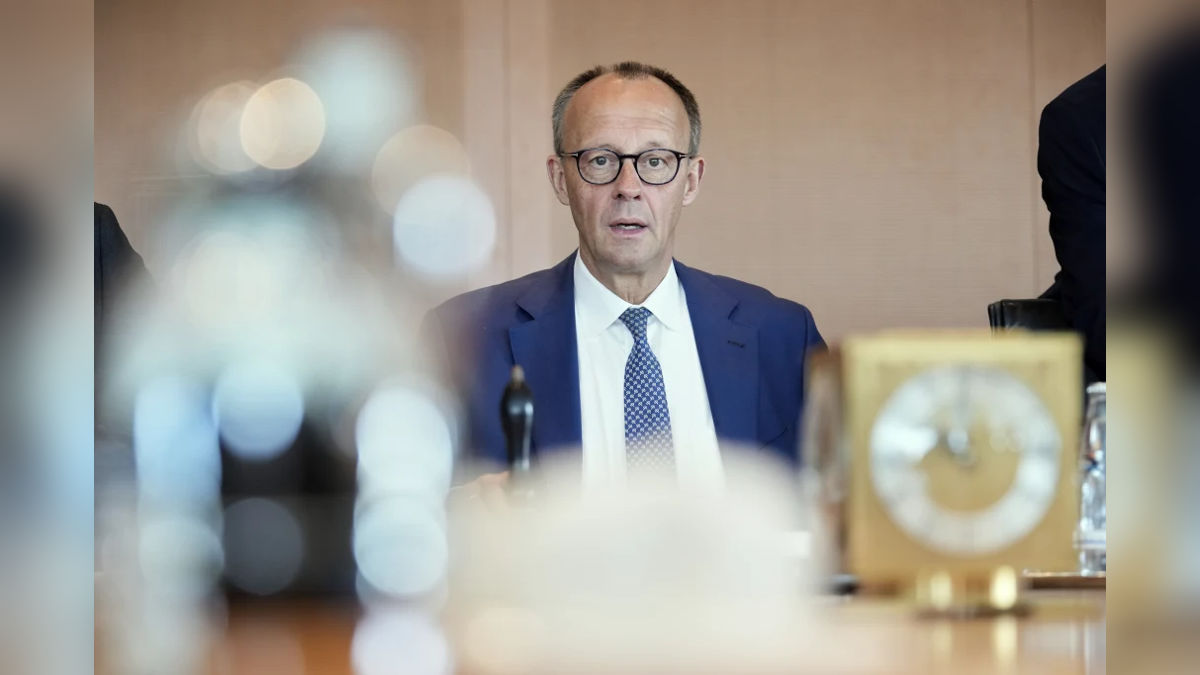
Because Europe was split over using Russian assets.On the one hand, Germany, France, the Netherlands, Denmark, Sweden, Poland, Latvia, Lithuania and Ireland were pushing for the plan. German Chancellor Friedrich Merz, backed by European Commission chief Ursula von der Leyen, was among the strongest proponents of the idea.
However, on the other hand, Belgium, the Czech Republic, Hungary and Slovakia were all against the plan. The objections from Belgium, the chief custodian of the Russian assets, were particularly vociferous, with its prime minister Bart De Wever arguing that the threat of retaliation from Moscow was real. De Wever claimed that Russia would respond by attempting to seize Belgian assets in places like China.
Belgium’s worries were not unfounded. Russia’s central bank last week launched a lawsuit against Euroclear to stop any loan being provided to Ukraine using its money.
De Wever demanded that each EU member commit to handing over cash in case Russia made any legal claim in court. However, this was a non-starter for many, particularly France’s Emmanuel Macron and Italy’s Giorgia Meloni.
“There were so many questions on the reparations loan, we had to go to Plan B. Rationality has prevailed,” De Wever said. “The EU has avoided chaos and division and remained united.”
Macron, after the deal was announced, called it a major advance, saying that borrowing on capital markets “was the most realistic and practical way” to fund Ukraine and its war efforts.
But those in the know say that Orbán, perhaps Putin’s closest ally in Europe, can now claim a diplomatic victory. “Orbán got what he wanted: no reparations loan, and EU action without participation of Hungary, the Czech Republic and Slovakia,” one EU diplomat said.
What experts, public think
Experts agree that even though Europe failed to use Russian assets, this was in many ways a landmark deal.
Guntram Wolff of the Bruegel economic thinktank told The Guardian the agreement was regardless a “huge deal for the EU”. “If you want to do EU foreign policy, you need EU resources and debt. The European Council delivered.”
Alberto Alemanno, a professor of EU law, added that the agreement was “unprecedented”. Letting willing states move forward had never before been tried for “EU budget-backed borrowing, with selective participation in collective liability”, he said.
Some in Ukraine are happy with the development.
As Yelyzaveta Horiaieva, a 19-year-old student from Lviv, told the BBC, “We need this, our people need this, but every day is so hard because you feel the cost of war. We have lost many people, and money cannot change this. I am hopeful for peace in the new year, but we can’t give up the territories our people are dying for.”
Tetiana Cherniavska, 33, from Kyiv, added that the money would “help us hold on to our lands”. However, her partner Denis Kozhemiakin added, “I have no faith that the money will help our fighters or our people. Our authorities are corrupt.”
But Ukrainian President Volodymyr Zelenskyy, who participated in the summit, urged the bloc to agree to use the Russian assets to provide the funds he said would allow Ukraine to keep fighting.
“The decision now on the table — the decision to fully use Russian assets to defend against Russian aggression — is one of the clearest and most morally justified decisions that could ever be made,” he added.
Meanwhile, Kremlin envoy Kirill Dmitriev responded to the development by saying, “Law and sanity win… for now.”
With inputs from agencies

 "‘Bangladesh’s Yunus govt failed to control ‘mobocracy’’: BNP leader on attack on Indian mission")
 "Tarique Rahman to return to Bangladesh after 17 years: Can Khaleda Zia’s son influence February elections?")
 "US Congressmen raise alarm over anti-Hindu violence in Bangladesh")
 "‘Time to Kash out’: Why Kash Patel’s choice of new wheels has sparked a row")
 "‘Bangladesh’s Yunus govt failed to control ‘mobocracy’’: BNP leader on attack on Indian mission")
 "Tarique Rahman to return to Bangladesh after 17 years: Can Khaleda Zia’s son influence February elections?")
 "US Congressmen raise alarm over anti-Hindu violence in Bangladesh")
 "‘Time to Kash out’: Why Kash Patel’s choice of new wheels has sparked a row")



