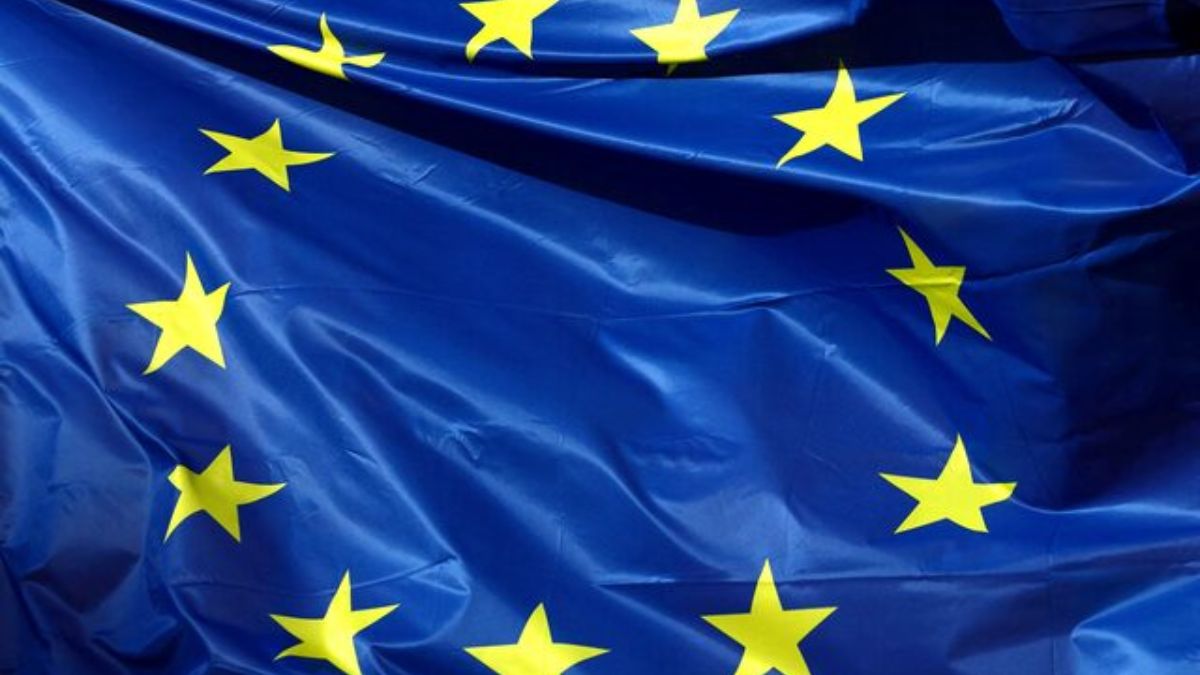
 "Bulgaria was granted permission to join the eurozone, countries within the European Union that use the euro as their official currency, earlier this year. Reuters")
Bulgaria is set to start using the euro from January 1.
Bulgaria, which will become the 21st country to join the eurozone, will bid adieu to its Bulgarian lev (BGN) currency.
Bulgaria was granted permission to join the eurozone, countries within the European Union that use the euro as their official currency, earlier this year.
This came after it met the formal entry criteria this year, including for inflation, budget deficit, long-term borrowing costs and exchange-rate stability.
Bulgaria, a country of just 6.7 million people, had joined the European Union in 2007.
But what do we know? Why is Bulgaria joining the eurozone?
Why Bulgaria is joining the eurozone
First, let’s take a brief look at the eurozone.The European Union is a bloc of 27 nations. The eurozone, the countries that use the euro, comprises 20 of those nations – barring Denmark, Sweden, Poland, Hungary, the Czech Republic and Romania. The euro is the world’s second-most traded currency – after the US dollar. It is used by approximately 350 million people.
Bulgaria has long wanted to join the eurozone. It first proposed doing so in 2018 and its currency has been pegged to the euro since 2007. There are tangible benefits to nations joining the eurozone – economic stability, easier trade, and increased political and economic influence. Becoming a member of the eurozone, apart from using euro notes and coins, also means a seat at the European Central Bank’s rate-setting Governing Council.
Though Bulgaria remains among the poorest members of the European Union, things have improved over the past decades. In 2007, Bulgaria’s GDP was around $44 billion (Rs 3.96 lakh crore). In 2025, Bulgaria’s GDP is estimated to have touched $150 billion (Rs 13.49 lakh crore). In 2007, GDP per person was around $6,000 (Rs 5.39 lakh), while in 2025 that number is around $20,000 (Rs 17.98 lakh).
“Bulgaria’s macroeconomic performance has been stable in the last decades, even though its economic growth and catch-up has been suboptimal,” Guntram Wolff, an expert on euro-area fiscal policy at the European economic think tank Bruegel, told DW.
In November, Bulgaria’s Prime Minister Rosen Zhelyazkov argued that doing so would bolster Sofia’s position in Europe. The euro is “not just a currency but a strategic choice”, Zhelyazkov said.
Christine Lagarde, president of the European Central Bank, said the move “bolsters Bulgaria’s economic foundations, builds its resilience against global shocks and amplifies its voice in euro area decision-making”.
Bulgarians will be able to use the lev till January 31. After that, they will have to use only the euro.
What opponents say
Opponents have argued that Bulgaria will lose control over its monetary policy after giving up its own currency in favour of the euro. They argue that prices will rise while wages remain stagnant. They claim only the wealthy and elite will benefit from the adoption of the euro and that inflation will hurt the elderly and those paid lower wages.
“Supporters of Bulgaria’s entry into the eurozone point out the fact that by joining the ‘club of the rich,’ the country will benefit and will achieve significant progress,” Rossitsa Rangelova, professor at the Bulgarian Academy of Sciences’ Economic Research Institute, told DW.
“Things are presented as if Bulgaria will automatically increase its standard of living and prosperity, but it is not justified how this will happen given the need for mandatory and postponed reforms, without which our country would not be an equal participant,” she added.
“The eurozone accession process will not benefit the economy of Bulgaria. It would become a periphery for the eurozone, less flexible and unable to reduce or eliminate its shocks on its own,” said Rangelova.
However, the European Union has argued that there is no evidence joining the eurozone will cause inflation to spike.
Citizens remain divided about the idea. A poll from Bulgaria’s Ministry of Finance showed that around 51 per cent of citizens favoured joining the eurozone, while 45 per cent were against it.
Some have welcomed the move. “Not only older people but also all young people can easily travel using euros instead of having to exchange currency,” said Veselina Apostolova, a pensioner shopping in Sofia.
Businesses that sell goods across borders were also supportive.
Natalia Gadjeva, owner of the Dragomir Estate Winery in the Thracian Valley, said, “For me, the most important thing is that all operations involving currency conversion and reissuing invoices in euros and then in levs will be eliminated.”
Businesses have been preparing. Prices of everything from fruit to bottles of wine are displayed in both levs and euros. Government-funded billboards show the euro-lev exchange rate with a message saying: “Common past. Common future. Common currency.” Television adverts have also flagged the coming change.
But others are less in favour.
“I am against it, first because the lev is our national currency,” said Sofia pensioner Emil Ivanov, interviewed while shopping. “Secondly, Europe is heading towards demise, which even the American president (Donald Trump) mentioned in the new national security strategy.
“I may not be alive when this (the EU’s demise) happens, but that is where everything is going.”
Maya Neshev, a 67-year-old pensioner from Vidin, in north-western Bulgaria, told The Guardian that she was concerned.
“The uncertainty is evident and I have concerns because I am retired,” said Maya. “Should I stock up? Does it make sense? How will it happen in January? Is it better to save [the old currency] leva during the whole month of January? To continue in leva, and then in February go to the euro? There is a lot of uncertainty.”
Elena Vasileva, 26, an engineer in the food industry from Hisarya, likened the development to losing one’s identity. “We have some of the brightest people of our country on our money,” she said. “It’s like losing your identity. It’s a pity.”
The transition comes as Bulgaria faces a crisis that saw the government step down this month amid widespread protests against proposed tax increases.
Zhelyazkov’s government resigned on December 11. It is now tasked with setting up a new government or calling a snap poll – the eighth such election in four years.
Experts are unsurprised by the divide.
Petar Ganev, a senior research fellow at the Institute of Market Economics, a think tank based in Sofia, told The Guardian, “This is not surprising. The country is divided on almost everything that you can imagine. And after the political instability, we ended up in a very hostile political environment.”
Rangelova also took aim at the government for not holding a referendum on the issue.
“For such fundamental projects, the government of any democratic country takes into account the opinion of the public,” she told DW. “The Bulgarian authorities have categorically rejected referendums as a form of public opinion over the years and still find ways to ignore them.”
With inputs from agencies