

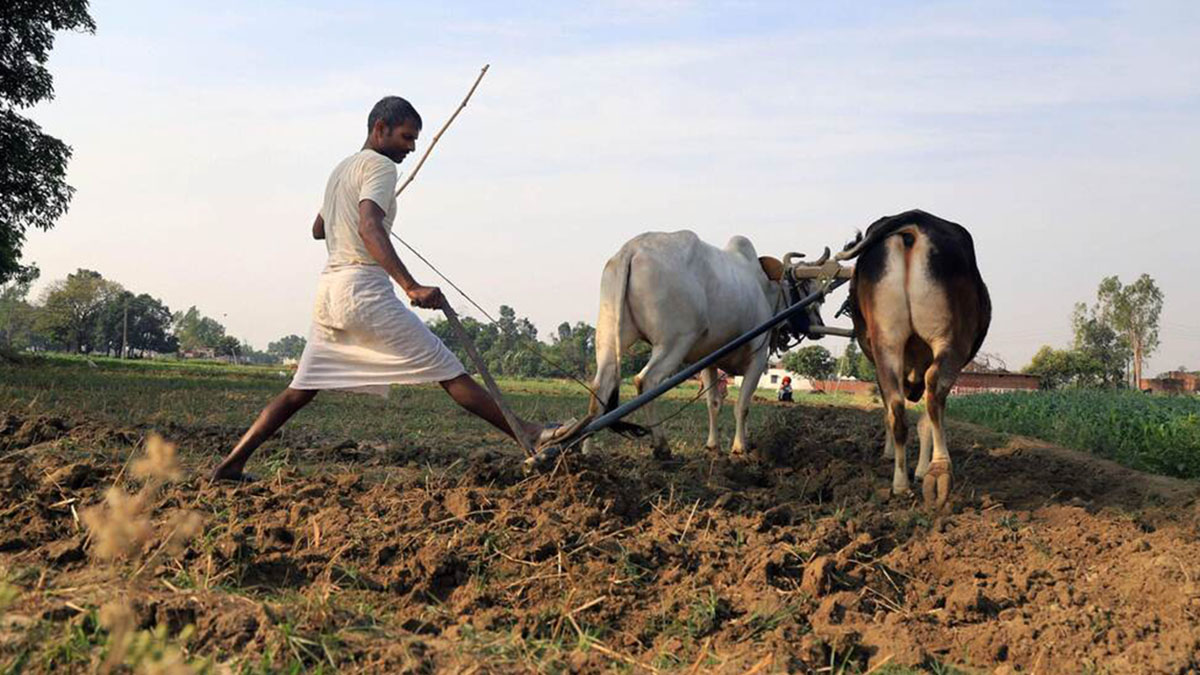
 "What’s the VB-G Ram G bill that will replace MNREGA?")
Update: The VB–G RAM G bill has cleared the Parliament, with both the Lok Sabha and Rajya Sabha passing the legislation amid uproar from the opposition.
The Centre is set to replace the landmark Mahatma Gandhi National Rural Employment Guarantee Act (MNREGA), 2005.
The law, which is considered the flagship scheme of India, guarantees at least 100 days of paid work to rural households every year. However, the government now wants to replace MNREGA with the Viksit Bharat—Guarantee for Rozgar and Ajeevika Mission (Gramin) (VB–G RAM G) Bill 2025.
But what do we know about this bill? What is in it?
Let’s take a closer look.
A brief look at MGNREGA
The MGNREGA, which is named after Mahatma Gandhi, was passed in 2005 by the then Manmohan Singh government. It was considered a landmark law when it comes to providing security for the rural poor. The idea behind MGNREGA was to give every rural household at least 100 days of unskilled manual work per year.
The idea behind this scheme is to
Increase the poor’s resource base
Strengthen their livelihood
Increase social inclusion
Strengthen Panchayati Raj Institutions (PRIs)
The Centre in 2025–26 set aside Rs 86,000 crore for the scheme, the highest amount of funds set aside since it was established two decades ago.
What we know about the bill and what changes
The Centre on Monday listed the VB–G RAM G Bill, 2025, in the Lok Sabha’s supplementary list of business. The idea behind the bill is to bring rural development and employment in alignment with Prime Minister Narendra Modi’s ‘Viksit Bharat 2047’ plan.
The bill seeks to repeal and replace the MNREGA, 2005. It is set to be introduced in the Lok Sabha during the Winter Session of Parliament, which began on December 1 and is set to conclude on December 15.
While the MNREGA guarantees 100 days of work to members of rural households every year, the new bill raises that to 125 days of work per year.
However, the bill allows employment under the scheme to be conducted in phases across the year. This will let the scheme be paused during the peak agricultural season so that labourers can work on farms instead. This will ensure “adequate agricultural labour availability during peak agricultural seasons”, as per the bill.
“All authorities responsible for planning, sanctioning or executing works under this Act shall ensure that all works are undertaken only outside the notified peak agricultural seasons,” as per the provisions of the bill.
Quick Reads
View AllUnder MGNREGA, a vast majority of the funds come from the central government. However, under the new bill, most states and Union Territories would have to contribute as much as 40 per cent of the cost of the scheme, while the Centre would pay for the remaining 60 per cent. The northeastern and Himalayan states would only have to contribute 10 per cent of the scheme. Union Territories without a legislature, meanwhile, would not have to bear any cost.
While the government allocates funds to MGNREGA on the basis of demand, the government has brought in ‘Normative Allocation’ under the new bill. It defines “Normative Allocation” as “the allocation of the fund made by the Central Government to the State”. This essentially means that if a state runs out of allotted funds, it must make up the difference itself.
Under the MGNREGA, wages must be paid every 15 days, failing which an unemployment allowance must be paid.
“In case the payment of wages is not made within fifteen days from the date of closure of the muster roll, the wage seekers shall be entitled to receive payment of compensation for the delay, at the rate of 0.05% of the unpaid wages per day of delay beyond the sixteenth day of closure of muster roll,” the MGNREGA states.
Under this new bill, wages to workers will be paid every week. “The disbursement of daily wages shall be made on a weekly basis or in any case not later than a fortnight after the date on which such work was done,” the bill states. The unemployment allowance will have to be paid by the states.
States under the bill will have six months to formulate a fresh scheme to bring them in line with the new law.
What is the government saying?
The government has argued that the new bill will reduce leakage and waste, allow states to conduct better planning, align work with farm cycles, and avoid artificial labour shortages during harvest.
Rural Development Minister Shivraj Singh Chouhan, in the statement of purpose of the Bill, said MGNREGA has provided guaranteed wage employment to rural households over the past 20 years.
However, “further strengthening has become necessary in view of the significant socio-economic transformation witnessed in the rural landscape driven by widespread coverage of the social security interventions and saturation-oriented implementation of major government schemes”, he said.
While the MGNREGA focused on the goal to “enhance livelihood security”, the new Bill says it aims to promote “empowerment, growth, convergence and saturation for a prosperous and resilient rural Bharat”.
The BJP-led government at the Centre has repeatedly tussled with Opposition-run states over MGNREGA, particularly the Mamata Banerjee government in West Bengal.
The government has claimed that there are irregularities in utilisation of funds released before March 2022.
Opposition slams Centre
West Bengal Chief Minister Mamata Banerjee last week tore up a note outlining new MGNREGA norms at a public meeting, calling it a “valueless and insulting” diktat and vowing that the state would run its own work scheme without seeking “Delhi’s charity”.
Addressing a TMC rally at the Ras Mela ground, Banerjee accused the BJP-led central government of using funds as a weapon against Bengal and throttling rural welfare programmes out of “jealousy and hatred”.
The Opposition has slammed the Centre over its plans to replace MGNREGA, particularly taking issue with the removal of Gandhiji’s name.
Congress leader Priyanka Gandhi Vadra said, “Why is Mahatma Gandhi’s name being removed? Mahatma Gandhi is considered the tallest leader not just in the country but in the world. So removing his name, I really don’t understand what is the objective. What is their intention?”
Congress MP Tariq Anwar said the move reflected hostility towards the Gandhi legacy. “It is unfortunate that the government is changing its name. It seems that they hate the name Gandhi. This decision will hurt the sentiments of those who believe in Mahatma Gandhi and his ideology,” he said.
Senior Trinamool Congress leader and Rajya Sabha MP Derek O’Brien called the move “an insult to Mahatma Gandhi”.
“But then, are you surprised? These are the same people who hero-worshipped the man who killed Mahatma Gandhi. They want to insult Mahatma Gandhi and remove him from history,” O’Brien claimed.
RJD leader Manoj Jha said, “I fail to understand why we should bow before the Prime Minister and his Cabinet.” He added that by changing the name, the scheme’s essence was being destroyed. He sarcastically suggested renaming it “Pujya Bapu Yojana” and claiming unemployment had been eliminated.
In June, Congress president Mallikarjun Kharge claimed that the Modi government was trying to destroy MGNREGA.
The Congress president shared on X a media report which claimed that, for the first time, the government has capped spending under the Mahatma Gandhi National Rural Employment Guarantee Scheme (MGNREGS) at 60 per cent of its annual allocation for the first half of the financial year 2025–26.
In a post in Hindi on X, Kharge said, “The Modi government is trying to destroy MGNREGA, the lifeline of the poor. The Modi government has now fixed the limit of MGNREGA expenditure at 60% for the first six months of the year.”
Making cuts in the implementation of MGNREGA, which ensures the Right to Work under the Constitution, is a “crime against the Constitution”, he said.
With inputs from agencies


 "Bangladesh Protests Live: ‘There’s no law & order, Yunus is backing them’, says ex-minister as mobs go on rampage")
 "'Don't see readiness for peace': Putin blames Ukraine for no progress on ceasefire dea")
 "Post-Hadi violence in Bangladesh makes election ‘unsafe’: Report puts spotlight on Yunus-Islamist link")
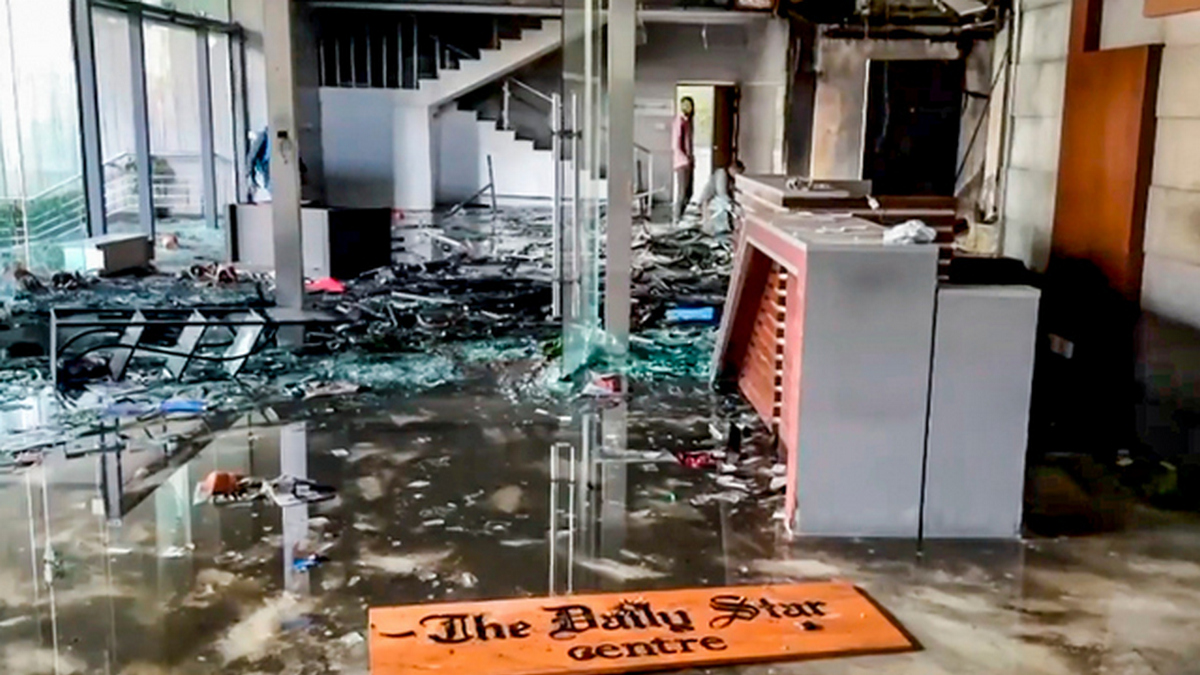 "Newspaper offices attacked, Indian Mission officer targeted: How Bangladesh protests spiralled")
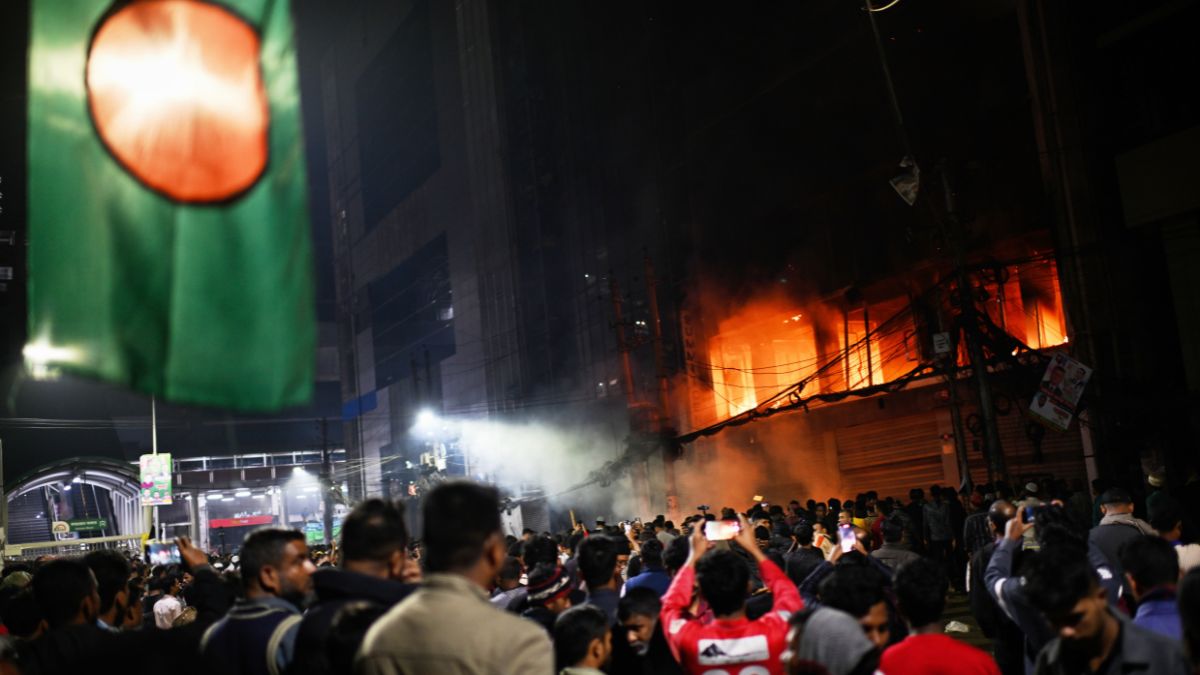 "Bangladesh Protests Live: ‘There’s no law & order, Yunus is backing them’, says ex-minister as mobs go on rampage")
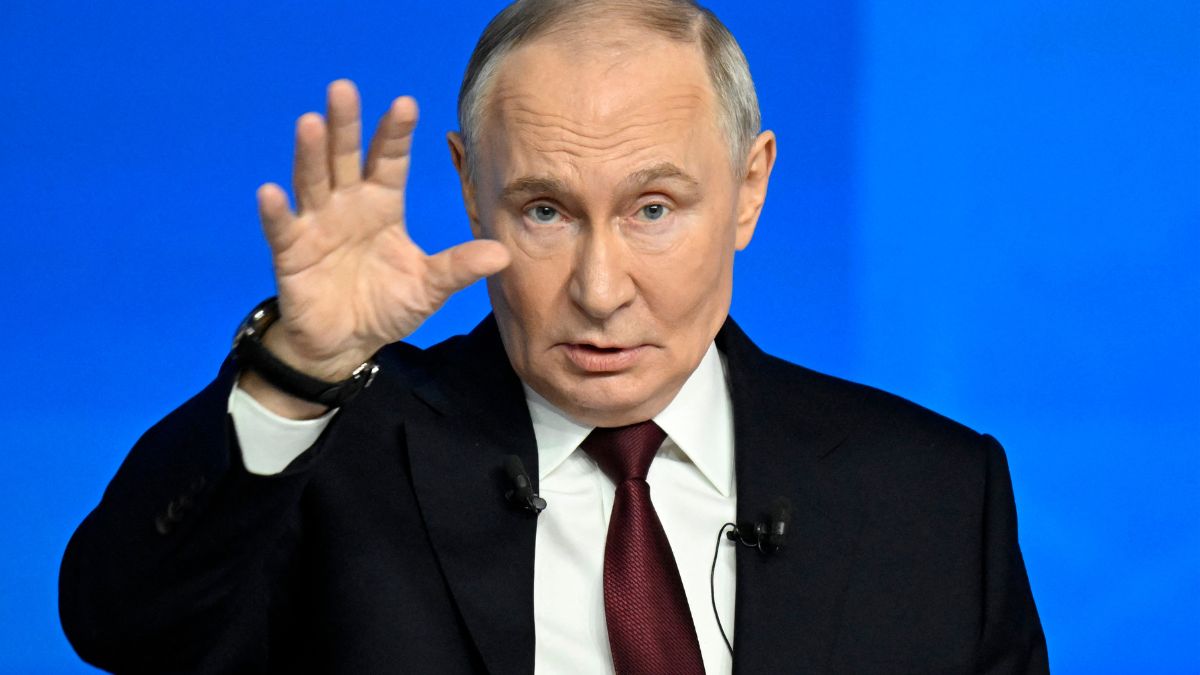 "'Don't see readiness for peace': Putin blames Ukraine for no progress on ceasefire dea")
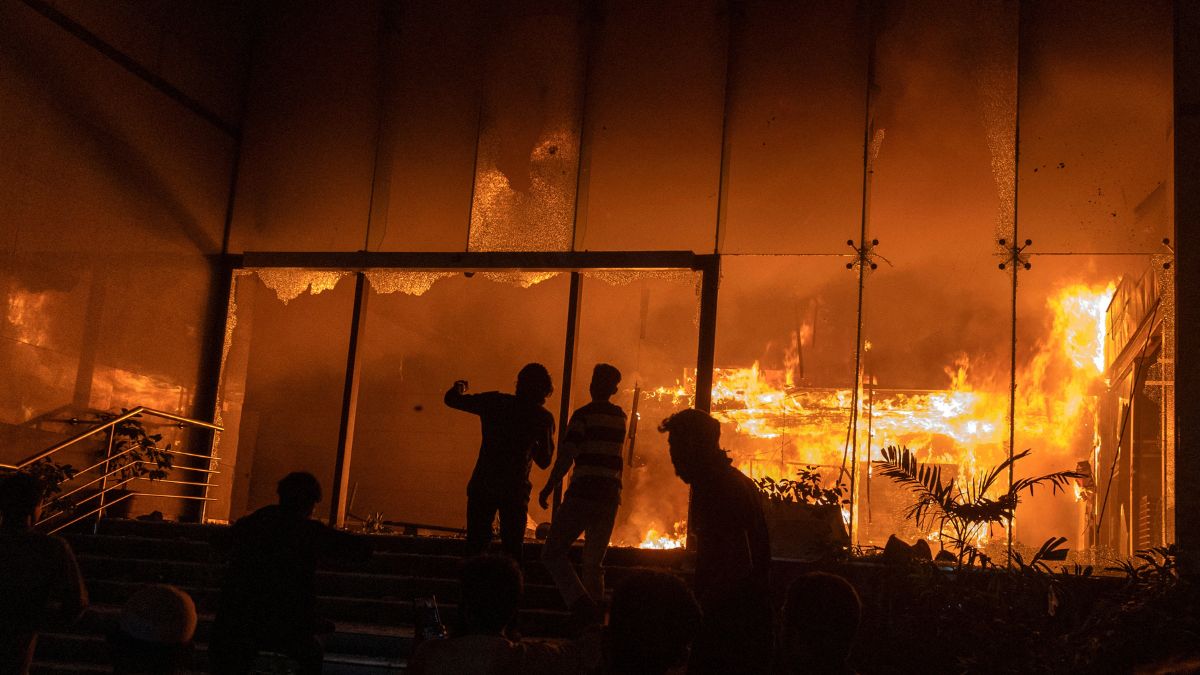 "Post-Hadi violence in Bangladesh makes election ‘unsafe’: Report puts spotlight on Yunus-Islamist link")
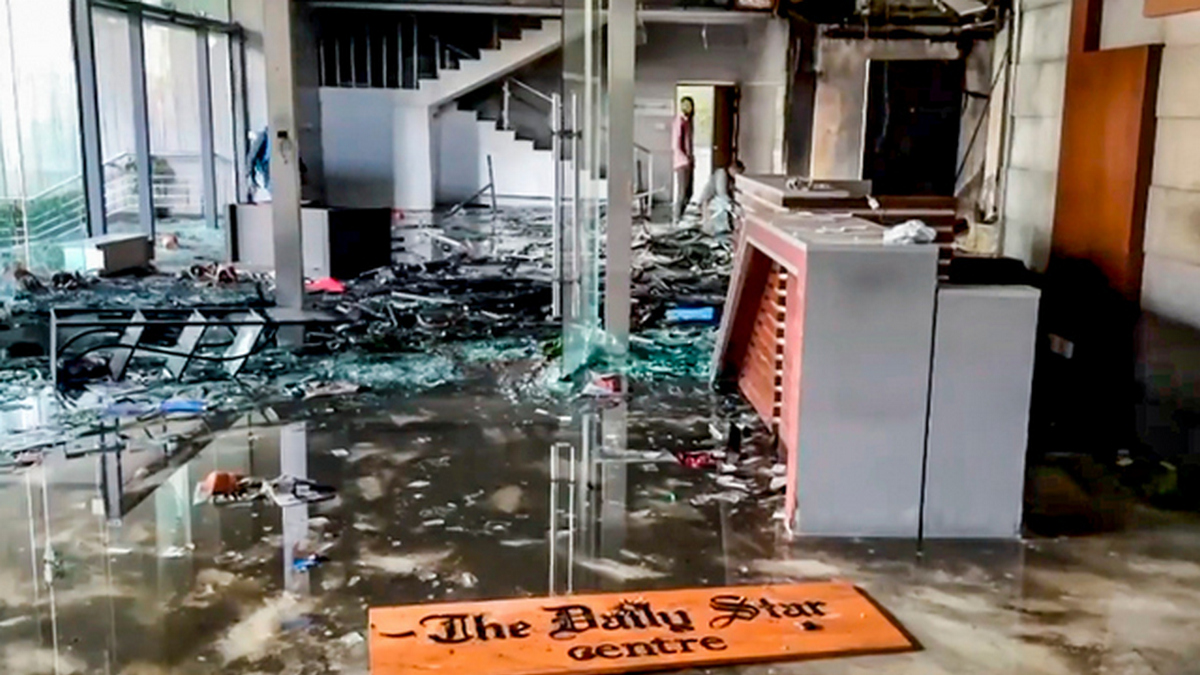 "Newspaper offices attacked, Indian Mission officer targeted: How Bangladesh protests spiralled")



