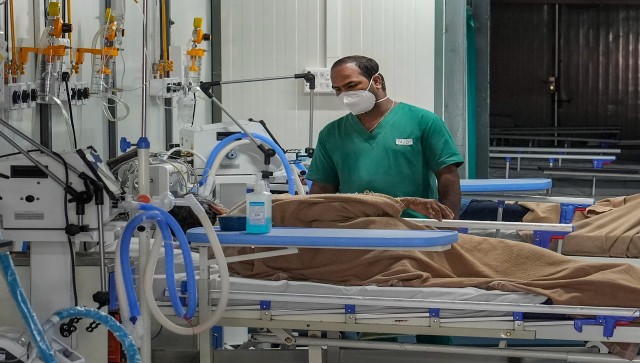
 "What are the new ICU admission guidelines for critical patients?")
There seem to be a lot of firsts in store for this year.
For the first time, the central government has released hospital rules.
24 leading physicians with expertise in critical care medicine, including doctors from Dubai and Canada, produced the new guidelines for the Union Health Ministry regarding the admission of critically ill patients to the intensive care unit (ICU).
Experts believe that the recently released guidelines by the Directorate General of Health Services (DGHS), a top technical advisory and regulatory body within the health ministry, could improve the decision-making process when determining whether ICU admission is necessary in a given situation.
Let’s take a closer look.
New guidelines for ICU
According to the guidelines, critically ill patients cannot be admitted to the ICU if there is a refusal by them and their relatives.
It is further recommended that when no further treatment is possible or available in a disease or terminally ill patient, if the continuation of therapy is not going to make an impact on the outcome, especially survival, then keeping in the ICU is futile care, according to the news agency PTI.
Further, the seven-page guidelines also state that anyone with a living will or advanced directive against ICU care should not be admitted to the ICU.
Besides, low-priority criteria in case of a pandemic or disaster situation, where there is resource limitation, should be taken into account for keeping a patient in the ICU.
Quick Reads
View AllAccording to ANI, the guidelines have also mentioned that the specialist in ICU should also have specific qualifications. The Intensivist should have a postgraduate qualification in Internal Medicine, Anaesthesia, Pulmonary Medicine, Emergency Medicine, or General Surgery with either of the following.
Instead, they recommend MBBS graduates with a great deal of expertise in critical care, defined as three years or more of experience in the intensive care unit (at least half of which should be in the ICU).
ICU admission and discharge criteria
The criteria for admitting a patient to the ICU should be based on organ failure, the need for organ support, or the anticipation of deterioration in the medical condition, the guidelines stated.
Altered level of consciousness of recent onset, hemodynamic instability, need for respiratory support, patients with acute illnesses requiring intensive monitoring and/or organ support or any medical condition or disease with anticipation of deterioration have been listed as criteria for ICU admission.
Patients who have experienced any major intraoperative complication like cardiovascular or respiratory instability or have undergone major surgery also feature among the criteria.
According to the guidelines, blood pressure, pulse rate, respiratory rate, breathing pattern, heart rate, oxygen saturation, urine output and neurological status among other parameters should be monitored in a patient awaiting an ICU bed.
ICU discharge criteria are included in the guidelines as well.
This includes the return of physiological aberrations to near-normal or baseline status, reasonable resolution and stability of the acute illness that necessitated ICU admission, patient/family agreeing for ICU discharge for a treatment-limiting decision, or palliative care.
What’s the need for guidelines?
Dr Sheila Nainan Myatra of Tata Memorial Hospital in Mumbai, Dr RK Mani of Yashoda Superspeciality Hospital in Ghaziabad’s Kaushambi, Dr E Lenin Babu of JIPMER Puducherry, Dr Anjan Trikha and Dr Lokesh Kashyap of Delhi AIIMS, and Dr JV Peter of CMC Vellore have all contributed to the guidelines.
ICU admissions that are not necessary have been the subject of criticism in the past.
ICU is a limited resource, according to Dr Mani. TOI quoted him as saying, “Our recommendations are aimed at ensuring its judicious use so that those who need it the most get it on priority.”
While Dr Sumit Ray, Secretary of the Indian College of Critical Care Medicine, believes the guidelines are purely for guidance and not binding.
“The ICU admission and discharge criteria are broad in nature, and a lot is left to the wisdom of the treating doctor,” he said, according to TOI, adding, that the majority of developed nations have systems in place for patient triage, ensuring that resources are used wisely.
India has about a lakh ICU beds, the majority of which are found in private hospitals. In private hospitals, the price of an ICU bed is five to ten times higher than that of a regular bed.
“Poor people who cannot afford private hospitals have to struggle, sometimes without success, to get an ICU bed,” advocate and public health activist Ashok Agarwal said, as per TOI, adding, “The idea of prioritising patients for ICU care based on their condition may be good for a disaster situation, but in general, the government should work towards ensuring enough facilities to provide critical care to all.”
With inputs from agencies


 "Jaishankar meets Sergio Gor ahead of US visit, says discussed 'many dimensions of our partnership'")
 "As Trump shakes up Nato, Europe aims to go self-sufficient in weapon production")
 "EU to list Iran’s Revolutionary Guards as terrorist group alongside al-Qaeda and Hamas")
 "With new security pact, India and EU eye win-win defence ties as US, China rival in arms race")
 "Jaishankar meets Sergio Gor ahead of US visit, says discussed 'many dimensions of our partnership'")
 "As Trump shakes up Nato, Europe aims to go self-sufficient in weapon production")
 "EU to list Iran’s Revolutionary Guards as terrorist group alongside al-Qaeda and Hamas")
 "With new security pact, India and EU eye win-win defence ties as US, China rival in arms race")