 "What is Trump’s Dalilah Law that targets Indian-origin truck drivers?")
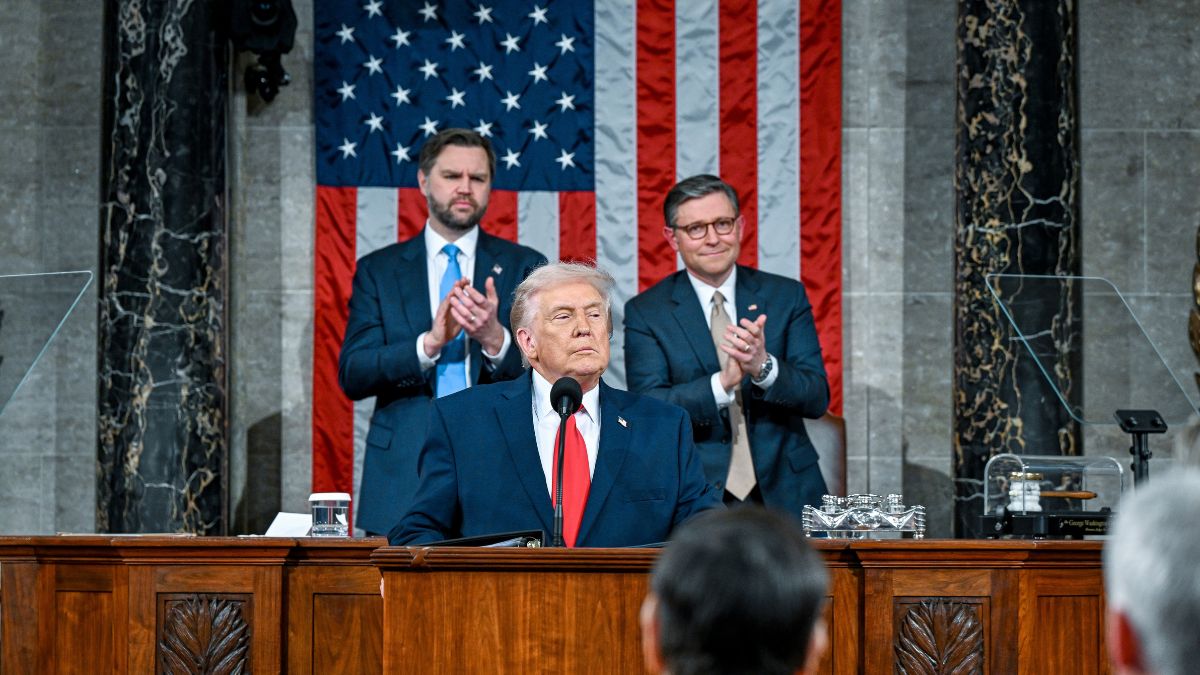
United States President Donald Trump used his State of the Union address on Tuesday, to urge Congress to enact what he has dubbed the “Dalilah Law”, a federal proposal that would stop states from issuing commercial driver’s licences (CDLs) to undocumented immigrants.
The proposal has been framed by the White House as part of a broader tightening of immigration enforcement and trucking regulations, following a series of fatal and life-altering accidents involving truck drivers who entered the US illegally but were later able to obtain commercial licences from state authorities.
“… I’m calling on Congress to pass what we will call the Dalilah Law, barring any state from granting commercial driver’s licenses to illegal aliens,” Trump said.
What is the Dalilah law?
The proposed legislation seeks to override state-level practices by introducing a nationwide bar on issuing CDLs to undocumented migrants.
Trump argued that this change is necessary to prevent heavy commercial vehicles from being operated by drivers who lack legal status and, in his view, often do not meet minimum safety and language standards.
“Many, if not most, illegal aliens do not speak English and cannot read even the most basic road signs as to direction, speed, danger or location.” the US president claimed.
“Importing these cultures through unrestricted immigration and open borders brings those problems right here to the USA. And it is the American people who pay the price in higher medical bills, car insurance rates, rent, taxes and perhaps most importantly crime. We will take care of this problem. We’re going to take care of this problem,” he said in his speech.
Under the current system, licensing rules vary by state, and non-domiciled CDLs have been issued in some cases to non-citizens who lack permanent residency.
The White House has argued that this patchwork approach has allowed undocumented migrants to operate heavy vehicles such as 18-wheelers on US highways.
In addition to barring undocumented migrants from receiving CDLs, the administration has launched audits of non-domiciled commercial licences across multiple states. These audits are aimed at identifying cases where licences were issued to drivers who did not meet federal eligibility standards.
The proposal has also been tied to the reintroduction of strict English-language proficiency requirements for commercial drivers.
Under Trump, a 2016 memo issued during the administration of Barack Obama, which restricted inspectors from sidelining drivers solely for limited English proficiency, has been withdrawn.
As part of the same regulatory push, the US has also stopped issuing visas to foreign truck drivers as of December 2025.
Why is the proposed law named ‘Dalilah’?
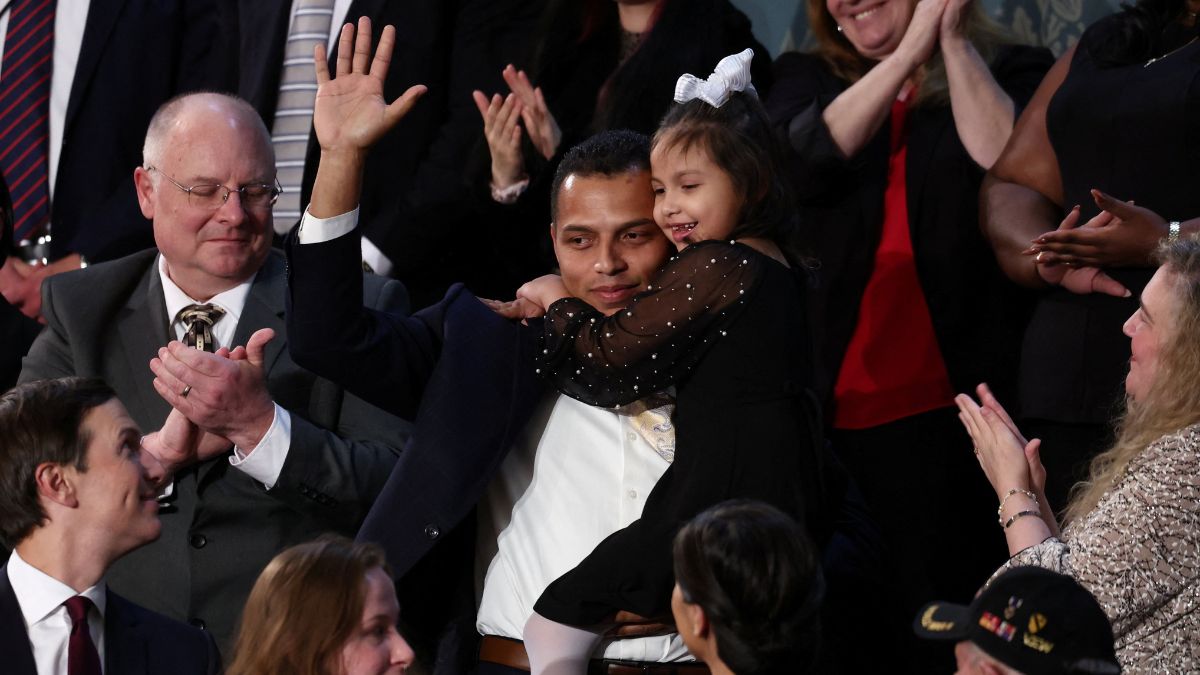
The Dalilah Law takes its name from Dalilah Coleman, who was five years old when she suffered catastrophic injuries in a multi-vehicle crash in Southern California in June 2024.
The accident occurred when a commercial 18-wheeler failed to stop in traffic and ploughed into a line of vehicles in a construction zone.
The truck was being driven by Partap Singh, an undocumented migrant from India who had crossed the US border illegally in 2022 and was later issued a CDL in California.
Trump highlighted Dalilah’s case during his SOTU address to illustrate the human impact behind the proposed legislation.
“We are not playing games. Dalilah Coleman was only five years old in June 2024 when an 18-wheel tractor-trailer plowed into her stopped car traveling at 60 miles an hour or more. The driver was an illegal alien let in by Joe Biden and given a commercial driver’s license by open borders politicians in California,” he said.
Dalilah’s injuries were described by the White House as severe and life-altering. The administration has said she suffered a traumatic brain injury and cerebral palsy and will require lifelong care and therapy.
“Doctors said Dalilah would never be able to walk or talk, have a good life. She wouldn’t even be able to eat again. But against all odds, she is now in the first grade, learning to walk. And she’s here this evening with her dad Marcus, a fantastic man. Dalilah , please, you are a great inspiration. Please stand up. Thank you, Dalilah.”
Her mother, Ileana Krause, has told media outlets in the US last year that Dalilah “has a TBI [traumatic brain injury]. She is now diagnosed with cerebral palsy and global developmental delay. She doesn’t walk. She receives nutrition through a G-tube.”
Dalilah’s father, Marcus Coleman, has publicly criticised California’s leadership for failing to engage with the family after the crash.
“We never did receive anything back from the governor. We never received a call back. We never received a ‘governor’s going to look into this.’ We didn’t receive anything,” he told Fox News in September 2025.
The driver involved in the crash, Partap Singh, was later arrested by US Immigration and Customs Enforcement (ICE) in August 2025 and placed into deportation proceedings.
Investigations found that he had been driving at an unsafe speed and failed to stop for traffic in a construction zone.
Have there been other such accidents?
In August 2025, Harjinder Singh, who had entered the US illegally in 2018, caused a deadly crash on the Florida Turnpike while attempting an illegal U-turn through an “Official Use Only” access point near Fort Pierce.
His semi-truck became stuck across lanes, and a minivan crashed into the trailer, killing three people.
After the incident, Harjinder Singh fled to California but was later arrested and extradited back to Florida. He now faces three counts of vehicular homicide and manslaughter.
If convicted, he could receive a sentence of up to 45 years in prison. Authorities have also said that he failed an English test administered after the crash.
Licensing records showed that Harjinder Singh obtained a commercial driver’s licence in Washington in 2023 and a limited-term CDL in California in 2024.
How will the law affect Indian-origin truckers?
The Dalilah Law, if passed, is expected to have significant implications for Indian-origin truck drivers, who form a substantial portion of the US trucking workforce.
Estimates cited by the administration indicate that more than 1.5 lakh Indian-origin drivers, mainly from Punjab and Haryana, work in the US, accounting for roughly one-fifth of the country’s truck drivers, and nearly half on the West coast of the US.
Indian drivers have been especially prominent in states such as California and Texas. The Sikh community, in particular, has played a notable role in filling chronic labour shortages in the US and Canada trucking industry over the past decade.
The tightening of licensing rules has already had measurable effects. More than 7,000 commercial drivers were taken off US roads in 2025 following audits and enforcement actions, with a majority reported to be of Indian origin.
California has also announced plans to revoke 17,000 commercial licences issued to foreign nationals.
Together with the proposed Dalilah Law and stricter English proficiency checks, these measures are expected to influence the labour pool in the trucking industry.
While the Trump administration has presented the changes as necessary for public safety and immigration enforcement, the measures come against the backdrop of long-standing driver shortages in the US logistics sector.
The crackdown raises questions about how the industry will balance tighter regulatory standards with the continued need for drivers to keep supply chains moving.
With inputs from agencies

 "India-Pakistan war, Iran nukes, tariffs: What Trump spoke of in longest State of Union speech")
 "Did Trump save 35 million Pakistanis during Op Sindoor? Fact-checking State of the Union speech")
 "Four years later, how close is Russia to achieving its goals in Ukraine?")
 "'We did not hear the truth': Spanberger slams Trump for 'unprecedented corruption' in Democratic response")
 "India-Pakistan war, Iran nukes, tariffs: What Trump spoke of in longest State of Union speech")
 "Did Trump save 35 million Pakistanis during Op Sindoor? Fact-checking State of the Union speech")
 "Four years later, how close is Russia to achieving its goals in Ukraine?")
 "'We did not hear the truth': Spanberger slams Trump for 'unprecedented corruption' in Democratic response")