 "Why did the US strike Venezuela and capture its President Nicolas Maduro?")
Donald Trump had been warning of “land strikes” against Venezuela. In the early hours of Saturday, the US carried out attacks in Caracas and other regions, and captured the Venezuelan leader, President Nicolas Maduro and his wife.
In a statement on Truth Social, he wrote, “The United States of America has successfully carried out a large-scale strike against Venezuela and its leader, President Nicolas Maduro, who has been, along with his wife, captured and flown out of the Country. This operation was done in conjunction with U.S. Law Enforcement. Details to follow. There will be a News Conference today at 11 A.M., at Mar-a-Lago. Thank you for your attention to this matter! President DONALD J. TRUMP.”
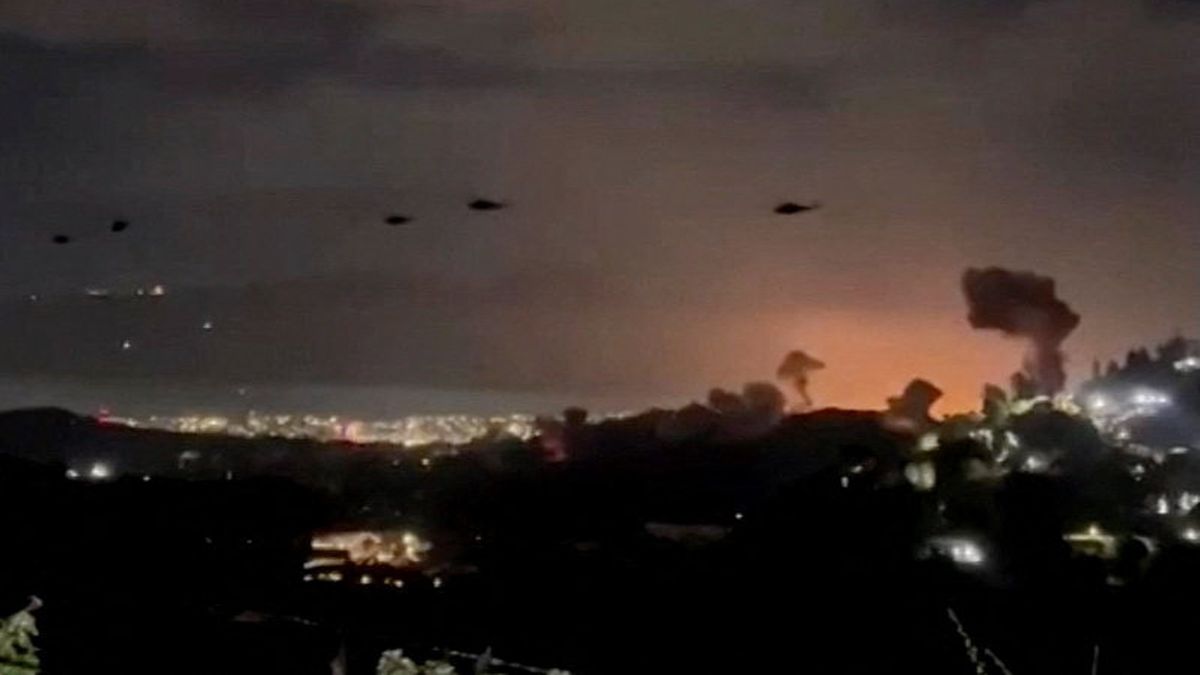
It all started when explosions, loud noises and low-flying aircraft were heard in the Venezuelan capital of Caracas around 2 am local time. Several areas were without power in the Venezuelan capital. There were also reports of the sound of aircraft after the explosions.
Before Trump announced Maduro’s capture, the Venezuelan government rejected and denounced the US military aggression. “Venezuela rejects, repudiates, and denounces before the international community the extremely serious military aggression perpetrated by the current Government of the United States of America against Venezuelan territory,” the official statement said.
What happened in the early hours of Saturday in Caracas?
At least seven explosions and low-flying aircraft were heard in the wee hours of Saturday in Caracas. Smoke could be seen rising from the hangar of a military base in the capital. Another military installation was without power.
La Carlota, a military airfield in the centre of the city, and the main military base of Fuerte Tiuna, were described by eyewitnesses as having been affected, reports the BBC.
People in various neighbourhoods rushed to the streets. Some could be seen in the distance from various areas of Caracas. “The whole ground shook. This is horrible. We heard explosions and planes,” said Carmen Hidalgo, a 21-year-old office worker, her voice trembling. She was walking briskly with two relatives, returning from a birthday party. “We felt like the air was hitting us.”
Maduro declared a state of emergency on Saturday over what his government called an “extremely serious military aggression” by the US on the capital, Caracas.
“Venezuela rejects, repudiates, and denounces before the international community the extremely serious military aggression perpetrated by the current government of the United States of America against Venezuelan territory and people,” Maduro’s government said.
As details of the attack continued, Trump announced that Maduro had been captured along with his wife. However, the Venezuelan government has not confirmed this yet.
Why is Trump going after Maduro and Venezuela?
According to the US president, Venezuelan drug cartels were a threat to US “national security, foreign policy, and vital US interests”. He has branded Maduro a “narco-dictator”, even though the country is a minor player in the flow of drugs to the US. The US had offered a $50 million reward for information leading to the arrest of Maduro.
Trump has alleged that the South American nation had sent a significant number of prisoners, including individuals from mental health facilities, into the US.
The US president blames Maduro for the arrival of thousands of Venezuelan migrants into the country. Close to eight million Venezuelans have fled the country’s economic crisis since 2013, reports the BBC.
While Trump has not provided any evidence, he has accused Maduro of “emptying his prisons and insane asylums” and “forcing” the inmates to migrate to the US, the report says.
However, Maduro had denied being a cartel leader. He had accused the US of using its “war on drugs” as an excuse to try to oust him and get its hands on Venezuelan oil reserves.
How the US has been pressuring Venezuela
Tensions between the US and Venezuela have been simmering for years, but have escalated under Trump’s second presidency. The US president has been ramping up pressure against Maduro, going beyond economic sanctions.
In September, Trump accused Maduro, whom he does not recognise as the country’s leader, of heading the Cartel de los Soles. According to analysts, this is not a group but a term used to describe corrupt officials who allowed the cocaine business to thrive in Venezuela.
The US then began targeting alleged Venezuelan drug boats, killing dozens of people.
US warships were deployed within striking distance of the South American country.
In late October, the Pentagon rerouted the USS Gerald R Ford, the US Navy’s most advanced aircraft carrier, to the Caribbean, bringing 5,000 personnel closer to Venezuela. More than 15,000 US troops are now deployed in the region, the largest American military presence in the Caribbean in decades.
In early December, Trump designated Venezuela a foreign terrorist organisation and formally ordered a blockade of all US-sanctioned oil tankers servicing the country.
Trump on Monday (December 29) said the United States hit and destroyed a docking area for alleged Venezuelan drug boats. However, the Republican leader would not say if it was a military or CIA operation or where the strike occurred, noting only that it was “along the shore”.
Saturday’s actions came after Trump repeatedly warned that the US was preparing to take new action against alleged drug trafficking networks in Venezuela, and that strikes on land would start soon.
So what happens next?
The situation is fast developing. So far, Maduro’s whereabouts are unknown.
Venezuela’s Vice President Delcy Rodríguez said that the government does not know the whereabouts of President Maduro or the First Lady Cilia Flores. She added that the government demanded “immediate proof of life” for them both.
Meanwhile, sources in the Venezuelan opposition told Sky News that the operation to “capture” Maduro and his wife was part of a “negotiated exit” between the Venezuelan president and the US.
With inputs from agencies

 "Trump announces 25% tariff on Iran’s trading partners. How India may be affected")
 "India, US to resume BTA talks after 5 months as Gor pushes for trade deal with 'real friends'")
 "ICC sources rubbish Bangladesh sports adviser’s sensational claim of BCB being asked to drop Mustafizur")
 "Jerome Powell: The 'Fed chair with a spine' taking on Trump")
 "Trump announces 25% tariff on Iran’s trading partners. How India may be affected")
 "India, US to resume BTA talks after 5 months as Gor pushes for trade deal with 'real friends'")
 "ICC sources rubbish Bangladesh sports adviser’s sensational claim of BCB being asked to drop Mustafizur")
 "Jerome Powell: The 'Fed chair with a spine' taking on Trump")