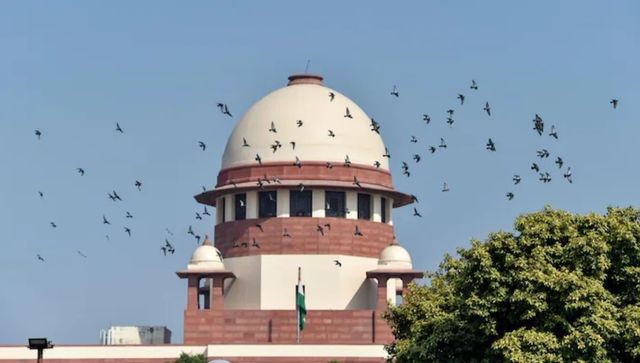
 "What is the collegium system and why Centre and Supreme Court are at loggerheads over it?")
Amid Union law minister Kiren Rijiju’s recent remarks on the Supreme Court Collegium, the central government has asked the top court to reconsider 19 out of the 21 names recommended for appointment as High Court judges.
As per PTI sources, the Centre expressed “strong reservations” about these pending recommendations made by the apex court collegium and sent back the files on 25 November.
Indian Express reported that out of the 10 names returned after SC Collegium’s reiterations, five were for Allahabad HC, two each for Calcutta HC and Kerala HC, and one for Karnataka HC.
Two recommendations, including Santosh Govind Chapalgaonkar and Milind Manohar Sathaye as Bombay High Court judges, have been accepted, the law minister informed on Twitter.
As per the provisions under the Constitution of India, the following Advocates are appointed as Additional Judges of Bombay High Court.
— Kiren Rijiju (@KirenRijiju) November 29, 2022
My best wishes to them. pic.twitter.com/swkr05Duod
On Monday (28 November), the top court had expressed reservations about Rijiju’s statements about the collegium system of appointing judges.
In an interview at the Times Now Summit, the law minister had said that the Centre cannot be accused of “sitting over recommendations” and the SC Collegium cannot expect the government to simply sign off on all its recommendations, reported Bar and Bench.
A bench of Justices Sanjay Kishan Kaul and AS Oka expressed anguish over the delay by the Centre in clearing names recommended by the collegium, saying the timeline set by the apex court for the appointments has to be adhered to, reported PTI.
Quick Reads
View AllThe Supreme Court said that the government cannot just hold back recommendations without notifying any concerns. “You cannot hold the names back without stating your reservations. I did not comment on the High Court names since four months had not elapsed, but these names are pending for 1.5 years,” the court said, as per Bar and Bench.
“Once the names have been reiterated. It is crossing rubicons by keeping names like this. What happens is you completely disturb the seniority, collegium considers all this,” the court added.
Earlier in November, Rijiju had said the collegium system is “opaque”.
What is the collegium system over which a war of words has begun between the Centre and judiciary? What was National Judicial Appointments Commission (NJAC) and why was it struck down? How are judges elected in other democracies? We explain.
What is the collegium system?
A Supreme Court Collegium is a five-member judges’ body that is headed by the Chief Justice of India (CJI) and consists of four other seniormost judges of the top court at the time.
A High Court Collegium consists of a Chief Justice and two seniormost judges of that court.
These groups are responsible for the appointment of judges of the Supreme Court and High Courts.
An HC Collegium sends the recommendation to the collegium of the apex court on judicial appointments.
The appointments made through the collegium system can be in the form of elevation of High Court judges to the top court, or direct appointments of senior lawyers as Supreme Court judges, as per Business Standard.
The collegium system is not governed by any specific law enacted by the Parliament.
Articles 124(2) and 217 of the Constitution are related to the appointment of judges in the Supreme Court and High Courts.
According to Article 124(2), “Every Judge of the Supreme Court shall be appointed by the President by warrant under his hand and seal after consultation with such of the Judges of the Supreme Court and of the High Courts in the States as the President may deem necessary for the purpose and shall hold office until he attains the age of sixty-five years. Provided that in the case of appointment of a Judge other than the Chief Justice, the Chief Justice of India shall always be consulted.”
Article 217 states: “Every Judge of a High Court shall be appointed by the President by warrant under his hand and seal after consultation with the Chief Justice of India, the Governor of the State, and, in the case of appointment of a Judge other than the Chief Justice, the Chief Justice of the High Court.”
Union government’s role
Once cleared by the CJI and SC Collegium, the names of judges for the High Courts reach the central government. As per Indian Express report, the Centre has a limited role in the appointment of judges to High Courts or the apex court.
The government can get a probe conducted by the Intelligence Bureau (IB) on whether a particular lawyer should be elevated. It can also seek clarification or express objections, however, if the collegium reiterates those recommendations, they have to be accepted, the report added.
The collegium system has been criticised by some over its lack of transparency. “It is seen as a closed-door affair with no prescribed norms regarding eligibility criteria, or even the selection procedure,” says Indian Express.
A similar sentiment was expressed by the Union law minister earlier this month. “I am not critical about the judiciary or the judges but I state a fact which is the reflection of the thinking of the common people of India. The collegium system is opaque and isn’t accountable. Judges and lawyers too believe this,” Rijiju had said, as per Indian Express.
The Centre has tried to change the system of appointing judges earlier.
What was NJAC Act and why was it repealed?
In 2014, the Narendra Modi-led central government brought the National Judicial Appointments Commission (NJAC) Bill. The Constitution (99th Amendment) Bill, 2014 and the NJAC Bill were cleared by both houses of the Parliament the same year.
They came into effect on 13 April 2015.
The NJAC Act sought to change the collegium system and extend the role of the executive in appointments to the higher judiciary.
The commission was to comprise the Chief Justice of India (Chairperson, ex-officio), two other senior SC judges, Union minister of law and justice, ex-officio and two other eminent persons, to be appointed by the CJI, Prime Minister, and Leader of Opposition in the Lok Sabha, reported India Today.
However, some lawyer associations and groups filed petitions in the Supreme Court challenging the Act.
In October 2015, a five-judge Constitution Bench of the Supreme Court struck down the NJAC Act 2014 as “unconstitutional and void”. In a 4:1 majority verdict, the bench held the collegium system would make the appointments of judges, and the CJI would have “the last word”.
In December last year, the law minister had claimed that there is growing support for the reintroduction of the NJAC Bill.
“There has been a huge support regarding NJAC, so I want to tell the House on record that many retired judges and Supreme Court Bar Association have given me in writing that the present collegium system of appointment of judges is not correct; not transparent; and not accountable,” he had told the Lok Sabha, as per Indian Express.
ALSO READ: Should Indian lawyers do away with robes? Dress code in the spotlight after law minister's remark
How do other democracies elect their judiciary?
In the United States of America, Supreme Court justices, court of appeals judges, and district court judges are appointed by the President and confirmed by the Senate.
As per the United States Courts website, “The federal judiciary, the Judicial Conference of the United States, and the Administrative Office of the US Courts play no role in the nomination and confirmation process”.
In the United Kingdom, a selection commission is convened by the Lord Chancellor for the appointments to the judiciary. The Lord Chancellor heads the ministry of justice as the Secretary of State for Justice.
If the Lord Chancellor is satisfied with the recommendation, then the name is forwarded to the Prime Minister who, in turn, sends it to the King who makes the formal appointment.
Canada’s Supreme Court has nine judges, including the Chief Justice of Canada. Each judge is appointed by the Governor in Council and must have been “either a judge of a superior court or a member of at least ten years’ standing of the bar of a province or territory”, says Supreme Court of Canada website.
In France’s Court of Cassation, the highest court in its judicial system, the judges are selected by the President of the Republic on a recommendation of the Higher Council of the Judiciary.
In Norway, the King-in-council appoints the judges. An advisory appointment board suggests the government on the issue of the selection of judges. This appointment board examines the qualifications of applicants. The Chief Justice of the Supreme Court gives recommendations to the Minister of Justice, while the King-in-council takes the final decision.
With inputs from agencies
Read all the
Latest News,
Trending News,
Cricket News,
Bollywood News,
India News and
Entertainment News here. Follow us on
Facebook,
Twitter and
Instagram.


 "Pentagon no longer views China as top threat, offers 'more limited' support to US allies")
 "'Governor Carney sorely mistaken': Trump threatens 100% tariff on Canada over its potential China trade deal")
 "Bangladesh out of 2026 T20 World Cup, announces ICC; Scotland named replacement team")
 "Monster winter storm cancels nearly 10,000 US flights, leaves millions bracing for ice and outages")
 "Pentagon no longer views China as top threat, offers 'more limited' support to US allies")
 "'Governor Carney sorely mistaken': Trump threatens 100% tariff on Canada over its potential China trade deal")
 "Bangladesh out of 2026 T20 World Cup, announces ICC; Scotland named replacement team")
 "Monster winter storm cancels nearly 10,000 US flights, leaves millions bracing for ice and outages")