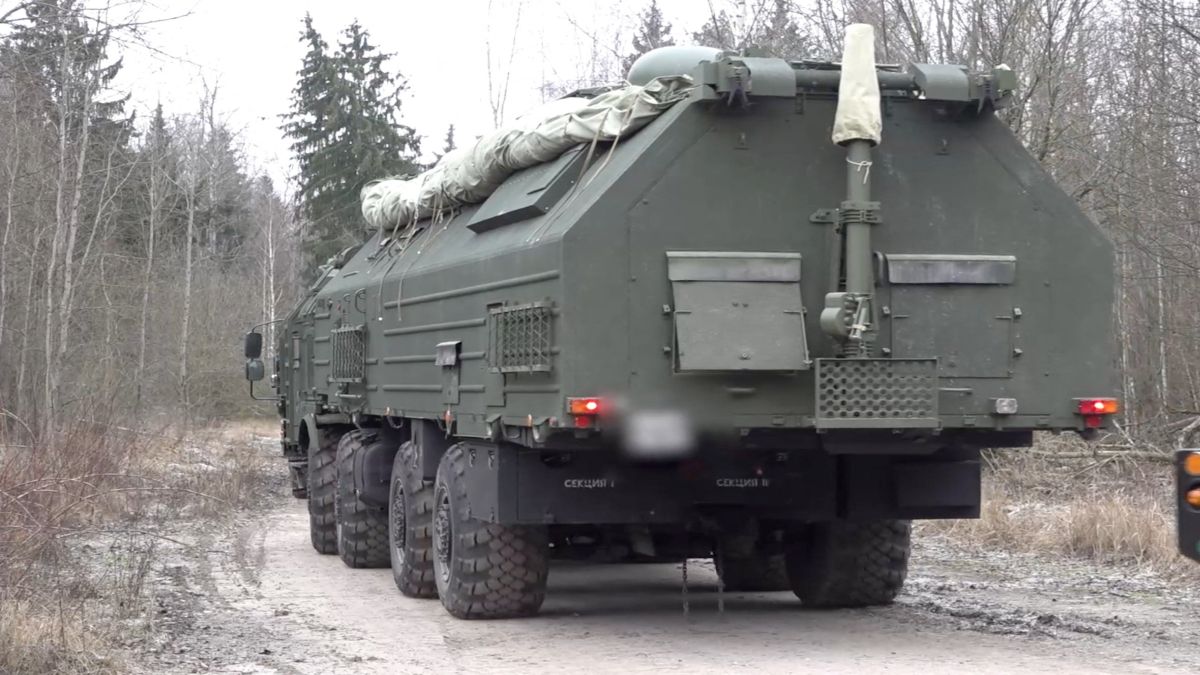
 "Oreshnik: Russia’s most advanced missile fired at Ukraine")
It’s been 1,415 days since the war broke out between Russia and Ukraine. Lives have been lost, property has been damaged while the world looks on. However, shortly before the fourth anniversary of this conflict — it began in February 2022 — it seems that it’s escalating.
On Friday (January 9), Russia declared it had used the new Oreshnik ballistic missile along with other weapons in a massive strike on Ukraine overnight, targeting energy facilities and drone manufacturing sites.
Following the strike and Russia’s declaration, Ukraine is calling for urgent international action. The country’s Foreign Minister Andrii Sybiha described the attack as “a grave threat to European security and a test for the transatlantic community”.
He accused Russian President Vladimir Putin of deploying an intermediate-range ballistic missile near EU and Nato borders, calling it “a global threat that demands global responses”.
How deadly is the Oreshnik missile? What does its deployment mean for the Russia-Ukraine war?
Russia’s deployment of the Oreshnik
In the intervening hours of January 8-9, Russia launched a strike against Ukraine, taking aim at “strategic targets”. Ukrainian officials were quoted as saying that four people were killed and at least 22 wounded in the capital overnight.
According to Lviv’s Mayor Andriy Sadoviy, Russia struck critical infrastructure with a ballistic missile, but didn’t give further details. Unverified social media reports suggested the site was a massive underground gas storage facility, however, this has not been verified.
Later, the Ukrainian Air Force stated that a saying that a ballistic missile had been used in the strike and that it was travelling at a speed of nearly 13,000 kilometres per hour.
On Friday morning, Russia then declared that it had used the Oreshnik missile in the overnight strike, as a retaliation to what Moscow said was a Ukrainian drone strike on Russian President Vladimir Putin’s residence last month. Kyiv and US President Donald Trump, however, have rejected this claim.
Notably, this isn’t the first time that Russia has deployed the Oreshnik amid the war. In November 2024, Moscow had fired the missile at what it said was a military factory in Ukraine. At the time, Ukrainian sources said that the missile carried dummy warheads rather than explosives and caused limited damage.
Lethality of the Oreshnik
Oreshnik, which means hazel nut in Russian, is an intermediate-range ballistic missile. According to Russian President Vladimir Putin it is capable of Mach 10 — 10 times the speed of sound. Moreover, there is no means of counteracting the weapon. In fact, Putin had said earlier, “Modern air defence systems and US systems in Europe cannot intercept such missiles. It is impossible.”
According to Sabrina Singh, the Deputy Pentagon Press Secretary, the Oreshnik is a variant of Russia’s RS-26 ballistic missile. The RS-26 is a 40-tonne, solid-fuelled missile.
Forbes explains that depending on the angle at which it’s fired, the RS-26 could travel slightly more than 3,400 miles. That would make it an ICBM. But it’s more comfortably an IRBM that ranges fewer than 3,400 miles.
The RS-26 itself is reportedly a smaller derivative of the RS-24 Yars ICBM. Rubezh is also understood to have a multiple independently targetable reentry vehicle (MIRV) configuration.
According to defence experts, the novel feature of the Oreshnik is that it can carry multiple warheads capable of simultaneously striking different targets — usually associated with longer-range intercontinental ballistic missiles (ICBMs).
What next after Russia’s use of Oreshnik
Many note that the timing of Russia’s use of the Oreshnik is significant. It comes as US President Donald Trump attempts to persuade both warring nations to agree a peace deal to end the war that began with Russia’s full-scale invasion of Ukraine in February 2022.
Many observe that the strike shows Russia’s lack of intent to put an end to the war. Ukrainian President Volodymyr Zelenskyy said: “Twenty residential buildings alone were damaged,” adding that “a building of the Embassy of Qatar was damaged last night by a Russian drone”.
“Qatar, a state that does so much to mediate with Russia in order to secure the release of prisoners of war and civilians held in Russian prisons,” he said.
Zelenskyy added that Russia attacked with 13 ballistic missiles, including the Oreshnik, and 22 cruise missiles, while also launching 242 drones on Ukraine. He stated that the world needed to act against Russia. “A clear reaction from the world is needed. Above all from the United States, whose signals Russia truly pays attention to,” said the Ukrainian president on social media.
“Russia must receive signals that it is its obligation to focus on diplomacy, and must feel consequences every time it again focuses on killings and the destruction of infrastructure,” he added.
The Ukrainian foreign minister also rejected Russia’s reasoning for the overnight strike. “It is absurd that Russia attempts to justify this strike with the fake ‘Putin residence attack’ that never happened,” said Sybiha in his statement, describing the Russian version of events as Putin’s “hallucinations”.
With inputs from agencies


 "Trump announces 25% tariff on Iran’s trading partners. How India may be affected")
 "India, US to resume BTA talks after 5 months as Gor pushes for trade deal with 'real friends'")
 "ICC sources rubbish Bangladesh sports adviser’s sensational claim of BCB being asked to drop Mustafizur")
 "Jerome Powell: The 'Fed chair with a spine' taking on Trump")
 "Trump announces 25% tariff on Iran’s trading partners. How India may be affected")
 "India, US to resume BTA talks after 5 months as Gor pushes for trade deal with 'real friends'")
 "ICC sources rubbish Bangladesh sports adviser’s sensational claim of BCB being asked to drop Mustafizur")
 "Jerome Powell: The 'Fed chair with a spine' taking on Trump")