 "From judiciary to Mughal history: When NCERT textbooks wrote the ‘wrong’ chapter")
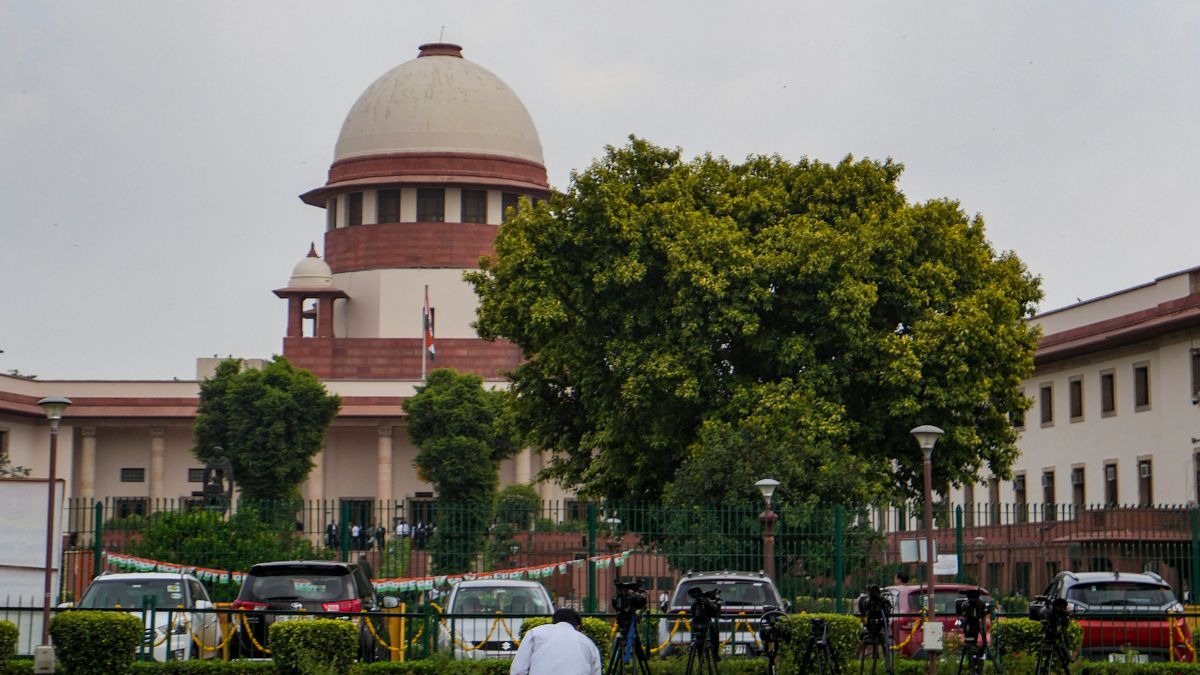
The National Council of Educational Research and Training (NCERT) is in the eye of a storm. The Supreme Court pulled up the autonomous body recently for a chapter in a school textbook that referred to corruption in the judiciary.
The apex court has put a complete ban on the publication, printing or digital dissemination of the revised social science Class 8 book, published by NCERT. Prime Minister Narendra Modi has expressed displeasure over the controversy and called for fixing accountability in the matter, government sources told CNN-News18.
This is not the first time that NCERT has been embroiled in a controversy.
Let’s take a closer look.
SC slams NCERT
NCERT’s revised social science book for Class 8 has sparked a storm. The Supreme Court on Thursday (February 26) banned the Class 8 book, which includes a section on “corruption in the judiciary”.
Taking a strong exception to the “offending textbook”, a bench comprising Chief Justice of India (CJI) Surya Kant and Justices Joymalya Bagchi and Vipul M Pancholi said that the book could damage the reputation of the judiciary.
The controversy is related to a chapter, titled The Role of the Judiciary in Our Society, in a revised version of the textbook meant for the eighth standard students.
According to reports, the text refers to “corruption at various levels of the judiciary” and mentions a “massive backlog” of cases.
The apex court described the contents of the book as “extremely contemptuous” and “reckless”.
NCERT later issued a statement expressing “regret” over what it said was an “error in judgement” that had “inadvertently crept” into the chapter.
PM Modi, who was on a two-day visit to Israel from February 25-26, called for fixing accountability in the matter.
Quick Reads
View All“Kaun dekh raha hai ye sab (Who is looking after all this),” a government source told NDTV, quoting the PM.
Union Education Minister Dharmendra Pradhan also expressed his regret over the inclusion of the contentious chapter.
“We hold the judiciary in the highest regard… There was absolutely no intention on the part of the government to disrespect the judiciary. We are taking this matter very seriously… We will fully comply with the judiciary’s decision. I am deeply saddened by what happened and express my regret,” Pradhan told reporters.
NCERT’s other controversies
Over recent years, NCERT has found itself increasingly in the middle of controversies over its decision to include or exclude certain chapters pertaining to Indian history.
Last year, NCERT stirred a row by removing chapters about the Mughal empire and the Delhi Sultanate from the contents of textbooks for Class 7.
Earlier, students had three separate books for history, geography, and social and political life. The autonomous organisation under the Ministry of Education merged these into a single volume titled Exploring Society: India and Beyond (Part I).
Class 7 history book used to include sections on the medieval Delhi Sultanate (12th-15th centuries) and the rise of the Mughal Empire in the 16th century. However, the new combined textbook excluded these topics.
Critics slammed the move, seeing it as an attempt to “change history."
Later, NCERT shifted the topics of the Delhi Sultanate, the Mughal Empire, and colonial encounters from Class 7 to Class 8.
The central body also faced backlash after new textbooks devoted more pages to Maratha history and less to Rajput rulers.
Critics perceived it as an unbalanced representation, arguing for giving equal importance to different historical rulers.
NCERT’s decision to drop Tipu Sultan from the Class 8 Social Science textbook and reduce Mughal ruler Akbar to a “mixture of tolerance and cruelty” also did not sit well with many.
The body edited out Mahatma Gandhi’s opposition to Hindu extremism and the ideological background of his assassin, Nathuram Godse, from Class 12 political science. Opposition parties and academics claimed these changes distorted historical facts.
During the Covid-19 pandemic, NCERT pruned chapters on democracy, the civil rights movement, the agricultural movement, and the environment.
The NCERT has maintained that the changes were made to ease the burden on students. “Overlapping” and “irrelevant” content was dropped as part of syllabus “rationalisation”, it claimed.
With inputs from agencies

 "Pakistan-Afghanistan War Live Updates: Russia, China call for ceasefire as Pak-Taliban conflict worsens")
 "Local ceasefire in Russia-Ukraine war to repair Moscow-controlled Zaporizhzhia nuclear plant")
 "A defaulter replaces an economist. The controversy over appointment of new Bangladesh bank chief")
 "Pakistan Stock Exchange tanks over 3,000 points as border tensions with Afghanistan escalate")
 "Pakistan-Afghanistan War Live Updates: Russia, China call for ceasefire as Pak-Taliban conflict worsens")
 "Local ceasefire in Russia-Ukraine war to repair Moscow-controlled Zaporizhzhia nuclear plant")
 "A defaulter replaces an economist. The controversy over appointment of new Bangladesh bank chief")
 "Pakistan Stock Exchange tanks over 3,000 points as border tensions with Afghanistan escalate")