

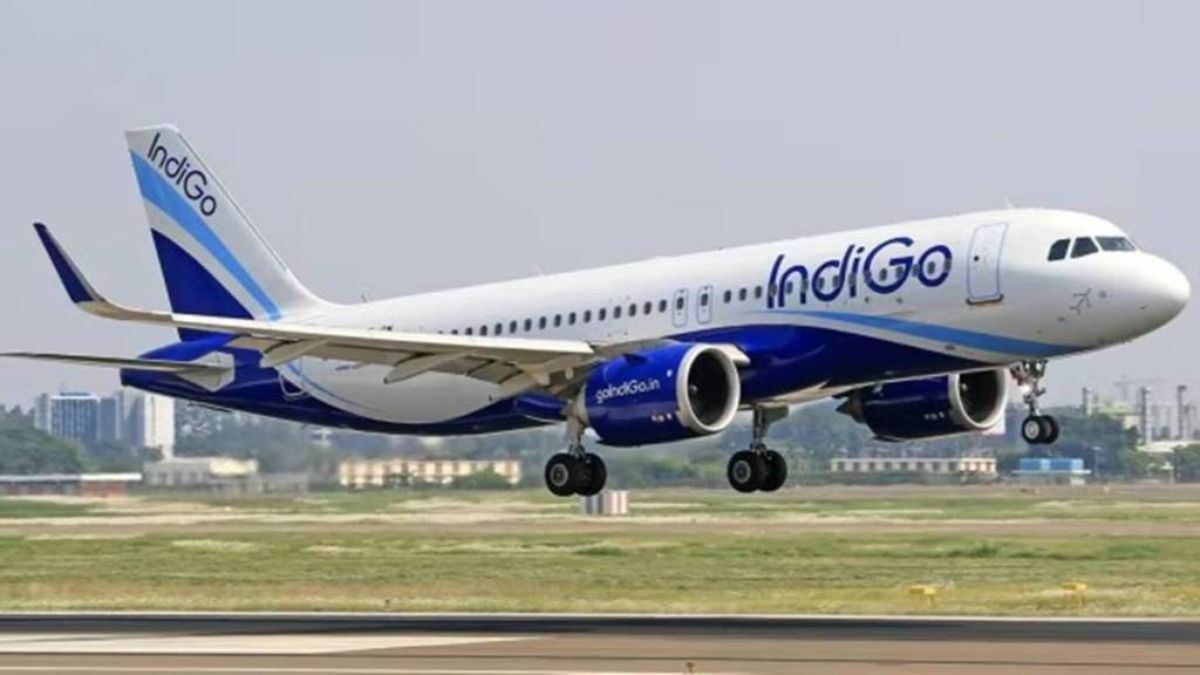
 "IndiGo cancels 200 flights, leaves thousands of passengers stranded. What's wrong?")
IndiGo is facing trouble.
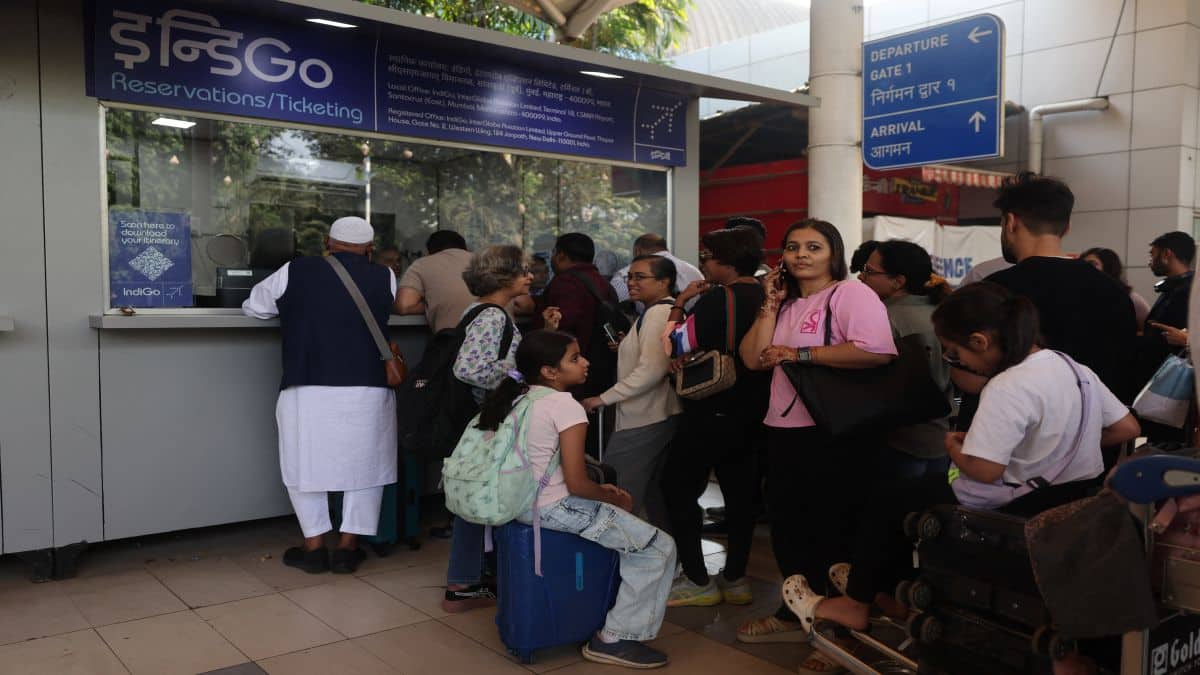
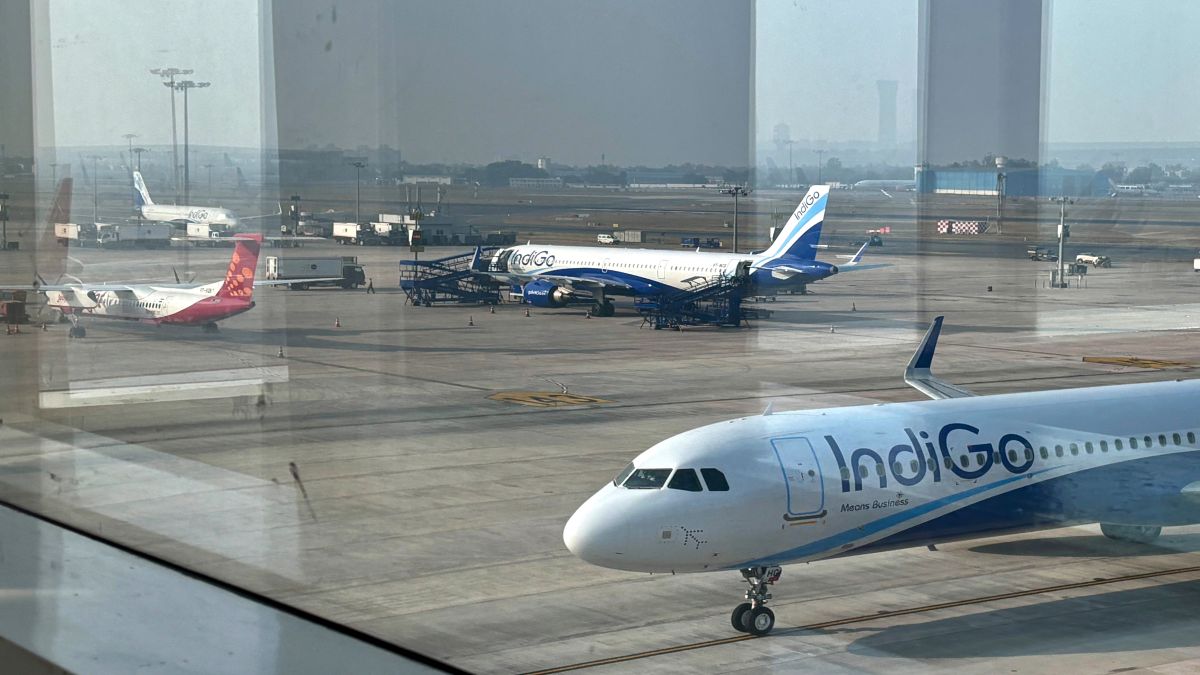
Thousands of passengers have been left stranded after the airline cancelled at least 200 flights over the past two days. Delhi, Mumbai, Hyderabad, Bengaluru and Ahmedabad are among the airports that witnessed mass cancellations.
The airline says a number of factors it could not have foreseen combined to create the situation.
India’s aviation regulator the Directorate General of Civil Aviation has announced an investigation into the matter. It has directed IndiGo has been asked to explain the causes of the ongoing operational crisis and present its mitigation plans. “A large share of cancellations arose from crew / FDTL compliance and airport/airspace / ATC-related factors, many of which lie beyond the operator’s direct control,” the DGCA said.
But what happened? And how is IndiGo responding?
Let’s take a closer look.
Flights cancelled, passengers stranded
At least 100 IndiGo flights had been cancelled at half a dozen airports today (December 3). This came after a similar number of flights had been cancelled on Tuesday (December 2).
Delhi’s Indira Gandhi International Airport witnessed nearly three dozen flights being cancelled, while Mumbai’s Chhatrapati Shivaji Maharaj International Airport saw over 50 flights cancelled. Hyderabad witnessed nearly two dozen IndiGo flights being cancelled, while Ahmedabad saw at least 14 flights canned.
Data from the Ministry of Civil Aviation showed that 65 per cent of IndiGo flights were delayed on Tuesday and that just 35 per cent of the airline’s flights were on time. T his was bettered by the state-owned Alliance Air at 38 per cent.
Sources said some of IndiGo’s flights were delayed between 1 and 5 hours, including on critical Delhi–Mumbai, Delhi–Bengaluru and Mumbai–Bengaluru routes.
On Monday (December 1), 49.5 per cent of IndiGo’s flights were on time. IndiGo, which operates around 2,200 daily flights, comprises 65 per cent of India’s air traffic.
Data from the DGCA showed that IndiGo cancelled 1,232 flights in November, with 755 linked to crew shortages and new Flight Duty Time Limitation (FDTL) rules. Other cancellations were caused by airport and airspace restrictions, ATC failures, and various operational issues. The airline’s punctuality also dropped sharply to 67.7 per cent in November from 84.1 per cent in October.
While the regulator noted that several factors were outside IndiGo’s direct control, it has advised the carrier to improve crew planning, coordination with ATC and airports, and streamline turnaround and disruption-management processes. The revised FDTL norms, implemented in July and tightened further from November 1 by capping night landings have increased staffing needs and added to operational challenges.
Sources said that because IndiGo accounts for so much of the traffic, issues with its operations resulted in other airlines also facing a ‘cascading effect’.
Meanwhile, many stranded passengers took to social media to vent. “I have been stranded since 3 am and have missed an important meeting,” one wrote.
“I am at Hyderabad airport waiting for my Udaipur flight. It was first delayed to 1.55 pm, then 2.55 pm, and now 4.35 pm. Is this a joke? I was informed only three minutes before entering the airport,” another added.
Sources have said that IndiGo has been facing issues since the implementation of the Flight Duty Time Limitation (FDTL) norms in November. The FDTL norms place a maximum limit on the number of hours a crew member including pilots and cabin staff can remain on duty. This reduces flying time to eight hours per day, 35 hours per week, 125 hours per month and 1,000 hours per year. The rules were implemented following a directive from the Delhi High Court.
The situation was exacerbated after check-in systems at several airports failed on Wednesday. Airlines were switched to manual procedures, leading to the system being burdened even further and more delays and cancellations.
“Some IndiGo flights operating from Mumbai Airport may experience delays or cancellations due to airline-related operational issues. Passengers booked with IndiGo are requested to check the latest flight status directly with the airline before heading to the airport,” the Mumbai airport said in a statement.
What IndiGo is saying, how it is responding
The airline has said multiple factors combined to impact operations in a manner it could not have foreseen. This included minor technical glitches, winter schedule adjustments, bad weather, airport congestion and updated crew-rostering rules.
“We acknowledge that IndiGo’s operations have been significantly disrupted across the network for the past two days, and we sincerely apologise to our customers for the inconvenience caused. A multitude of unforeseen operational challenges, including minor technology glitches, schedule changes linked to the winter season, adverse weather conditions, increased congestion in the aviation system and the implementation of updated crew-rostering rules (Flight Duty Time Limitations), had a negative compounding impact on our operations in a way that was not feasible to be anticipated,” the statement read.
IndiGo said it has adjusted its operations that will remain in place for the next 48 hours.
“This will allow us to normalise our operations and progressively recover our punctuality across the network,” IndiGo added.
The airline also offered passengers alternative travel arrangements or refunds where applicable.
“Furthermore, the affected customers are being offered alternative travel arrangements to reach their destinations or refunds, as applicable. We request customers to check the latest flight status at https://www.goindigo.in/check-flight-status.html before heading to the airport. We deeply regret the inconvenience caused and remain fully committed to minimising disruption and supporting our customers through this period,” it added.
With inputs from agencies

 "Putin India Visit LIVE Updates: India and Russia sign Vision 2030 to boost economic cooperation, explore FTA with EEU, says PM Modi")
 "India, Russia agree to boost trade, investments after Modi-Putin talks")
 "DGCA puts new pilot rest rule behind IndiGo flight cancellations on hold")
 "'India is not neutral...': How Modi's diplomacy has triumphed amid the Russia-Ukraine war")
 "Putin India Visit LIVE Updates: India and Russia sign Vision 2030 to boost economic cooperation, explore FTA with EEU, says PM Modi")
 "India, Russia agree to boost trade, investments after Modi-Putin talks")
 "DGCA puts new pilot rest rule behind IndiGo flight cancellations on hold")
 "'India is not neutral...': How Modi's diplomacy has triumphed amid the Russia-Ukraine war")



