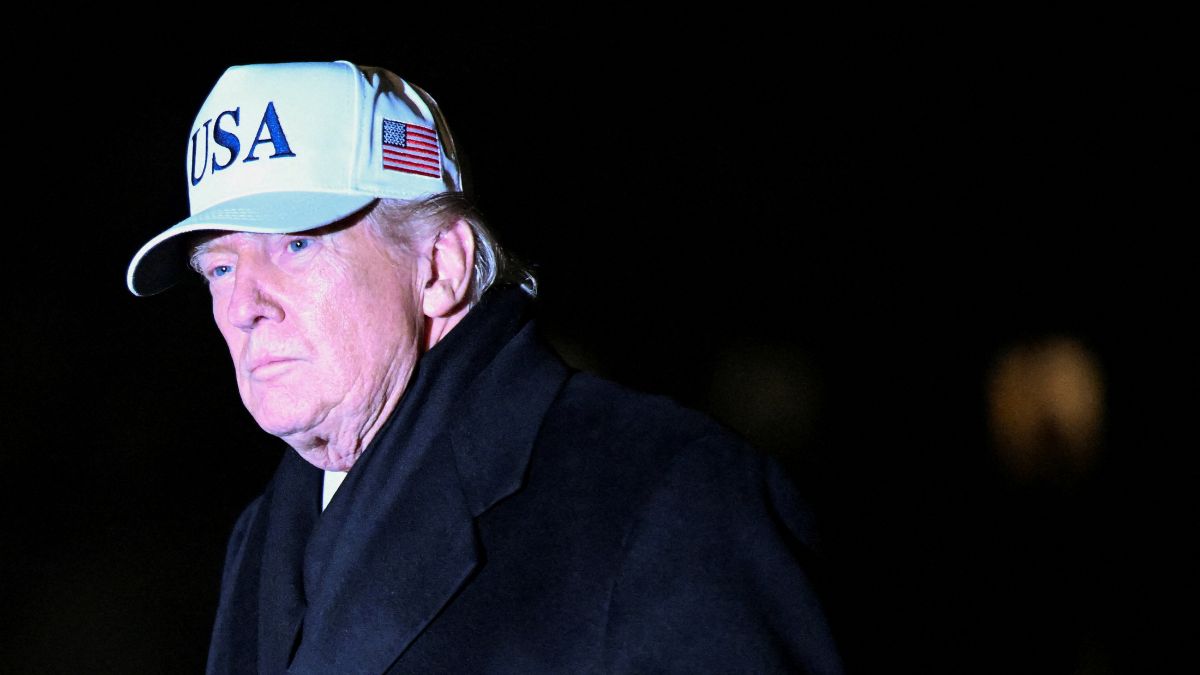
 "US President Donald Trump walks upon arrival on the South Lawn of the White House in Washington, US, January 27, 2026. File Image/Reuters")
A visible global realignment is being witnessed as countries reassess their economic and diplomatic dependencies in response to US President Donald Trump’s aggressive trade policies, territorial rhetoric and unilateral use of force.
From Europe and Britain to Canada, Brazil and parts of Asia, governments are increasingly recalibrating foreign policy priorities, often by strengthening engagement with India and China.
This shift has manifested through major trade agreements, diplomatic outreach to Beijing, and coordinated efforts by middle powers to insulate themselves from economic shocks caused by tariffs.
While no country has publicly announced a break from the United States, recent developments suggest that Trump’s actions are accelerating diversification away from Washington — reshaping alliances across continents.
India-EU trade agreement
The announcement of a landmark trade agreement between India and the European Union on Tuesday was the culmination of negotiations stretching back nearly two decades. Yet the timing of the deal highlighted more than just bilateral ambition.
It reflected a broader strategic response to growing global instability, particularly the disruption caused by US trade measures.
Although neither New Delhi nor Brussels explicitly referred to the United States during the announcement, both sides acknowledged the uncertainty shaping the international environment.
Prime Minister Narendra Modi highlighted this context while outlining the significance of closer India-EU cooperation. “Today, the global order is undergoing profound turbulence. In this context, the partnership between India and the European Union will strengthen stability within the international system,” Modi said.
European Commission President Ursula von der Leyen described the agreement as a turning point in bilateral relations. “Europe and India are making history today,” she said. “This is only the beginning.”
The agreement aims to significantly liberalise trade flows by eliminating or reducing tariffs on 96.6 per cent of traded goods by value.
According to the European Union, the deal is expected to double EU exports to India by 2032 and save European companies approximately 4 billion euros ($4.75 billion) in duties.
On India’s side, the EU will progressively remove tariffs on 99.5 per cent of goods imported from India over a seven-year period. Tariffs on Indian exports including marine products, leather and textile goods, chemicals, rubber, base metals, and gems and jewellery will be reduced to zero.
Agriculture-linked items such as soya, beef, sugar, rice and dairy products remain excluded from the agreement.
“Yesterday, a big agreement was signed between the European Union and India,” Modi said.
“People around the world are calling this the mother of all deals. This agreement will bring major opportunities for the 1.4 billion people of India and the millions of people in Europe.”
Trade figures underline why both sides see strategic value in the pact. India-EU trade stood at $136.5 billion in the fiscal year ending March 2025, exceeding India’s trade with the United States ($132 billion) and China ($128 billion).
Officials expect the agreement to be formally signed after a legal vetting process lasting five to six months, with implementation anticipated within a year.
However, the process may face hurdles in Europe. EU lawmakers have already voted to challenge the EU-Mercosur agreement in the bloc’s top court, raising the possibility that similar scrutiny could slow progress on the India deal.
How Trump’s tariffs are driving strategic hedging
The renewed urgency behind the India-EU trade agreement can be traced to recent US policy moves that have unsettled allies. Washington imposed a 50 per cent tariff on some Indian goods, while European countries faced threats of new trade barriers and political pressure linked to Trump’s ambitions in Greenland and the Arctic.
Trump’s statements about taking control of Greenland triggered diplomatic backlash across Europe, compounding concerns about the direction of US foreign policy.
While the US president later withdrew threats of using military force in Greenland and stepped back from imposing tariffs on countries opposing his Arctic plans, the episode reinforced perceptions that Washington had become unpredictable.
Recent US military actions have also strained confidence. Strikes on Venezuela and the abduction of former Venezuelan leader Nicolas Maduro and his wife were widely viewed as assaults on international norms.
At the World Economic Forum’s annual meeting in Davos, Switzerland, political and business leaders repeatedly warned of a fractured global order.
Although criticism of the United States remained indirect, several speakers delivered pointed remarks about unilateralism and instability, while largely avoiding explicit condemnation of China.
Experts interpreted this restraint as a signal that US allies were recalibrating their engagement with Beijing as Trump’s political unpredictability continued to unsettle long-standing partnerships.
China’s outreach to Europe
As Washington’s credibility falters, China has moved to expand diplomatic engagement across Europe and beyond, presenting itself as a defender of the existing international system.
Beijing has sought to emphasise continuity, multilateralism and economic openness — messages that resonate with governments seeking stability.
Ireland’s Prime Minister Micheál Martin met Chinese President Xi Jinping earlier this month at the Great Hall of the People in Beijing, marking another high-profile European engagement.
Around the same time, China’s state-run Global Times published an editorial aimed squarely at European audiences.
Headlined “Europe should seriously consider building a China-EU community with a shared future,” the article warned that the world risked “returning to the law of the jungle” and argued that China and Europe should work together to build “a shared future for mankind.”
Beijing has also openly criticised US actions abroad. Chinese officials condemned the US operation in Venezuela, describing it as a violation of international law and global norms.
In a phone conversation with Brazilian President Luiz Inacio Lula da Silva, Xi called for coordinated action to protect international institutions.
Xi urged Brazil to jointly “uphold the central role of the United Nations and international justice” amid rising instability, reinforcing China’s message that it remains committed to multilateral governance structures.
Canada pivots toward China and India
Canada has emerged as a prominent example of a middle power seeking to reduce exposure to US economic coercion. Prime Minister Mark Carney, elected on promises to stand up to what he described as US bullying, travelled to Beijing last week to strengthen ties with China.
“Canada is forging a new strategic partnership with China,” Carney said, adding that the global order was facing “rupture … not a transition.”
Carney’s visit followed a standing ovation speech at Davos, where he urged middle powers to cooperate in order to avoid becoming victims of geopolitical pressure. Canada subsequently struck a deal with China that will slash tariffs on Chinese electric vehicles and Canadian canola oil.
The move provoked a sharp response from Washington. Trump threatened to impose 100 per cent tariffs — effectively an embargo — on all Canadian goods entering the United States if Ottawa followed through on its China trade commitments.
Despite the backlash, Canada has continued broadening its international partnerships.
Carney is planning a visit to India to sign agreements related to uranium, energy and minerals, reinforcing Ottawa’s strategy of diversifying economic ties beyond the United States.
Britain’s engagement with Beijing
UK Prime Minister Keir Starmer travelled to China on Tuesday, marking the first visit by a British leader in eight years.
Starmer’s three-day visit includes meetings with President Xi Jinping and Premier Li Qiang in Beijing, followed by travel to Shanghai and a brief stop in Japan. He is accompanied by two ministers and dozens of business executives, including HSBC chairman Brendan Nelson and AstraZeneca CEO Pascal Soriot.
The visit comes against a backdrop of tension between London and Washington, particularly over Trump’s threats regarding Greenland and his volatile trade posture.
Kerry Brown, professor of Chinese studies at King’s College London, said US behaviour would loom large during discussions.
“At the forefront of the visit ‘will be what both sides make of the current behaviour and posture of the US and Trump,’” Brown told Reuters.
“One of the great anomalies of the current situation is that London is probably closer to Beijing than Washington” on global issues such as artificial intelligence, public health and environmental policy.
Since his election in 2024, Starmer has prioritised rebuilding ties with China after years of deterioration caused by disputes over Hong Kong, allegations of espionage and cyberattacks. Chinese officials have framed the visit as an opportunity to reset relations.
China’s foreign ministry spokesperson Guo Jiakun said Beijing viewed the trip as a chance to open a “new chapter in the healthy and stable development of China-UK relations,” while the commerce ministry confirmed that trade and investment agreements were expected to be signed.
Britain’s outreach has not been without controversy. Starmer’s government recently approved plans for a Chinese “mega embassy” in central London, despite objections from politicians who warned the facility could facilitate espionage.
Starmer has acknowledged security concerns while arguing that economic engagement remains necessary. He previously stated that China poses national security threats to Britain but that stronger business ties are in the national interest.
Trade data illustrates the economic rationale behind the engagement. In the 12 months to mid-2025, China was Britain’s fourth-largest trading partner, with total trade valued at approximately £100 billion ($137 billion).
Still, critics remain sceptical. Sam Goodman, policy director at the China Strategic Risks Institute, questioned whether closer engagement would deliver tangible gains.
“We have had a lot of concentrated engagement with this government on China, and the real question from this trip is what was it for?” Goodman told Reuters. “Are there tangible outcomes that really point to meaningful growth in the British economy?”
He noted that China accounts for just 0.2 per cent of foreign direct investment in Britain, compared with roughly one-third from the United States, and that Britain’s market share in goods and services trade with China declined over the past year.
China deepens engagement with Europe’s smaller economies
China’s diplomatic push has extended beyond major European powers. Finnish Prime Minister Petteri Orpo visited Beijing on Tuesday as part of a four-day trip aimed at strengthening bilateral cooperation.
During talks with Orpo, Xi expressed willingness to enhance trust and deepen economic ties, inviting Finnish companies to “swim freely” in China’s “vast” market, according to state news agency Xinhua.
Xi also reiterated China’s commitment to multilateralism, telling Orpo that Beijing was ready to work with Finland “to firmly uphold the international system with the United Nations” and promote “an equitable and orderly multipolar world.”
The two leaders discussed collaboration in areas including energy transition, agriculture and forestry. On Monday, Orpo met Chinese Commerce Minister Wang Wentao, who urged Finland to encourage the European Union to exercise restraint in deploying restrictive trade tools.
Wang also called on Helsinki to oppose protectionism and help “create a fair, open and predictable policy environment” for Chinese companies, according to China’s state-owned Global Times.
India emerges as parallel beneficiary
Alongside China, India has become a key destination for countries seeking to diversify partnerships amid geopolitical volatility. Brazil is set to send a high-level delegation to India from February 19 to 21, led by President Luiz Inacio Lula da Silva.
The scale of the visit underscores its importance. Brazil has rented a 500-seat auditorium for two days to host meetings between Lula and Indian business leaders, signalling strong commercial interest.
India has also concluded multiple trade agreements in recent years, including pacts with Britain, New Zealand and Oman.
The EU deal follows the bloc’s agreements with Mercosur, Indonesia, Mexico and Switzerland, highlighting a broader trend toward diversified trade networks.
Together, these developments point to a growing consensus among middle powers that reliance on a single economic or security partner carries increasing risk in a world shaped by tariff wars, territorial disputes and unilateral interventions.
Also Watch:
With inputs from agencies