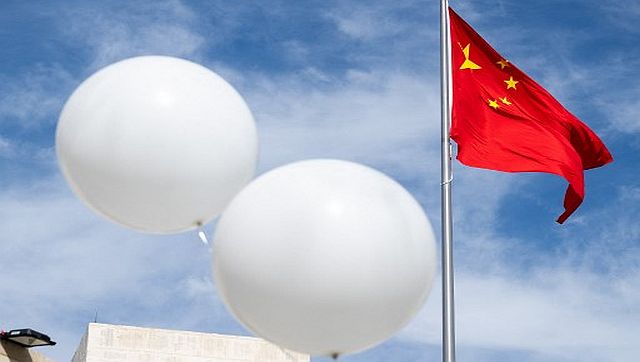
 "How spy balloon incident throws spotlight on China's military-civil bond")
Washington: A People’s Liberation Army veteran turned drone manufacturer. A Shanghai real estate company that wagered there was more profit in high-altitude airships. An eminent Chinese aviation scientist who started more than a dozen companies to commercialise his expertise.
Each sought to help their business by supporting China’s military modernisation. Each now stands accused by the United States of helping to build China’s spy balloons.
The international fracas over those high-altitude balloons has thrown a light on China’s program of “military-civil fusion.” Xi Jinping, China’s leader, has pushed the recruiting of commercial businesses to help build what he has described as a world-class military guarding China’s rise as a superpower.
The aim is to create a symbiotic relationship that provides the military with wider, faster access to commercial innovations while also giving businesses contracts and military skills.
Several Chinese makers of airships and their components that were blacklisted by the US government last Friday over China’s balloon program have ties to this effort, corporate records and other Chinese documents show.
One of the companies, Eagles Men Aviation Science and Technology Group, proclaimed itself “one of the national model businesses of military-civil fusion.” Another firm, Guangzhou Tian-Hai-Xiang Aviation Technology, primarily a drone manufacturer, was founded by a former soldier who had fought in China’s border war with Vietnam in 1979.
“If you come from the military, you should give back to it,” company founder and chair Li Yuzhuang has said.
China is far from alone in seeking to harness the dynamism and innovation of commercial businesses to help build a more technologically advanced military.
Quick Reads
View AllChinese officials and experts have cited lessons from the Pentagon’s partnerships with US companies developing cutting-edge technologies, as well as the role of companies such as SpaceX in the US aerospace industry.
But the Communist Party’s sweeping power means that its military priorities demand even greater attention, and loyalty, from many Chinese business leaders. Xi has long sought to develop technological self-sufficiency, and that effort is likely to accelerate in the wake of Washington’s expanding restrictions on Chinese access to microchips.
“Given its concern about foreign sanctions and export controls, what we are now seeing is more and more efforts by the Chinese side to try to build up a much more significant civil military fusion system,” said Tai Ming Cheung, a professor at the University of California, San Diego, and the author of Innovate to Dominate: The Rise of the Chinese Techno-Security State. He called these efforts “an important part of this drive for self-reliance in the strategic and defence sectors.”
By the time that Xi came to power in 2012, Chinese leaders had been trying for decades to get civilian industries to work closely with the military. Rivalry between Beijing and Western governments was growing, and homegrown innovation was increasingly important to China’s security.
But many of China’s innovators were in the private sector, and those that sought to do business with the military often encountered distrust and red tape.
Xi rolled out a vigorous program to press businesses to share their talent and technology. Local governments established funds to support the development of drones, robots and other technologies with military applications.
In 2017, Xi underscored the urgency of the initiative by putting himself in charge of a newly founded national committee to oversee it. It was, he told the committee, “a major step to win a national strategic advantage.”
More than three dozen investment funds dedicated to this effort have been founded in China since 2015, with an anticipated ability to disperse a total of more than $68.5 billion to firms, according to a 2021 study by Elsa B Kania and Lorand Laskai at the Centre for a New American Security.
In China today, there is a complex network of linkages between military applications, commercialisation and academic research into emerging technologies, connections that are “hardly coincidental,” Kania said.
Those linkages have in turn raised concerns in Washington that US goods or technologies sold through civilian supply chains could ultimately find military uses.
Those fears prompted the Trump administration to cut Huawei off from buying US technologies and prohibit American citizens from investing in the securities of certain companies linked with the Chinese military.
Officials in the Biden administration have also concluded that, at least in certain narrow sectors of the economy, not even commercial ties with China are safe.
On Thursday, the Justice and Commerce departments announced that they had set up a new “strike force” in 12 US cities to help prevent advanced technology from being shared with adversaries like China, Russia, Iran and North Korea.
The Biden administration has fortified the country’s system of export controls to stop companies from sharing advanced technologies like quantum computing with China. Likewise, the administration’s move to place five Chinese companies and a research institute that had supported military airship and balloon programs on a blacklist is aimed at preventing them from purchasing US technology.
The companies have not responded to phone calls seeking comment.
Experts caution that enduring state monopolies in the Chinese defence sector, and a general attitude of distrust toward private business, have meant that China’s efforts to bridge the divide between its military and private business is still very much a work in progress.
But some firms have clearly benefited from China’s drive to entice private companies to work with the military.
For example, Eagles Men Aviation, which was founded by leading Chinese aeronautics scientist Wu Zhe, sold 16 per cent of its shares to three government-backed investment funds focused on military-civil opportunities, according to corporate records.
Eagles Men Aviation had “continuously supplied stealth concealment materials to the Chinese military for 14 years, and its stratospheric airship flight data is at world-leading level,” an executive told officials visiting its Beijing headquarters in 2019.
Wu helped to found another firm facing sanctions, Beijing Nanjiang Aerospace Technology, alongside Shanghai Nanjiang Group, a real estate firm that had also ventured into graphene, intelligent robots and airborne vehicles. Beijing Nanjiang also signed a deal with Xilinhot, a city in northern China, to build a “near-space industrial park” where test flights could be held.
According to tracking by David Asher, a senior fellow at the Hudson Institute, one of Nanjiang’s subsidiaries appears to have sold drones directly to the People’s Liberation Army.
Traditionally, the Chinese military would have acquired such technology from state-controlled entities, he said. But these links may suggest the PLA is sourcing what were originally commercially developed balloons and drones and “applying them to military missions, including intelligence, surveillance and reconnaissance.”
“Nanjiang Group operates in a manner that is emblematic of a new type of civil-military fusion,” Asher said.
Wu also helped to set up a venture capital company that invested in a collection of satellite, hydrogen power and aerospace companies with funding from Beihang University, a top military university also under sanctions from the United States, according to documents accessed through Sayari, a commercial risk intelligence platform.
One of these companies, Dongguan Zhonghang Huaxun Satellite Technology, advertised on its website airships installed with monitoring systems, including for military needs, The Wire China previously reported. The website has been taken down.
Even in China, though, these military ties have not been a sure way to riches.
By 2019, for example, Shanghai Nanjiang Group’s near-space project was foundering financially, and the company announced that it had terminated the program.
The “near-space industrial park” in northern China became caught up in legal disputes over shoddy construction and high costs. A company that Wu partnered with called Dongfeng Sci-Tech Group delisted from the Shenzhen stock exchange in 2020 after some of its forays into high technology were panned.
Although Washington has clearly seized on the risks posed by Chinese corporate-military partnerships, some analysts say the reaction may be going too far. Some have argued that previous characterisations of China as a “whole-of-society threat” contribute to ethnic profiling of Chinese citizens and some Chinese Americans and deter valuable academic partnerships.
The balloon episode in particular has provoked “a certain sense of hysteria” in the past few weeks, said Christopher Johnson, president of China Strategies Group and a former senior China analyst at the CIA.
When the US government cuts off trade with Chinese firms and sectors, there are also costs to US competitiveness, in losing access to revenue and innovation, Johnson said. “You’ve just got to be thoughtful about it.”
Ana Swanson and Chris Buckley, c.2023 The New York Times Company
Read all the Latest News, Trending News, Cricket News, Bollywood News,
India News and Entertainment News here. Follow us on
Facebook,
Twitter and
Instagram.


 "'Indian food, our pride': $200k settlement in Palak Paneer case a moral victory against racism in the west")
 "India’s air dominance in Operation Sindoor forced Pakistan to seek ceasefire, European report says")
 "How Pakistan’s support may have led Bangladesh towards a very costly mistake")
 "India vs New Zealand Live Score 3rd T20: Samson bowled on very first ball by Henry")
 "'Indian food, our pride': $200k settlement in Palak Paneer case a moral victory against racism in the west")
 "India’s air dominance in Operation Sindoor forced Pakistan to seek ceasefire, European report says")
 "How Pakistan’s support may have led Bangladesh towards a very costly mistake")
 "India vs New Zealand Live Score 3rd T20: Samson bowled on very first ball by Henry")