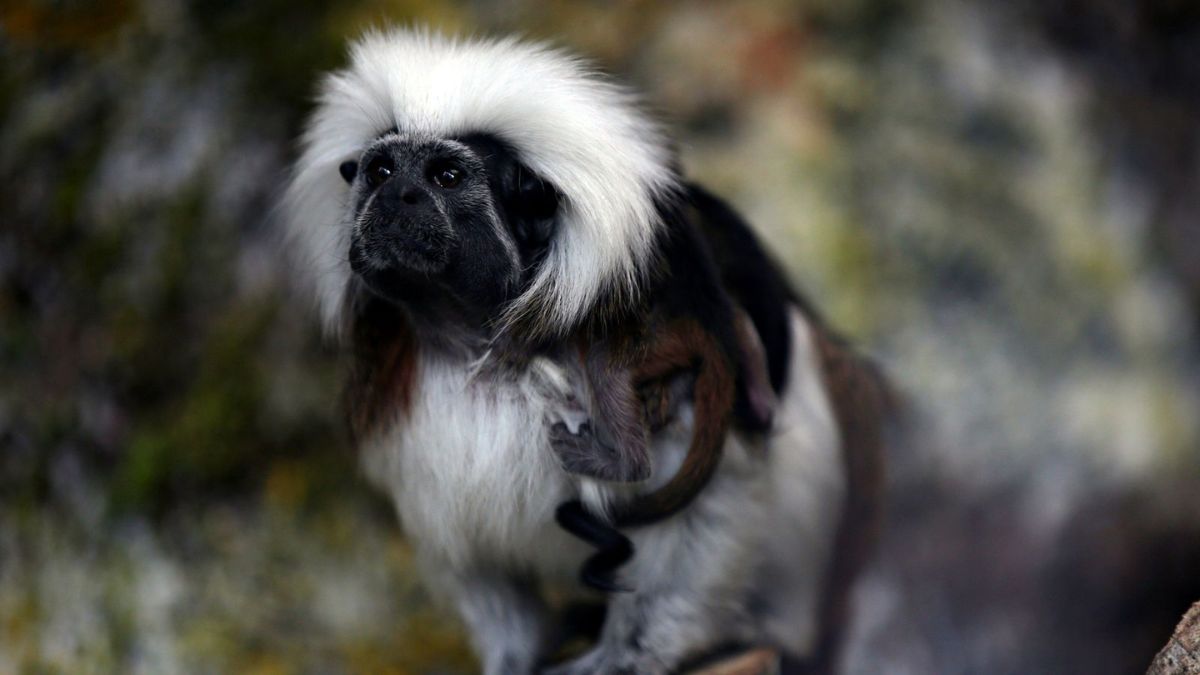
 "A cotton-seed monkey died following the bacterial infection in a Hong Kong zoo. Reuters")
A deadly bacterial outbreak has hit Hong Kong’s Zoological and Botanical Gardens, claiming the lives of 12 monkeys, including critically endangered species.
The zoo officials are now investigating if the 12th monkey died from the same infection—Melioidosis—that has already killed 11 other primates in the last 10 days.
Amid rising concerns over a possible zoonotic disease, authorities have launched an investigation at the zoo, the oldest park in the city, and are stepping up measures to contain the infection.
But what caused this situation, and what do we know about Melioidosis? Let’s take a closer look.
12 primates deaths in 10 days
The Hong Kong zoo has so far reported 12 monkey deaths.
Earlier this week, the zoo reported the death of De Brazza’s monkey, which had been kept isolated since October 13, when the first eight deaths were reported.
Initial findings revealed that this 12th monkey exhibited “similar lesions… in the tissues of its organs,” according to officials who spoke to the BBC.
Prior to this, the zoo had already lost three critically endangered cotton-top tamarins, four white-faced saki monkeys, another De Brazza’s monkey, and a common squirrel monkey due to a bacterial infection.
Autopsies conducted on the deceased primates discovered a significant presence of sepsis-inducing bacteria, which is believed to have originated from contaminated soil located near their enclosures, said authorities.
Kevin Yeung Yun-hung, the Secretary for Culture, Sports and Tourism told The South China Morning Post that the infection may have resulted from digging activities associated with pipe repairs in a nearby flower bed earlier in October. This work could have exposed contaminated soil to the surrounding environment.
He added, “The contaminated soil might have been brought into the cages by staff wearing shoes with the soil."
What is Melioidosis?
Melioidosis is an infectious disease caused by the bacterium Burkholderia pseudomallei, which thrives in soil and muddy water, particularly in moist clay-rich areas.
The US Centres for Disease Control explains that it is primarily transmitted through contact with contaminated soil or surface water, often via skin abrasions, wounds, inhalation of contaminated dust or water droplets, or drinking contaminated water.
Besides monkeys, other animals susceptible to melioidosis include sheep, goats, pigs, boars, horses, cats, dogs, and cows. The disease is most commonly found in tropical regions, especially in Southern Asia and northern Australia.
Dirk Pfeiffer, a veterinary epidemiologist from the City University of Hong Kong, who spoke to the BBC, said that the risk of this disease spreading to spreading to humans remains “fairly low."
“In general, healthy humans are resistant to the disease, but in people with underlying health conditions such as diabetes, cancer, or kidney disease, the infection can be fatal in 10 per cent to 40 per cent of cases,” Professor Vanessa Barrs, dean of the Jockey Club College of Veterinary Medicine and Life Sciences at City University, told the South China Morning Post.
The infection can be treated with antibiotics but currently, there is no vaccine targeting the bacteria.
How common is the disease?
Melioidosis is an endemic disease in Hong Kong, with cases reported annually in the city, according to the Department of Health’s Centre for Health Protection.
Health authorities have noted 19 cases so far this year, following 17 cases documented the previous year.
The latest human infection was confirmed on Friday, involving a 59-year-old woman with underlying health conditions residing in Sham Shui Po, an area that faced a widespread outbreak of melioidosis in 2022.
In animals, the earliest recorded instance of melioidosis dates back to the mid-1970s, when 24 dolphins at Ocean Park, a popular theme park, suddenly died from the disease.
What are the symptoms?
According to the Cleveland Clinic, symptoms can vary depending on the site of infection and may include fever, headache, cough, chest pain, ulceration, and localised pain or swelling.
In many cases, melioidosis manifests as a lung infection, with common symptoms such as a persistent cough, chest pain, high fever, headache, and loss of appetite.
Melioidosis can present itself in various forms, including localised infections, pneumonia, and sepsis—an extreme immune response where the body starts attacking its own healthy tissues.
In usual conditions, the incubation period typically ranges from two to four weeks in humans, while for primates, it is usually about a week.
How is Hong Kong zoo preventing infections?
Zoo authorities are taking measures to contain the infection by sealing off and disinfecting affected areas.
“We have cordoned off the whole mammals section for the time being, so there will be no sort of contact between normal citizens with the animals,” Kevin Yeung, the city’s culture and tourism minister, told local broadcaster RTHK.
Authorities also confirmed that the health of the remaining mammals is “normal.” The zoo, one of the oldest in the city, is home to around 158 birds, 70 mammals, and 21 reptiles, spread across 40 enclosures.
Abigail Forsyth, Peta’s campaign manager, told the BBC, “The only way to ensure the emotional and physical health of animals and prevent further deaths and the spread of zoonotic diseases is to stop imprisoning them for ’entertainment’ and instead focus on protecting their natural habitats.”
With input from agencies