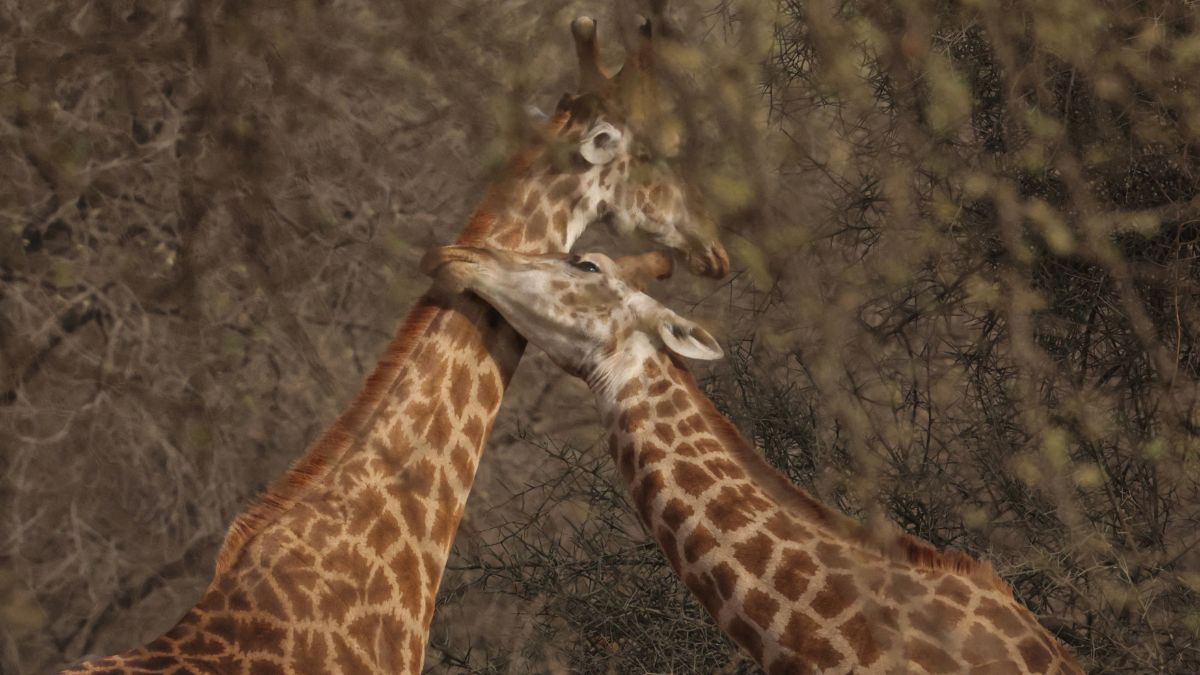
 "Giraffes are seen at Bandia Conservation Park, in Mbour, Senegal, March 2, 2024. Reuters")
This beloved zoo favourite is on the brink of joining the endangered species list.
Giraffe numbers in Africa’s wild savannas have plunged to alarming levels, leading to action from the US government to protect the species.
The US Fish and Wildlife Service has proposed listing three northern giraffe subspecies - West African, Kordofan, and Nubian - as endangered under the Endangered Species Act. Further, the reticulated giraffe and the Masai giraffe could be designated as threatened.
Though giraffes are native to Africa, this proposal would limit the import of giraffe parts into the United States while boosting conservation funding to support their survival.
What is the reason for giraffes to be considered endangered?
Giraffe numbers in the wild have drastically fallen, with only about 117,000 left worldwide, according to the Giraffe Conservation Foundation. This is around a 30 per cent drop since the 1980s. Northern giraffes, in particular, have suffered a steep decline of 77 per cent since 1985, shrinking to 5,919 individuals from 25,653, according to the US Fish and Wildlife Service. In West Africa, giraffes have disappeared entirely from several countries, The New York Times reported.
Shockingly, international data from 2022 revealed that thousands of giraffe parts - including trophies, skins, feet, bones, carvings, and leather - were imported into the United States, according to the report.
ALSO READ | White giraffe in Kenya fitted with GPS tracking device in an effort to keep poachers at bay
While trade is not the primary cause of the population drop, officials said it may further strain the species. Under the new proposal, such imports would be banned unless authorised by special permits.
Notably, the US Fish and Wildlife Service has identified poaching, habitat loss, and climate change as the leading threats to giraffes, according to NBC News. Human population growth, urbanisation, and the resulting habitat fragmentation and degradation are several other major threats. Conservationists argue that tackling these root causes is critical for progress.
Giraffes, which rely on leaves, stems, flowers, and fruits for sustenance, are particularly vulnerable to habitat destruction and human-wildlife conflicts during periods of drought.
Interestingly, scientists differ on how many species and subspecies of giraffes exist. In its proposal, the US Fish and Wildlife Service recognised three subspecies of Northern giraffes, recommending them for endangered status. Two others - reticulated and Masai giraffes - would be classified as threatened - a less severe category. Two more subspecies, the Angolan and South African giraffe, were deemed not currently at risk.
However, due to their similarity to the endangered subspecies, they would also be treated similarly.
How will the action help giraffe population?
The initiative aims to control giraffe poaching by restricting the import of giraffe body parts and products, such as rugs, jewellery, and shoes made from their remains, the New York Post reported. These items have contributed to the species’ ongoing population decline.
ALSO READ | Taking selfies with wild animals in Odisha can get you up to 7 years in jail
Notably, several environmental advocates have welcomed the move. Martha Williams, director of the US Fish and Wildlife Service, said in a statement, “Federal protections for giraffes will help protect a vulnerable species, foster biodiversity, support ecosystem health, combat wildlife trafficking, and promote sustainable economic practices.”
“This action supports giraffe conservation while ensuring the United States does not contribute further to their decline.”
By restricting the commercial market for giraffe products, especially in the US - a major hub for wildlife trade - the proposal aims to strengthen global efforts to protect giraffes.
This decision follows years of advocacy by environmental groups like the Centre for Biological Diversity and the Natural Resources Defence Council (NRDC), who petitioned for protections in 2017.
With millions of species at risk of extinction, immediate action is essential to tackle the threats facing wildlife. To further conservation efforts, the proposal includes new funding opportunities to support giraffe conservation initiatives in African countries.
The US Fish and Wildlife Service is seeking public comments on the proposal until February 19, with plans to finalise it later this year.
‘Fewer giraffes in Africa than elephants’
Tanya Sanerib, international legal director at the Centre for Biological Diversity, one of the organisations that petitioned the federal government, told NYT, “We actually realised that there are fewer giraffes in Africa than elephants.”
“The species had been undergoing a silent extinction.”
There is debate among conservationists about whether trophy hunting helps or harms threatened species. Supporters argue that it creates economic incentives for conservation, while critics call it cruel, saying it often targets the largest and most visually impressive animals, putting more pressure on populations. Both sides accuse the other of upholding colonialist perspectives.
The planet is undergoing an unprecedented loss of biodiversity, a 2019 report by an intergovernmental panel of scientists revealed. On land, habitat loss due to agriculture and development is the primary driver. In oceans, overfishing poses the greatest threat, with climate change further contributing to these challenges.