 "Explained: What’s next in the field of ancient DNA studies following Svante Paablo’s Nobel Prize win?")
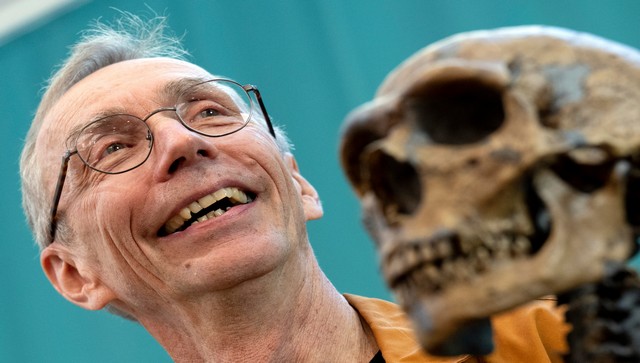
For the first time, a Nobel Prize recognized the field of anthropology, the study of humanity. Svante Pääbo, a pioneer in the study of ancient DNA, or aDNA, was awarded the 2022 prize in physiology or medicine for his breathtaking achievements sequencing DNA extracted from ancient skeletal remains and reconstructing early humans’ genomes – that is, all the genetic information contained in one organism. His accomplishment was once only the stuff of Jurassic Park-style science fiction. But Pääbo and many colleagues, working in large multidisciplinary teams, pieced together the genomes of our distant cousins, the famous Neanderthals and the more elusive Denisovans, whose existence was not even known until their DNA was sequenced from a tiny pinky bone of a child buried in a cave in Siberia . Thanks to interbreeding with and among these early humans, their genetic traces live on in many of us today , shaping our bodies and our disease vulnerabilities – for example, to COVID-19 . The world has learned a startling amount about our human origins in the last dozen years since Pääbo and teammates’ groundbreaking discoveries. And the field of paleogenomics has rapidly expanded. Scientists have now sequenced mammoths that lived a million years ago . Ancient DNA has addressed questions ranging from the origins of the first Americans to the domestication of horses and dogs , the spread of livestock herding and our bodies’ adaptations – or lack thereof – to drinking milk . Ancient DNA can even shed light on social questions of marriage, kinship and mobility. Researchers can now sequence DNA not only from the remains of ancient humans, animals and plants, but even from their traces left in cave dirt . Alongside this growth in research, people have been grappling with concerns about the speed with which skeletal collections around the world have been sampled for aDNA, leading to broader conversations about how research should be done . Who should conduct it? Who may benefit from or be harmed by it, and who gives consent? And how can the field become more equitable? As an archaeologist who partners with geneticists to study ancient African history , I see both challenges and opportunities ahead. Building a better discipline One positive sign: Interdisciplinary researchers are working to establish basic common guidelines for research design and conduct. In North America, scholars have worked to address inequities by designing programs that train future generations of Indigenous geneticists . These are now expanding to other historically underrepresented communities in the world. In museums, best practices for sampling are being put into place. They aim to minimize destruction to ancestral remains, while gleaning the most new information possible. But there is a long way to go to develop and enforce community consultation, ethical sampling and data sharing policies, especially in more resource-constrained parts of the world. The divide between the developing world and rich industrialized nations is especially stark when looking at where ancient DNA labs , funding and research publications are concentrated. It leaves fewer opportunities for scholars from parts of Asia, Africa and the Americas to be trained in the field and lead research. The field faces structural challenges, such as the relative lack of funding for archaeology and cultural heritage protection in lower income countries, worsened by a long history of extractive research practices and looming climate change and site destruction . These issues strengthen the regional bias in paleogenomics, which helps explain why some parts of the world – such as Europe – are so well-studied, while Africa – the cradle of humankind and the most genetically diverse continent – is relatively understudied, with shortfalls in archaeology , genomics and ancient DNA . Making public education a priority How paleogenomic findings are interpreted and communicated to the public raises other concerns . Consumers are regularly bombarded with advertisements for personal ancestry testing, implying that genetics and identity are synonymous . But lived experiences and decades of scholarship show that biological ancestry and socially defined identities do not map so easily onto one another . I’d argue that scholars studying aDNA have a responsibility to work with educational institutions, like schools and museums, to communicate the meaning of their research to the public. This is particularly important because people with political agendas – even elected officials – try to manipulate findings . For example, white supremacists have erroneously equated lactose tolerance with whiteness . It’s a falsehood that would be laughable to many livestock herders from Africa, one of the multiple centers of origin for genetic traits enabling people to digest milk**.**
Leaning in at the interdisciplinary table Finally, there’s a discussion to be had about how specialists in different disciplines should work together . Ancient DNA research has grown rapidly, sometimes without sufficient conversations happening beyond the genetics labs. This oversight has provoked a backlash from archaeologists, anthropologists, historians and linguists. Their disciplines have generated decades or even centuries of research that shape ancient DNA interpretations, and their labor makes paleogenomic studies possible. As an archaeologist, I see the aDNA “revolution” as usefully disrupting our practice. It prompts the archaeological community to reevaluate where ancestral skeletal collections come from and should rest . It challenges us to publish archaeological data that is sometimes only revealed for the first time in the supplements of paleogenomics papers. It urges us to grab a seat at the table and help drive projects from their inception. We can design research grounded in archaeological knowledge, and may have longer-term and stronger ties to museums and to local communities, whose partnership is key to doing research right. If archaeologists embrace this moment that Pääbo’s Nobel Prize is spotlighting, and lean in to the sea changes rocking our field, it can change for the better. This article is republished from The Conversation under a Creative Commons license. Read the original article .
Read all the Latest News , Trending News , Cricket News , Bollywood News , India News and Entertainment News here. Follow us on Facebook , Twitter and Instagram .