

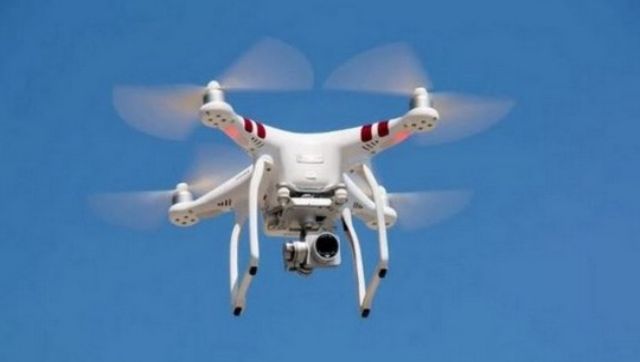
 "Enemies in the Sky: How India is countering Pakistan's drone menace")
Drones from Pakistan are posing a fresh threat to India. The BSF, which guards over 3,000 km of the India-Pakistan International Border running across Gujarat, Rajasthan, Punjab and Jammu, says incidents of unmanned aerial vehicles bringing drugs, arms and ammunition from across the border have more than doubled from 2021. Border Security Force director-general Pankaj Kumar Singh has described it as a ‘bombardment’. But what is happening? And what is India doing to stop it? Let’s take a closer look: What is happening? Authorities detected 79 drone flights along the India-Pakistan international border in 2020. That figure increased to 109 in 2021 which has “more than doubled at 266 this year”. Singh said Punjab has seen a whopping 215 flights this year alone, while Jammu has seen 22 such incidents. How are authorities responding? Authorities have established a state-of-the-art laboratory at a camp in Delhi to study drone forensics. However, this came after much grappling with the immense challenge of how to address the menace. Singh admitted that even when the BSF brought the drones down they initially had “no clue” from where it had come or where it was going. “We then started getting into the forensics part. We realised that these drones had chips similar to computation devices like computers and mobile phones. As digital forensics help in solving cybercrimes, we got answers here too,” Singh said. “We found (after forensic analysis of drones) their flight paths, launching and landing points, timings, GPS (global positioning system) coordinates and even messages they have exchanged and we realised there was an information mine. If we could get into this, we could find suspect’s addresses, locations and much more,” Singh said.
The BSF then established a drone repair lab in Delhi last September.
In October, it made improvements to the lab, allowing it to analyse the forensics of the drones shot down or recovered by it and the Punjab Police and the Narcotics Control Bureau. It spent about Rs 50 lakh in creating this forensic lab and has deployed tech-savvy officers and personnel to run it. Singh said the results have been very encouraging. Security agencies can now track the flight path and even addresses of criminals, Singh added. “The BSF has been at the receiving end of the drone menace for quite some time… the versatility of the drone, which is very well known, has been posing problems to us with nefarious elements having found new uses of the drone due to its anonymity and quick flight at sufficient height bypassing the frontiers,” he said. [caption id=“attachment_11653421” align=“alignnone” width=“640”] Graphic: Pranay Bhardwaj[/caption] Singh made the remarks while briefing Union home secretary Ajay Kumar Bhalla, who was chairing an event to inaugurate the forensic lab through a webinar session. ‘No foolproof system’ Unfortunately, there is no silver bullet. “The problem is grave. We do not have a foolproof solution as of now. They (drones) have been bringing across narcotics, arms and ammunition, counterfeit currency and all kinds of things,” he said. Singh added that the BSF has developed a good rapport with the Punjab Police – which has also provided the BSF with 200 personnel to conduct “depth patrols” at the front to check drones and their droppings. Singh even cited a success story – after drones dropped off material in Punjab’s Havelia in March, a joint investigation and action by the two security agencies led to the arrest of eight people, six of whom were convicted for narcotics crimes. Singh said the force has now begun a new system of incentivising and giving cash rewards to its border teams who shoot down drones. “Eleven drones have been shot down (by us) this year and we are giving very handsome incentives to teams that bring them down. There is a very good enthusiasm in these teams,” he said. Singh said the force is now undertaking a two-pronged approach to check this menace. “We are undertaking depth patrolling so that people cannot come to the border to pick drone droppings. We are digging deep into drone forensics to extract information about its senders and receivers,” he added. The problem is “so acute” and, “this we know by interrogation (of suspects and those apprehended) that wherever our drone teams are deployed… depth patrols are or anti-drone equipment is installed, the criminals go to other parts to undertake the illegal activity”, Singh said.
A senior BSF officer, speaking to the Hindustan Times on condition of anonymity, agreed that there is no silver bullet.
The BSF officer told the newspaper in September that the absence of an “effective” anti-drone technology meant only a handful of UAVs had been shot down in Punjab. “Until there is no effective anti-drone technology, the possibility of shooting down drones is very less. We have been running a trial of an anti-drone technology for the last around one year, but this technology, which works at a particular frequency, has not been found effective so far.” While the officer said the BSF nabbed six drones, he added, “But we can’t attribute that the seizures were purely on the basis of the trial-based anti-drone technology. Most of them were shot down by our jawans.” Help on the way But help is on the way. According to Indian Express, security agencies in Punjab and Jammu and Kashmir will soon receive indigenous anti-drone equipment developed by the Electronics and Radar Development Establishment (LRDE) of Defence Research and Development Organisation (DRDO) to take out the drones. Sources in the Ministry of Defence told the newspaper this system was first trialled in Punjab in 2020 and has since been put through its paces extensively, The equipment includes a laser weapon with a 1,000 metre range, a radio frequency jammer and a GPS jammer/spoofer. “Orders have been placed in sufficient numbers for this anti-drone equipment that will be supplied to the stake holders dealing with border security by Bharat Electronics Limited (BEL),” the official told the newspaper. “The entire border cannot be covered so the counter drone systems have to be placed based on intelligence inputs, past behaviour and the anticipated reaction in future,” another official added. Foreign powers lend Pakistan hand He also said the enemy was very calculating and have had help from a foreign power. “Pakistan-based smugglers are very shrewd, who have been working in collusion with the country’s intelligence agency (ISI) and China. Most of the drones being used by Pakistani smugglers are being assembled. They are not using the drones made by companies, which have some fixed frequencies. The possibility of these assembled drones, which fly at varying frequencies, being detected in our anti-drone technology is very less. We need an effective anti-drone technology to tackle the treat.” In 2015, Pakistan publicly joined the United States, the United Kingdom, and Israel on the short list of countries that had officially used armed drones to take out targets after its “Burraq” drone killed three senior leaders of Tehreek-e-Taliban Pakistan (TTP), as per Sunday Guardian Live.
While Pakistan claimed the drone was homemade, aviation experts begged to differ.
Their analysis showed a large amount of the technology used for the drone was from China’s Rainbow series of unmanned aerial vehicles (UAVs). Experts also contend that another Pakistani drone “Shahpar” is also based on the CH series. Pakistani military strategists are also focussed on drones with an eye to gain an advantage over India. Experts regard Pakistan as “well ahead” of India with regard to military drones thanks to the assistance from China and Turkey. ‘Strike without posturing’ Experts say India needs to be prepared to do what is necessary. LT General Prakash Menon, writing in The Print in July 2021, said “terrorism has revealed another arrow in its arsenal, and India seemed unprepared despite threat recognition for several years.” Menon said India should be prepared to “strike without posturing, and strengthen deterrence by displaying the political resolve for retaliation”. “This is not a call for war, but an imperative for India due to the nature of the threat – deniable, difficult to defend, and harbouring the potential for magnifying the strategic effects through relatively minor tactical actions,” Menon wrote. Menon added that India must prepare assuming that political deftness and diplomacy could fail and that New Delhi must allow itself the option to hit Pakistan in a way that strengthens deterrence. “Any other policy plays into Pakistan’s hands,” Menon wrote. With inputs from agencies Read all the Latest News , Trending News , Cricket News , Bollywood News , India News and Entertainment News here. Follow us on Facebook, Twitter and Instagram.

 "Russian drones over Poland: Trump’s tepid reaction a wake-up call for Nato?")
 "As Russia pushes east, Ukraine faces mounting pressure to defend its heartland")
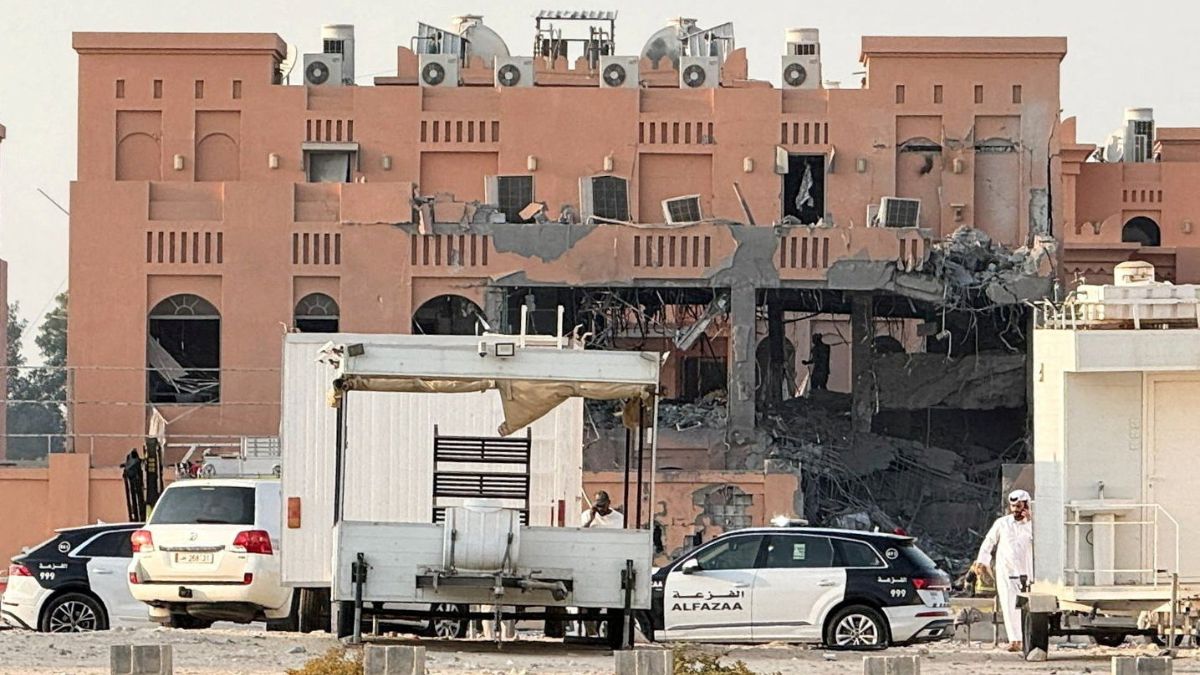 "Why Mossad was not on board with Israel’s strike on Hamas in Qatar")
 "Turkey: Erdogan's police arrest opposition mayor Hasan Mutlu, dozens officials in corruption probe")
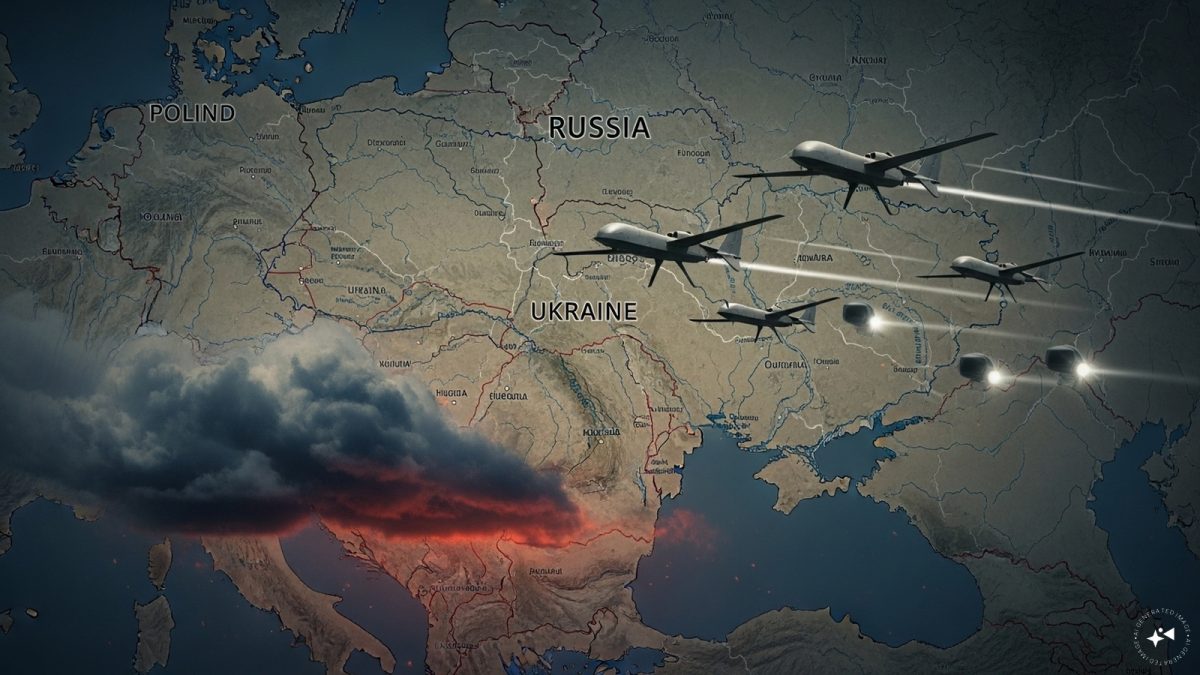 "Russian drones over Poland: Trump’s tepid reaction a wake-up call for Nato?")
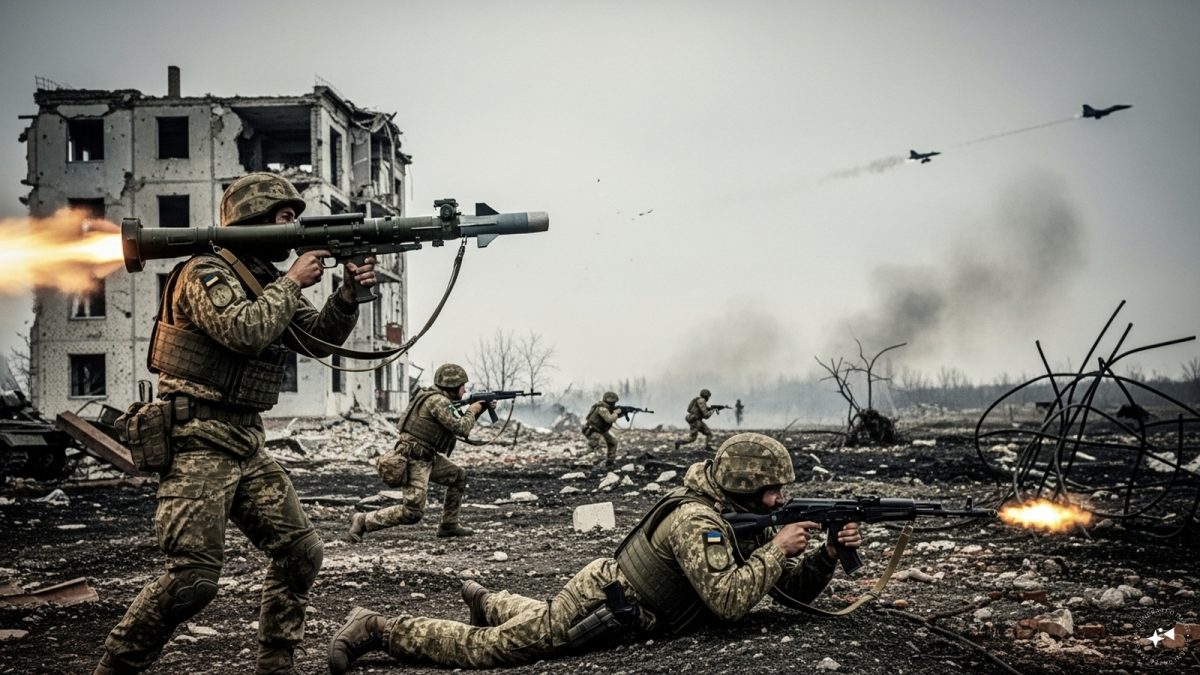 "As Russia pushes east, Ukraine faces mounting pressure to defend its heartland")
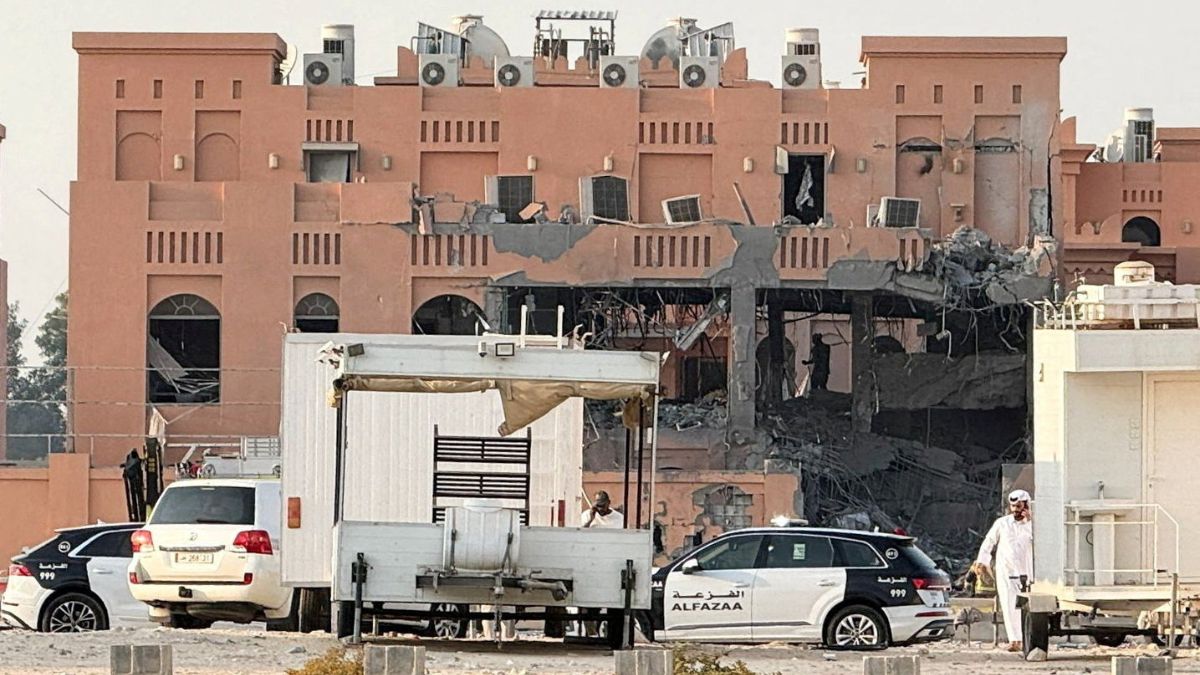 "Why Mossad was not on board with Israel’s strike on Hamas in Qatar")
 "Turkey: Erdogan's police arrest opposition mayor Hasan Mutlu, dozens officials in corruption probe")



