

 "Why Switzerland paying poor nations to cut emissions is ‘dangerous’")
Switzerland, one of the world’s richest nations, has an ambitious climate goal: It promises to cut its greenhouse gas emissions in half by 2030. But the Swiss don’t intend to reduce emissions by that much within their own borders. Instead, the European country is dipping into its sizable coffers to pay poorer nations, such as Ghana or Dominica, to reduce emissions there — and give Switzerland credit for it. Here is an example of how it would work: Switzerland is paying to install efficient lighting and cleaner stoves in up to five million households in Ghana; these installations would help households move away from burning wood for cooking and rein in greenhouse gas emissions. Then Switzerland, not Ghana, will get to count those emissions reductions as progress toward its climate goals. Also read: Climate change: Global collaboration holds key to sustainability Is this practice fair? Veronika Elgart, deputy head of international climate policy at the Federal Office for the Environment in Switzerland, said these sorts of arrangements could bring on additional climate action while benefiting the host countries. Still, there are questions over whether this mechanism is fair — an issue at the heart of discussions at this week’s
United Nations climate conference in Sharm el-Sheikh, Egypt. One of the main diplomatic sticking points centres on the extent to which rich nations should be compensating poorer countries for the damage caused by climate change, and helping them adapt, particularly since the wealthier world is disproportionately responsible for the carbon dioxide emissions warming the world. If other nations follow Switzerland’s lead, critics say, it could delay climate action in
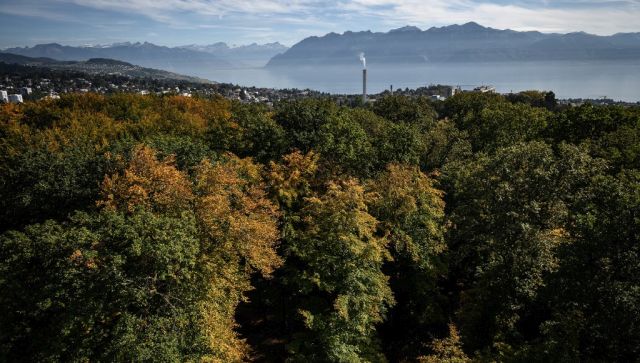
wealthier parts of the world while shifting the work of reducing emissions toward the global poor. In addition, it could take advantage of projects in poorer countries that would have proceeded anyway, with or without foreign funding. ‘Carbon capitalism’ “It’s a way of passing on the responsibility to reduce emissions,” said Crispin Gregoire, a former ambassador to the United Nations from Dominica, a tiny island nation of 72,000 people that made an agreement with Switzerland last year. “Instead of reducing emissions itself, Switzerland is going to other countries — ones that have very low emissions — to fulfill that obligation.” At last year’s global climate summit in Glasgow, Scotland, Bolivian President Luis Arce called the idea tantamount to “carbon capitalism”. The 2015 Paris Agreement tentatively allowed countries to cooperate in reducing their greenhouse gas emissions. And nations have made progress in laying down some of the rules at global talks — for example, creating guidance to make sure that emissions reductions aren’t double counted. But much of how that would actually work still needs to be fine-tuned, including how projects will be assessed and monitored. The issues are part of a wide-ranging agenda for climate negotiators gathered in Sharm el-Sheikh. Switzerland has been explicit that it won’t reach its emissions reduction targets on its own and that it needs to look for at least one-third of its cuts elsewhere. It already generates the bulk of its electricity using renewable energy — namely, hydroelectric and nuclear power — making further emissions cuts difficult. [caption id=“attachment_11606181” align=“alignnone” width=“640”] Students, activists and demonstrators hold placards during a worldwide climate strike against governmental inaction towards climate breakdown and environmental pollution in Lausanne, western Switzerland. AFP[/caption] Other rich nations to follow Switzerland Switzerland has so far signed pacts with eight nations — Peru, Ghana, Senegal, Georgia, Vanuatu, Dominica, Thailand and Ukraine — and is in talks with at least three more nations. Japan and Sweden have said they intend to pursue similar arrangements. There is concern that deals such as these could end up funding projects that might have already been in the works, said Thomas Day, an expert in carbon markets at the NewClimate Institute, an organization in Cologne, Germany, that advocates bolder climate policies. For example, the Swiss initially aimed to invest in making public buildings in Georgia more energy efficient. But Georgia was already planning those upgrades. That meant Switzerland would have gotten credit for emissions cuts that would have happened anyway, he said. Then, Georgia would have to take on more difficult or expensive projects to further meet its own targets, while, in effect, giving the Swiss credit for the easier work. Rich nations such as Switzerland have an obligation to help developing nations without claiming something in return, said Jade Begay, climate justice director at NDN Collective, an Indigenous-led social and environmental organization based in Rapid City, South Dakota. A ‘dangerous’ deal The rule that allows such deals is “dangerous,” Begay said, because it allows wealthier countries “to continue polluting, and to continue with business as usual, which is the root of the problem.” Mischa Classen, director at the KliK Foundation, a nonprofit in Switzerland that is working with the government to implement the agreements, said Switzerland was now planning to fund more ambitious policies in Georgia, such as investing in energy efficiency for private homes. And Georgia can authorise or reject projects covered under the agreement, Elgart said. Its partner countries are “in the driving seat,” she said. Switzerland will also ensure that the projects would not have happened otherwise, she added. The Ministry of Environmental Protection and Agriculture of Georgia did not respond to a request for comment. The debate comes as rich nations of the world face criticism for failing to compensate poorer nations as promised so they can better adapt to warming temperatures. According to an analysis by the Overseas Development Institute, Switzerland’s contributions to global climate funding fall almost 40 per cent short of what would be their share of an internationally agreed target of $100 billion a year. It is also falling behind on its goals for emissions reductions under the Paris Agreement. Hiroko Tabuchi, c.2022 The New York Times Company Read all the Latest News , Trending News ,
Cricket News , Bollywood News , India News and Entertainment News here. Follow us on
Facebook,
Twitter and
Instagram.
Switzerland is not doing enough within its borders to reach its climate goal. Instead, it is paying poorer nations like Ghana or Dominica to reduce emissions and taking credit for it
Advertisement
End of Article


 "Russian drones over Poland: Trump’s tepid reaction a wake-up call for Nato?")
 "As Russia pushes east, Ukraine faces mounting pressure to defend its heartland")
 "Why Mossad was not on board with Israel’s strike on Hamas in Qatar")
 "Turkey: Erdogan's police arrest opposition mayor Hasan Mutlu, dozens officials in corruption probe")
 "Russian drones over Poland: Trump’s tepid reaction a wake-up call for Nato?")
 "As Russia pushes east, Ukraine faces mounting pressure to defend its heartland")
 "Why Mossad was not on board with Israel’s strike on Hamas in Qatar")
 "Turkey: Erdogan's police arrest opposition mayor Hasan Mutlu, dozens officials in corruption probe")



