

 "4 shark attacks in 2 days: How safe are Australia's beaches?")
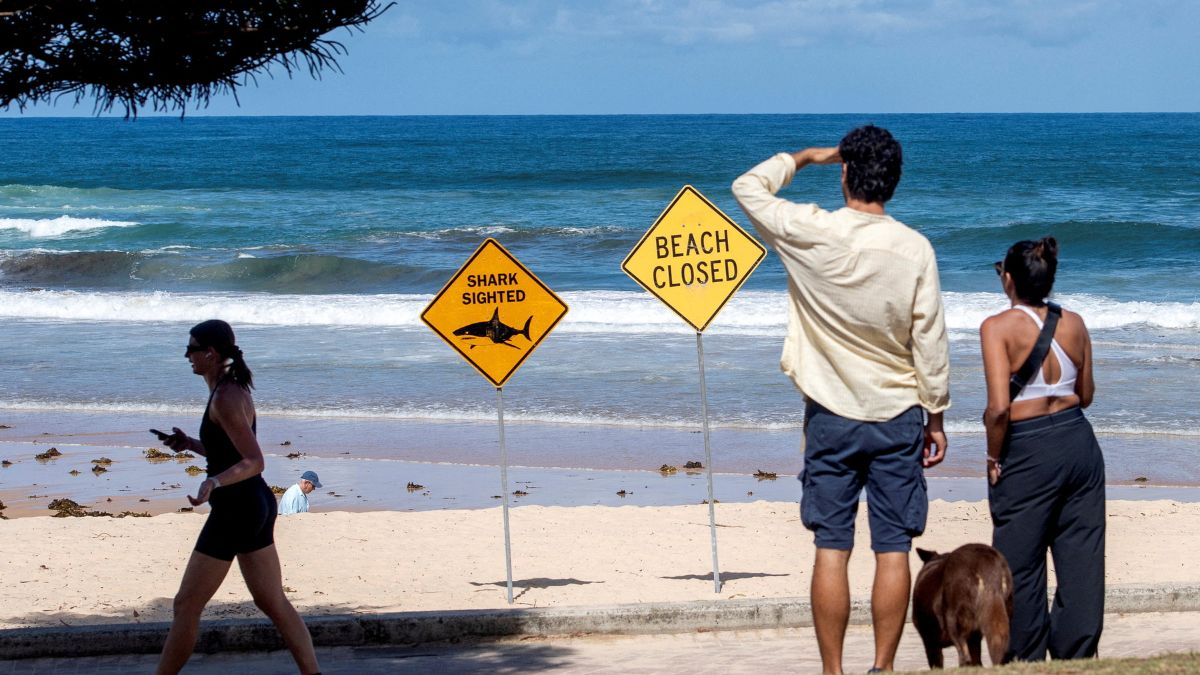
Australia has been rocked by four shark attacks in two days. Dozens of beaches along the country’s east coast, including in Sydney, have been closed following the “unprecedented” attacks.
Bull sharks are believed to be behind the recent attacks that have resulted in the closure of around 40 beaches along the coast of New South Wales (NSW). This comes after days of heavy rain that washed into the harbour and nearby beaches, forming ideal conditions for these species.
Let’s take a closer look.
4 shark attacks in 2 days
On Tuesday (January 20) morning, a surfer was bitten by a shark that knocked him off his board near Point Plomer Beach on the NSW Mid North Coast.
The surfer was “knocked off his board, his board has been bitten, there were multiple sharks in the water according to reports from other surfers in the water,” Steven Pearce, the head of Surf Live Saving NSW, the peak body for water safety in the state, told Sydney’s 2GB radio.
The 39-year-old man “sustained a wound to his chest” after a shark bit his board, the police said, according to BBC. He was treated for minor injuries and released from the hospital.
This was the fourth such attack off the coastline of Sydney, Australia’s largest city.
A 27-year-old man was left in critical condition on Monday evening after his leg was bitten by a shark at North Steyne Beach in Manly in Sydney’s Northern Beaches.
An eyewitness said another surfer had kept the man alive using his board’s leg rope as a makeshift tourniquet to stem the bleeding. “He was breathing, but he was unconscious, and we just … tried to keep him awake, as well as all the other people around us. Everyone was involved,” the eyewitness told Australian broadcaster ABC.
Quick Reads
View AllPolice described the young surfer as having been left with “life-changing” injuries.
The same day, an 11-year-old boy escaped unharmed after a shark took a 15-centimetre (6-inch) bite out of his surfboard at Dee Why Point beach, which is near Manly.
Shark biologists at the NSW Department of Primary Industries and Regional Development said that preliminary photo analysis of the bite mark indicated it was likely from a bull shark, the Manly Observer reported.
On Sunday, a 12-year-old boy was critically injured after a shark bit his legs while he was swimming near Shark Beach in Sydney Harbour.
Authorities suspect bull sharks were involved in most of these recent attacks.
More than a dozen beaches in northern Sydney, including Manly and Palm Beach, will remain closed on Tuesday and Wednesday. “If you’re thinking about going for a swim, think of going to a local pool because at this stage, we’re advising that beaches are unsafe,” Steven Pearce, the chief executive of Surf Life Saving New South Wales, told reporters.
Police on Monday urged the public to avoid waterways in NSW due to recent weather, which has reduced water quality and visibility.
“I would recommend not swimming in the harbour or our other river systems across NSW at this time,” Superintendent Joseph McNulty said.
Why Australia is seeing so many shark attacks
Shark attacks are rare in Australia. The spate of such attacks comes after heavy rains were reported around Sydney over the weekend. Experts say this has created a perfect mix of conditions for bull sharks, the species considered among the most dangerous.
The runoff from rainfall has brought prey into the ocean water for sharks to feast on, Leonardo Guida, a shark scientist with the Australian Marine Conservation Society, told New York Times (NYT).
The significant rain made the water murky, and likely led to raw sewage running straight into Sydney’s harbour and coastline.
The nutrients in the sewage draw “bait fish and brings sharks toward the bait fish,” University of Sydney associate professor of public policy Chris Pepin-Neff told the ABC.
Bull sharks usually inhabit warmer waters up the coast but move down the coastline towards Sydney’s most popular beaches in summer. They can live in both fresh and marine water. These sharks thrive in brackish water.
“We do get a lot of shark sightings, or people being bumped by sharks, but to have four incidents where all the victims have been actually attacked by sharks is really uncommon,” Pearce, the CEO of NSW Surf Life Saving, was quoted as saying by CNN.
While Australia is a global shark attack hotspot, Pearce said the number of recent attacks was “unprecedented”.
“This series of bites from bull sharks in such a short period of time is highly unusual,” Dr Daryl McPhee, associate professor of environmental science at Bond University, told the BBC.
Rain can lead to concentration of fish that bull sharks prey on downstream in rivers and beaches, McPhee said, adding that “bull sharks are well adapted to feeding in murky water after rain”.
“Where you find the fish, you find the bull sharks. Unfortunately, that sometimes occurs at popular beach locations.”
Sharks do not normally attack humans, but the murky water reduces their visibility, increasing their chances of bumping into something, due to which “they defensively or curiously bite and then bite again”, Pepin-Neff, an expert on shark behaviour, wrote in a column in the Sydney Morning Herald newspaper.
Last November, a woman was killed and a man was seriously injured after being attacked by a bull shark on a remote beach in Australia.
ALSO READ: Killer whale eats great white shark: Why scientists are worried
Why Australian beaches are packed
Beaches across Australia are usually crowded with locals and tourists at this time, as January and February are the summer months in the country.
Temperatures are predicted to increase over the weekend just ahead of the Australia Day public holiday, when many people will visit parks and beaches.
“We know this weekend is forecast for a really extreme hot temperature. So, we know we’re going to have tens of thousands of people flocking down to the coastline,” Pearce told CNN. “We know that they will go into the water regardless of whether they’re closed or not.”
The attacks have, however, not spooked everyone from the beaches. Rob West told CNN on Tuesday he had been surfing at Bondi Beach, which remains open, that morning.
“I’ve been surfing since I’ve been 13 and I’ve never even seen one out there. They’ve probably seen me plenty of times and just realised what I was. I don’t look enough like a seal to be attacked,” he said.
According to Vincent Raoult, a senior lecturer in marine ecology at Griffith University, it can take up to a week after heavy rain for the water to clear and for the threat of bull sharks to recede.
“In the conditions where bull sharks do encounter people, it’s in those really brackish, murky waters, so they’re not relying on their eyesight,” Raoult was quoted as saying by CNN.
Raoult said research does not indicate that the bull shark population has surged around Sydney. But said he believes the rise in interactions can be attributed to more people using beaches and waterways while development encroaches on the sharks’ habitat.
With inputs from agencies


 "'Mother of all deals': EU close to sealing historic India trade pact, says Ursula")
 "Greenland, Canada in 'new map of USA': Trump fuels territory feuds with allies")
 "Saudi Arabia-UAE rift spills into Davos as West Asia tensions deepen")
 "Japan: Three things Takaichi aims to achieve with snap polls")
 "'Mother of all deals': EU close to sealing historic India trade pact, says Ursula")
 "Greenland, Canada in 'new map of USA': Trump fuels territory feuds with allies")
 "Saudi Arabia-UAE rift spills into Davos as West Asia tensions deepen")
 "Japan: Three things Takaichi aims to achieve with snap polls")



