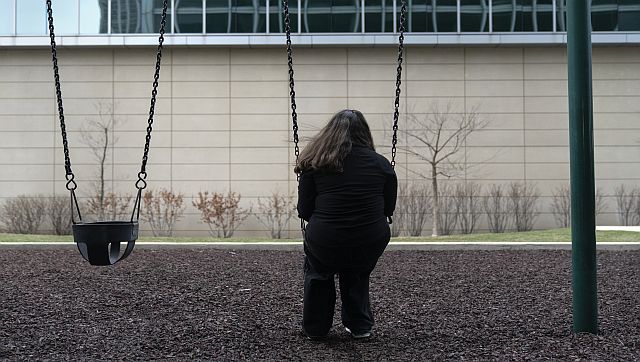
 "60 per cent of US teen girls are 'persistently sad': What's ailing them?")
Anxiety over academics. Post-lockdown malaise. Social media angst.
Study after study says American youth are in crisis, facing unprecedented mental health challenges that are burdening teen girls in particular.
Among the most glaring data: A recent Centres for Disease Control and Prevention report showed almost 60 per cent of US girls reported persistent sadness and hopelessness.
Rates are up in boys, too, but about half as many are affected.
Adults have theories about what is going on, but what do teens themselves say? Is social media the root of their woes? Are their male peers somehow immune, or part of the problem?
The Associated Press interviewed five girls in four states and agreed to publish only their first names because of the sensitive nature of the topics they discussed. The teens offered sobering — and sometimes surprising — insight.
“We are so strong and we go through so, so much,” said Amelia, a 16-year-old Illinois girl who loves to sing and wants to be a surgeon.
She also has depression and anxiety. Like 13 per cent of US high school girls surveyed in the government report, she is a suicide attempt survivor. Hospitalisation after the 2020 attempt and therapy helped. But Amelia has also faced bullying, toxic friendships, and menacing threats from a boy at school who said she “deserved to be raped.”
More than one in 10 girls said they’d been forced to have sex, according to the CDC report, the first increase noted in the government’s periodic survey. Sexual threats are just one of the burdens teen girls say they face.
Quick Reads
View All“We are trying to survive in a world that is out to get us,” Amelia said.
Emma, an 18-year-old aspiring artist in Georgia with attention deficit disorder and occasional depression, says worries about academics and college are a huge source of stress.
“Lately in myself and my friends, I realise how exhausted everyone is with the pressures of the world and the social issues and where they’re going to go in the future,” Emma added. “All of these things pile up and crash down.”
Zoey, 15, was raised in Mississippi by a strict but loving single mother who pressures her to be a success in school and life. She echoes those feelings.
“School can be nerve racking and impact your mental health so much that you don’t even … recognise it, until you’re in this space where you don’t know what to do,” Zoey said. She’s also had friendship struggles that ended in deep depression and felt the discomfort of being the only Black kid in class.
Several girls said they face added pressure from society’s standards that put too much focus on how they look.
“A lot of people view women’s bodies and girls’ bodies as sexual,” Emma said. “It’s overwhelming to have all these things pushed on us.”
The #MeToo movement began when these girls were quite young, but it intensified during the pandemic and they’re hyperaware of uninvited sexual advances.
Boys are less aware, they suggest. The girls cite crass jokes, inappropriate touching, sexual threats or actual violence. Girls say the unwanted attention can feel overwhelming.
“We deserve to not be sexualised or catcalled, because we are kids,” Amelia said.
Siya, an 18-year-old in New Jersey, said almost every girl she knows has dealt with sexual harassment. “That’s just been the normal for me,” she said.
“When you’re walking alone as girl, you’re automatically put in this vulnerable situation,” Siya said. “I think that’s so sad. I don’t know what it feels like to not have that fear.”
Makena, a high school senior in Mississippi, said she and her friends sometimes wear baggy clothes to hide their shapes but boys “comment, no matter what.”
She has had depression and therapy, and said she has grown up in a community where mental health is still sometimes stigmatised.
“Often in the Black community we aren’t as encouraged to express emotion” because of what previous generations endured, said Makena, who works with a teen health advocacy group. “We’re expected to have hearts of steel,” she said. “But sometimes it’s OK to not be OK.”
Social media platforms contribute, with their focus on superficial appearances and making perfectionism seem attainable. Girls say they’re just part of the problem.
“Social media has completely shifted the way we think and feel about ourselves” in good and bad ways, Makena said.
She’s felt pressure to be perfect when comparing herself with others online. But she also follows social media influencers who talk about their own mental health challenges and who make it seem “OK for me to feel sad and vulnerable,” she said.
Girls have historically been disproportionately affected by depression and anxiety. But those statistics at least partly reflect the fact that girls are often more likely than boys to talk about feelings and emotions, said Dr Hina Talib, an adolescent medicine specialist and spokesperson for the American Academy of Paediatrics.
Zoey, the Mississippi 15-year-old, says boys have to keep up a “macho facade” and are less likely to admit their angst.
“I feel like they might feel that way, we just don’t see it,” she said.
A study published in March in The Journal of the American Medical Association found that in 2019, before the pandemic, about 60 per cent of children hospitalised for mental health reasons were girls. A decade earlier, the difference was only slight.
COVID-19 lockdowns added another dimension, thrusting academic and social lives online, Talib said. Some kids entered the pandemic as youngsters and emerged with more mature bodies, socially awkward, uncertain how to navigate friendships and relationships.
They live in a world beset with school shootings, a rapidly changing climate, social and political unrest, and restrictions on reproductive care and transgender rights.
The CDC report released in February included teens queried in fall 2021, when US COVID-19 cases and deaths were still high. Other data and anecdotal reports suggest many teens continue to struggle.
“The pandemic as a percentage of their lives is huge,” said Talib.
Expecting kids to be unscathed may be unrealistic.
“It’s going to change a generation,” she said.
Read all the Latest News, Trending News, Cricket News, Bollywood News,
India News and Entertainment News here. Follow us on
Facebook,
Twitter and
Instagram.

 "'Indian food, our pride': $200k settlement in Palak Paneer case a moral victory against racism in the west")
 "India’s air dominance in Operation Sindoor forced Pakistan to seek ceasefire, European report says")
 "How Pakistan’s support may have led Bangladesh towards a very costly mistake")
 "India vs New Zealand Live Score 3rd T20: Kishan, Abhishek tee off after Samson bowled on first ball")
 "'Indian food, our pride': $200k settlement in Palak Paneer case a moral victory against racism in the west")
 "India’s air dominance in Operation Sindoor forced Pakistan to seek ceasefire, European report says")
 "How Pakistan’s support may have led Bangladesh towards a very costly mistake")
 "India vs New Zealand Live Score 3rd T20: Kishan, Abhishek tee off after Samson bowled on first ball")