

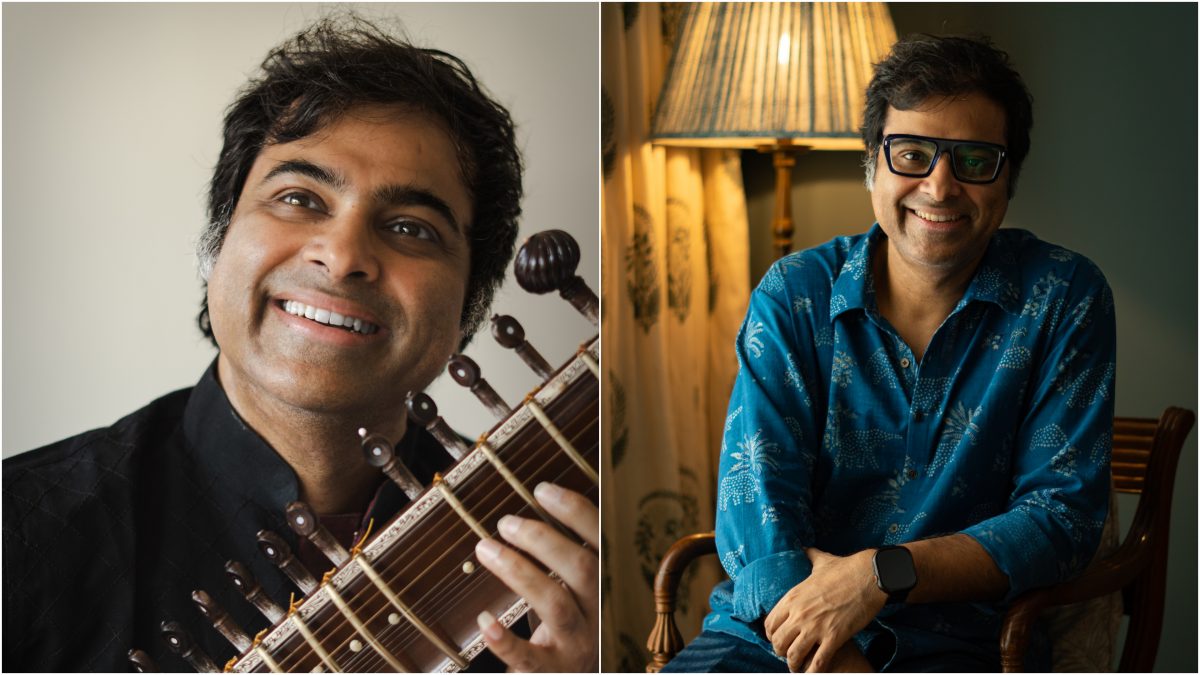
 "EXCLUSIVE | Sitaar meastro Purbayan Chatterjee on misconceptions about classical music, industry shift after Bandish Bandits' song success")
In an age of instant streaming and shortened attention spans, Purbayan Chatterjee continues to insist on something radical: patience. Whether through his deeply personal concert series Sitar Stories or cross-cultural collaborations that resist easy labels, the sitar maestro is less interested in spectacle and more invested in depth.
Ahead of his Sitar Stories concert at Mumbai’s Grand Theatre, NMACC, Chatterjee spoke exclusively to Firstpost’s Zinia Bandyopadhyay about listening as an act of presence, the misunderstood rigour of Indian classical music, and why accessibility should never mean dilution.
Excerpts from the interview:
Q. You’re back with Sitar Stories. What are your expectations this time?
Sitar Stories has always been about intimacy, honesty, and immersion. With this edition—especially the January 3 concert at the Grand Theatre, NMACC—I want the audience to experience the sitar not as a historical artifact, but as a living, breathing voice. The acoustics, scale, and curatorial intent of the Grand Theatre allow for a deeply nuanced listening experience, where silence, sustain, and subtlety matter. My expectation is not spectacle, but depth—to leave listeners quieter on the inside, yet more alive.
Q. Your work often brings Indian classical music into conversation with Western traditions. What has this taught you?
Cross-cultural dialogue has taught me clarity. When you place Indian classical music next to Western harmonic or rhythmic frameworks, its internal logic becomes even more apparent. It has deepened my respect for raga grammar and tala discipline, while also expanding my sense of form and texture. Projects like Feathered Creatures, my upcoming album with Mark Lettieri of Snarky Puppy—releasing spring 2026 on GroundUP Music—are not fusion for novelty’s sake, but conversations between equals.
Q. What misconceptions about Indian classical music do you encounter internationally?
The most common misconception is that Indian classical music is entirely free-form or purely improvisational without structure. In reality, it is one of the most rigorous and internally disciplined systems in the world. Another misconception is that it is meditative background music. It is actually highly dynamic, emotionally charged, and intellectually demanding—both for the performer and the listener.
Games
View AllQ. Do you feel a responsibility to make classical music more accessible?
I feel a responsibility to be honest. Accessibility should not come at the cost of dilution. Indian classical music demands patience and immersion, and that is its gift. However, the entry points can be made more humane. Whether through narrative concerts like Sitar Stories, or cinematic works like Garaj Garaj Rocks, the aim is to invite people in, not to simplify the art.
Q. Indian classical music today exists across concert halls, festivals, and digital platforms. How do you view this shift in the way audiences discover and engage with the art form?
Digital platforms are powerful gateways, not destinations. They help discovery, but the soul of Indian classical music still lives in shared physical space—in concert halls like NMACC, where breath, resonance, and attention align. The challenge is to use digital reach without losing the sanctity of the listening experience.
Q: After the success of Garaj Garaj Rocks from Bandish Bandits 2, do you sense a genuine industry shift?
There is curiosity, yes—but patience is still rare. Classical music cannot be fast-tracked. When it is integrated meaningfully, it elevates the entire ecosystem. When it is used superficially, it becomes an aesthetic garnish. The success of Garaj Garaj Rocks shows audiences are ready, but institutions must learn to listen as deeply as the music asks them to.


 "'Deeply concerned': PM Modi expresses worry as reports of drone strikes on Putin’s residence emerge")
 "Why Israel’s recognition of Somaliland is so controversial")
 "Russia claims Ukraine fired drones at Putin’s residence: Will this derail the peace talks?")
 "As Nobel snubs Trump, Netanyahu creates Israel Peace Prize to gift Potus a new badge of honour")
 "'Deeply concerned': PM Modi expresses worry as reports of drone strikes on Putin’s residence emerge")
 "Why Israel’s recognition of Somaliland is so controversial")
 "Russia claims Ukraine fired drones at Putin’s residence: Will this derail the peace talks?")
 "As Nobel snubs Trump, Netanyahu creates Israel Peace Prize to gift Potus a new badge of honour")



