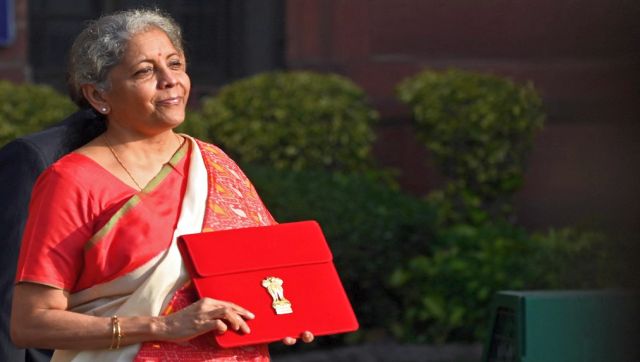
The Union Budget is a financial statement issued by the government that details revenue and expenditure anticipated for the upcoming year. The announcement of the nation’s Union Budget holds a great amount of significance for every citizen of this country. The document determines the functioning of the government and how the resources will be spent to develop the economy. Indian Finance Minister Nirmala Sitharaman is going to present the Union Budget 2023-24 on 1 February. The announcement of this year’s budget is just around the corner and every sector and every individual of India is having high expectations from it. Steps involved in the preparation of India’s Budget: Preparing the Union Budget is a long-drawn process which involves multiple steps and consultations. Every step is crucial to ensure that the public money is utilised judiciously and allocated properly. Here are the steps that are involved in forming our nation’s Budget: Step 1: First of all, the Ministry of Finance issues a circular. The circular asks all the ministries, states, union territories, and autonomous bodies to prepare an estimate on their end for the upcoming year. Then, the ministries give the initial estimates, including expenditure on infrastructure, education, health, etc. Along with this, they also provide details of expenditures and revenues in the previous year. After receiving these proposals, the top officials conduct thorough consultations. The data is sent to the Finance Ministry once the proposals have been approved. Step 2: After the validation of information, the Finance Ministry allocated revenue to various divisions to implement their impending outlays. The ministry deliberates with the Union Cabinet or the Prime Minister in case of a disagreement over the splitting up of money. Step 3: Stakeholders are also consulted by the Department of Economic Affairs and Department of Revenue to gain further understanding. The stakeholders include small business proprietors, agriculturists, and foreign institutional investors. Step 4: The ministry holds pre-Budget meetings with different stakeholders to understand their recommendations and requirements. These participants contain bankers, economists, state representatives, agriculturists, and trade unions. After looking at all the requests, the details are further discussed with the Prime Minister before the confirmation. Step 5: The government has an annual tradition of holding a halwa ceremony a few days before the announcement of the Budget. The ceremony signifies the beginning of Budget document printing. The halwa is produced with a giant kadhai (a large frying pot), which is then consumed by the entire workforce of the Finance Ministry. Step 6: The Budget’s presentation to the Parliament is the last stage of preparing the Budget. The presentation is conducted by the Finance Ministry on the first day of the Budget session. The Finance Minister summarizes the key points of the document and explains the thinking behind the proposals in the presentation. After the presentation, the Budget is laid before both the houses of Parliament for discussion. The Budget is forwarded to the President for approval once it has been approved by both the houses. Read all the Latest News , Trending News , Cricket News , Bollywood News , India News and Entertainment News here. Follow us on Facebook , Twitter and Instagram .
Union Budget 2023: How India's Budget is prepared?
FP Trending
• January 20, 2023, 12:34:18 IST
The document determines the functioning of the government and how the resources will be spent to develop the economy
Advertisement
 "Union Budget 2023: How India's Budget is prepared?")
End of Article