 "Stock market")
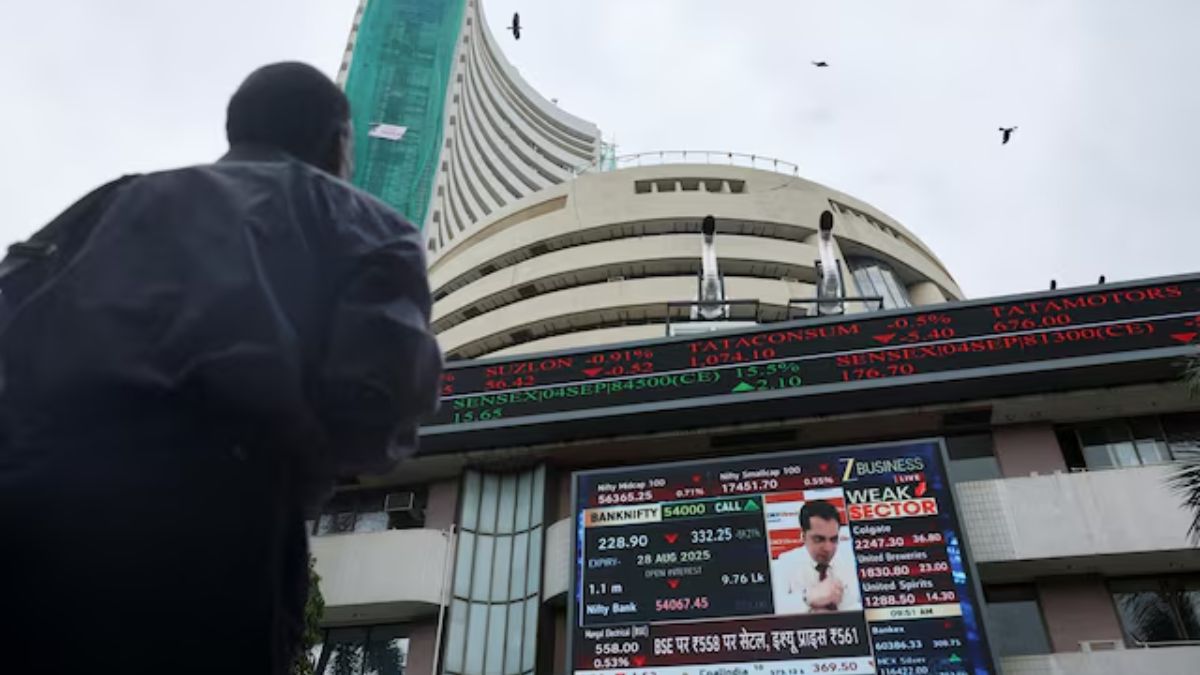
Indian equities opened sharply lower on March 30, extending last week’s losses, as a combination of sustained foreign investor outflows and rising global oil prices rattled market sentiment.
Benchmark indices mirrored weak global cues, with the Sensex falling 1,105.56 points or 1.50 per cent to 72,477.66, while the Nifty slipped 321.75 points or 1.41 per cent to 22,497.85—breaching the key 22,500 level in early trade. The selloff follows Friday’s steep decline, when the Nifty plunged 2.09 per cent to close at 22,819.60 and the Sensex dropped 2.25 per cent to 73,583.22.
At the heart of the market weakness is persistent foreign portfolio investor (FPI) selling. Overseas investors have offloaded a net $11.7 billion worth of Indian equities so far this year, according to Bloomberg data—signaling a clear shift in global risk appetite away from emerging markets.
Global macro pressures have compounded the selloff. Gold prices fell over 1 per cent as a spike in crude oil, triggered by renewed geopolitical tensions following Houthi attacks, stoked inflation fears. Higher energy prices are now clouding expectations of interest rate cuts by the US Federal Reserve, a key liquidity driver for global markets.
Back home, market breadth remained decisively negative. On the Nifty, financial heavyweights led the decline, with Axis Bank, Kotak Mahindra Bank, SBI, and Shriram Finance among the top losers. In contrast, metal and energy stocks offered some support, with Hindalco and ONGC emerging as gainers.
Quick Reads
View AllThe rupee, however, showed resilience, gaining 134 paise amid volatile currency movements, suggesting intermittent support from central bank actions or dollar weakness.
The current market trajectory underscores a fragile equilibrium—caught between domestic resilience and global headwinds. With oil prices firming up and rate cut expectations fading, investor focus is likely to remain fixed on inflation trends, central bank signals, and the pace of foreign capital flows in the weeks ahead.