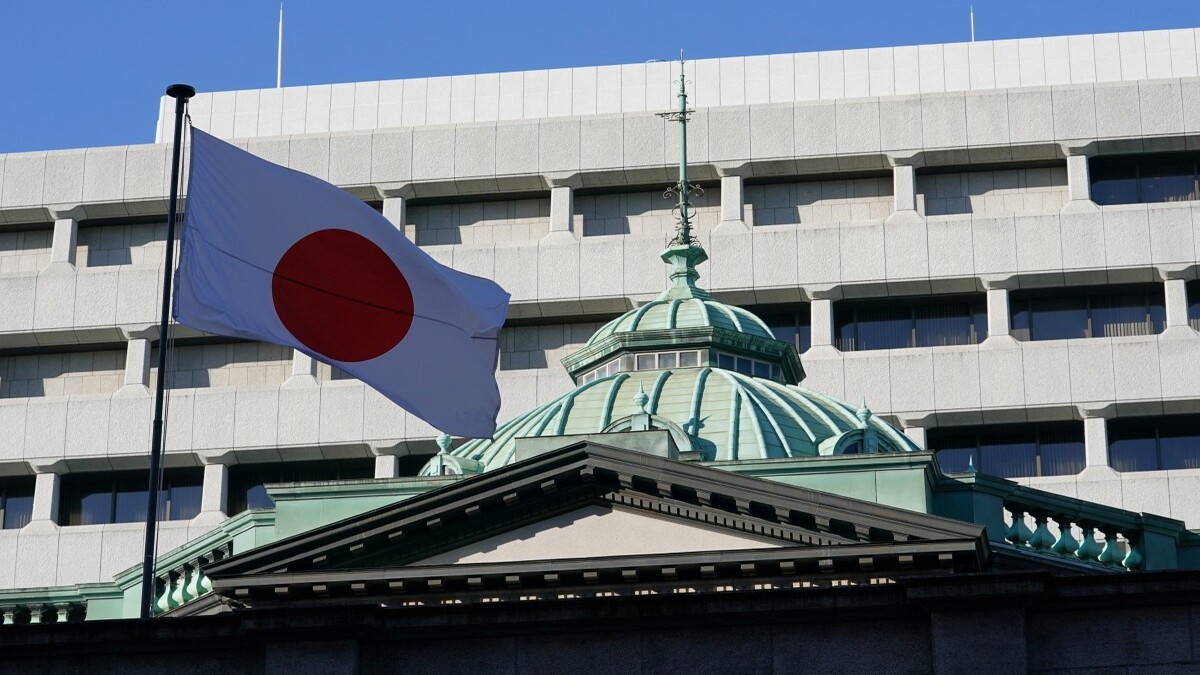
 "The Japanese flag flutters above the Bank of Japan headquarters in Tokyo (File/ AFP)")
Business sentiment among Japan’s large firms improved modestly in the first quarter, reflecting resilience in domestic demand, but companies are increasingly wary of deteriorating conditions ahead as the fallout from the Iran war threatens to disrupt global supply chains and drive up energy costs.
The latest tankan survey by the Bank of Japan, released on Wednesday, showed the headline index for big manufacturers’ confidence rising to +17 in March from +16 in December, slightly above market expectations of +16.
Confidence among large non-manufacturers remained stronger, with the index holding steady at +36, beating forecasts of +33, underscoring continued strength in services consumption even as external risks mount.
However, the forward-looking outlook was markedly more cautious. Both manufacturers and service-sector firms expect business conditions to worsen over the next three months, citing escalating uncertainty linked to the Iran conflict.
The war has effectively choked flows through the Strait of Hormuz, a critical artery for roughly a fifth of global oil and gas shipments. The disruption has pushed up crude prices and intensified demand for safe-haven assets, including the US dollar.
For resource-poor Japan, which depends heavily on imported fuel, the spike in energy costs poses a dual threat — stoking inflation while squeezing corporate margins and dampening economic activity.
Quick Reads
View AllThe deteriorating external environment complicates the policy path for the Bank of Japan. The central bank has been gradually normalising monetary policy after ending a decade-long stimulus programme in 2024, and raised its short-term policy rate to 0.75 per cent in December — the highest level in three decades.
Inflation has remained above the BOJ’s 2 per cent target for nearly four years, and a weak yen has further amplified imported price pressures. Markets are currently pricing in around a 70 per cent probability of another rate hike as early as April.