 "Infrastructure spending not the best way to boost growth")
The sudden flurry of activity by government officials after a dismal fourth-quarter GDP growth figure is not going to get India anywhere near a sustainable growth path.
GDP growth for the fourth quarter of 2011-12 came in at 5.3 percent, a nine-year low, and that has had everyone from economists to businessmen hankering for growth policies from the government. The PM, Manmohan Singh, held a much publicised meeting in which the focus was on infrastructure projects that are supposed to lead the country’s growth forward.
The reception to the announcement of the infrastructure projects was cold to say the least, as no one believes that one meeting can push the country forward.
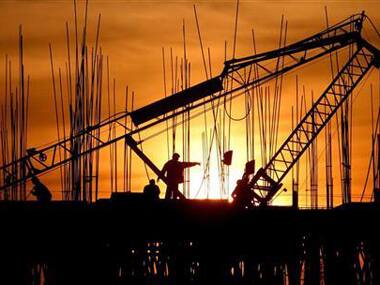
[caption id=“attachment_336972” align=“alignleft” width=“380” caption=“Infrastructure is not going to get the country on to the growth path if stress on infrastructure is not accompanied by structural reforms.Reuters”]
 [/caption]
The fact that the PM chose to focus on infrastructure to send out the right signals to the economy is worrying. Infrastructure is not going to get the country on to the growth path if stress on infrastructure is not accompanied by structural reforms.
Without reforms, infrastructure spending only leads to large-scale corruption where businessmen, bureaucrats and politicians amass untold wealth at the cost of the country. The biggest corruption scams over the past ten years have involved some infrastructure project or the other.
Burmese opposition leader Aung San Suu Kyi made an extremely pertinent point of investments coming into a newly opened up Burma recently. She said that investments should create jobs and not help feed corruption. Since Burma is far from implementing economic reforms, it’s very possible that investments in Burma before reforms will only feed the wealth of corrupt businessmen and politicians.
China is a good example of that phenomenon: it is seeing the effects of unchecked investments in infrastructure. Banks are stuck with non-performing loans, many of its infrastructure facilities are not economically viable and the Chinese corrupt have grown wealthier.
The Indian prime minister is an eminent economist himself and he understands what requires to be done. He once famously said that he does not care about where the stock markets are going. In fact, he should do the same and not look at where markets are going but focus on what requires to be done. Markets are fair-weather friends and largely short-term in nature. They embraced the PM when he did nothing in a liquidity-driven world, and punished him for doing nothing when that liquidity dried up.
The performance of the Sensex in the period from 2003-2007 (up 300 percent) and 2007-2012 (down 20%) tells the whole story.
Everyone likes the words “government spending” and “infrastructure”. Spending sends out images of creating wealth in the economy, while infrastructure sends out images of the money being spent in the right direction. The truth is that it just does not work like that.
Government spending is largely unaccounted though the money for the spending is reflected in fiscal deficits and government bond yields. Similarly, infrastructure in India is more an afterthought than a sense into the future. The losses faced by the owners of the new airports and power projects are testimony to the warped infrastructure policies of the government and the greed of the promoters bidding for the projects. Bids for airport projects were made keeping in mind land development gains rather than actual gains from the core business. Bids for power projects were made after considering coal mine valuations rather than actual gains from producing and selling power. The gainers in the end are the corrupt who have lined their pockets with huge loans given by banks to these projects.
The PM is under pressure from everyone to lift the country back to a sustainable growth path. However, he has to reflect on what went wrong and then take corrective measures. A PM repeating the same mistakes will only take the economy down and not up.
Arjun Parthasarathy is the editor of www.investorsareidiots.com a web site for investors.
Arjun Parthasarathy has spent 20 years in the financial markets, having worked with Indian and multinational organisations. His last job was as head of fixed income at a mutual fund. An MBA from the University of Hull, he has managed portfolios independently and is currently the editor of www.investorsareidiots.com </a>. The website is for investors who want to invest in the right financial products at the right time.