

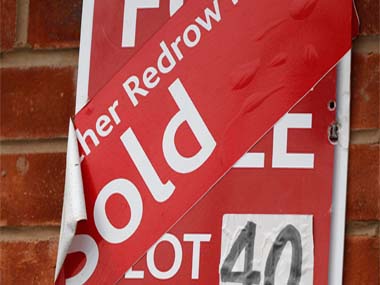
 "2008 won't end till we know if Laura can pay")
A few months ago, the mere mention of the words Double-Dip or QE3 (quantitative monetary easing) usually resulted in someone’s eyes rolling right out of the top of his/her head - here Sir, is this your Cornea? In extreme cases, it resulted in the boot of an economist making close contact with the inflation-flattened rear of a non-economist (“how dare you talk economics, you yield-curve challenged dolt?”). Not anymore. The rumblings are eliciting less exasperated gestures these days.
Sample this:
"Despite the mixed language in his comments on how well Fed policy has been working, I take the more-negative economic tone as an early warning of an eventual QE3 (third-quarter 2011)" , economist John Williams said in Shadowstats.com.
Economist Nouriel Roubini, the head of Roubini Global Economics, an independent, global economic and market strategy research firm_,_ believes “that there will be another round of quantitative easing by the end of the year, specifically if the stock market drops 10% or if economic data continue to worsen”.
Robert Reich, Former Secretary of Labor in the Clinton Administration and Professor at Berkeley, has been sounding the alarm-bells on a double dip for some time now. Larry Summers, former head of the Obama Administration’s financial team, has been hinting at the need for additional fiscal stimulus after June 30, when QE2 ends.
The strongest voice, perhaps, has come from the currency and commodities trader Jim Sinclair , “The impact of restricting monetary stimulation will open up a depression that will make the Great Depression look like kindergarten.” The likes of Mark Mobius, Marc Faber, Jim Rogers and George Soros have been painting pretty bleak pictures as well.
And last I heard, Nicholas Cage, Toni Braxton, Mel Gibson, Veronica Hearst, Evander Holyfield, Aretha Franklin, and Whitney Houston, to name a few, lost one or more of their not too un-fancy homes to foreclosure and default. The over-hang of 2008 refuses to go away.
Which brings me to the not entirely fictitious story, playing in my head for some time now, of a simple girl who bought an un-fancy home.
Circa 2006…a young lady , somewhere in the US, let us call her Laura. Employed at the local super-store the size of a football field, she raked in about 32 grand a year, drove a battered second-hand pick-up , lived with her parents but counted her two dogs and three kittens as family, preened at her stratospheric intellect and generally went through life as happy as can be.
In walks James. A Sales Manager at “Wherever-I-Lay-My-Hat Realtors”. In a nifty,cheap polyester suit and a paisley tie. Nice gelled hair. Couture, coiffure - all cutting edge. A debonair apparition indeed. For Laura, her two dogs and three kittens. With an after-shave a tad stronger than his command over real-estate price trends. But then, in 2006, one could get by with very little. Expertise, that is. Bubbles have been known to shrink people’s craniums before, and they will continue doing so till eternity.
James ended up selling Laura a $280,000 home. Even helped her to tie up a 30-year-loan. The go-go years that culminated in 2008 had done away with traditional credit-rating mechanisms, FICO scores (credit rating), loan-to-income ratios and other such useless naval fluff usually found in the dark underbelly of the financial system. “Who needs due diligence any way! Let us just package these sub-prime loans into fancy structured products, and mitigate the risk of Laura defaulting” would have been the Sherman McCoy-speak.
By 2011, Laura had defaulted. In the same year the bank was about 33% underwater on the loan exposure, James was working at the local used-car dealer, armchair activism spilled out into the streets in India, Jasmine Revolution climbed up the billboard charts (weekly?) as a popular cocktail circuit ice-breaker, OBL was woken up rather rudely in the middle of the night in an army-infested sleepy town, Anna reminded us that stealing post-it pads and blank CDs from office was wrong (while his detractors, growing with every passing day, said fascism was wrong), fasting became fashionable, the PIIGS went oink and Ratan Tata admitted to having fallen in love four times. Hmmm… The world had added complexities. It usually does.
[caption id=“attachment_32935” align=“alignleft” width=“380” caption=“Image from Reuters”] 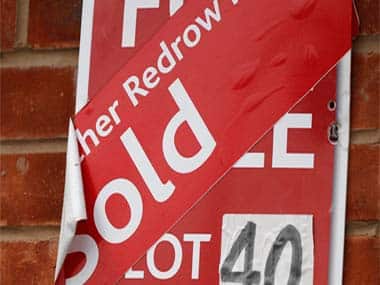 [/caption]
I finally come to the two beasts which created the entire Ponzi Scheme. A scheme, which Laura inadvertently set in motion, resulting eventually in “Too Big To Fail” and “Moral Hazard” becoming recognisable terms. “Risk mitigation” and “Derivatives” are the beasts I refer to. The first is an illusion, if ever there was one. Risk does not go away - it just gets passed up and down the financial food-chain. The second - well, this is what Mobius had to say a few weeks ago,.. “There is definitely going to be another financial crisis around the corner because we haven’t solved any of the things that caused the previous crisis. Are the derivatives regulated? No. Are you still getting growth in derivatives? Yes.”
Continue reading on page 2
The total value of derivatives in the world exceeds total global gross domestic product by a factor of 10. And believe you me, a lot of the derivatives sound like a whole lot of mumbo-jumbo, created and used to do one thing, and one thing only - create the illusion that risk is being mitigated. Right! We all saw how Laura’s inability to service her loan, was neutralised by the structured products which kicked in downstream…
CDO, CDO2, CDS, Regression Analysis, Tier 1, Tier 2 bonds, Interest-only/Principal-only Bonds? Befuddled? Here, let me add some more balderdash - the “interest only negative-amortising adjustable rate sub-prime mortgage”! Gotcha good there, did’nt I? Don’t worry, even I got hurled around in the maelstrom of exquisitely frustrating helplessness on that last one!
Not just me. Or some of you. Even CXOs of Wall Street firms were throwing their hands up in the air and helplessly muttering to their bond traders/analysts/economists, “If it brings in the money, and there are enough suckers in Asia and Europe to whom you can slip in a few of these to, go for it, you Masters of The Universe !”….. ..or something to that effect.
So they slurped, drooled, constructed and deconstructed complicated stuff, and generally made complete fools of EVERYONE - shareholders, regulators, taxpayers. And then got bailed out by TARP, when whatever-it-is-that-hits-the-fan, hit the fan!
Can Laura pay? Simpler to deconstruct, yes? I am afraid, it does not sound sexy enough though, to justify a million-dollar bonus - so chuck it!
As is now well documented, during the sub-prime boom, Wall Street specialised in repackaging mortgage securities into instruments called collateralised debt obligations (CDOs), which could be sliced into bundles with ostensibly varying degrees of risk. For buyers who wanted to insure against the debt going bad, Wall Street offered another instrument called credit-default swaps (CDSs). I am not sure if Lewis Ranieri had this in mind when he first came up with the concept of mortgage bonds 30 years ago. He had “investment grade” mortgages in mind, which he then proceeded to carve out in a manner that made them appealing enough to institutions who hitherto were investing in treasuries, municipal bonds, corporate bonds, etc.
Let us come to the credit rating agencies now, who were making a mockery of the ratings system. So would I, if my livelihood depended upon devising means to rate the sub-prime bonds as marketable instruments. The ratings given to these instruments had diverged too far away from the actual risk these instruments carried. And if Moody’s sprouted a conscience , well there was always S&P around, to sell its soul to the devil . “Here is the rating you wanted, now give me my fee”, was the leitmotif, I am guessing.
The fancy sounding models and synthetic instruments which could be explained using probability theory, distribution curves, risk-analytics, advanced statistics and other such impressive stuff, made the question “Can Laura pay?” gloriously redundant. And policy-makers and institutions which sit at the top of the heap, enjoying the bird’s-eye view, painting the BIG PICTURE….. well, they are good at debating the Keynesian approach while their heads are buried in an anatomical crevice I can’t mention here - history seldom makes them any wiser than most of us yield-curve-challenged mortals.
Laura could not pay, the real-estate asset bubble exploded right into the faces of economic geniuses prone to complex modelling of simple things, the mortgage bonds went underwater, the CDOs went phut-kaput and some of us putting in a hard day’s work churning out spider-man tee shirts in a garment unit in Tirupur (to be worn by pot-bellied truck drivers operating on the Interstate 5 perhaps!) lost our jobs. The only known sane person in all of this was John Paulson - he is still not done counting the truckloads of cash he raked in by seeing through this complex web. Ironically he used a structured product to do this - divine justice!
So much for risk mitigation, derivatives and connecting the dots of the macro-economic puzzle. 2008 is not over yet - it won’t be, till we correctly frame the equivalent of “Can Laura Pay?” this time around. I have not yet heard the right question being asked yet……so I wait for QE 2.5, visualising Bernanke oiling and greasing the printing press….
In the meanwhile, Brazilians seem to be on a massive shopping spree, preying like vultures on the foreclosures in US. With the real (the Brazilian currency) surging 45% against the dollar since 2008, they have been buying “cheap” condos in Miami at “throwaway” prices. Another report suggests, Chinese and Indians are doing pretty much the same in Europe. Thank God for BRICS - were it not for them, the shaky edifice of the leading G8 residents would have been dust in the wind by now.

 "Israel targets top Hamas leaders in Doha; Qatar, Iran condemn strike as violation of sovereignty")
 "Nepal: Oli to continue until new PM is sworn in, nation on edge as all branches of govt torched")
 "Who is CP Radhakrishnan, India's next vice-president?")
 "Israel informed US ahead of strikes on Hamas leaders in Doha, says White House")
 "Israel targets top Hamas leaders in Doha; Qatar, Iran condemn strike as violation of sovereignty")
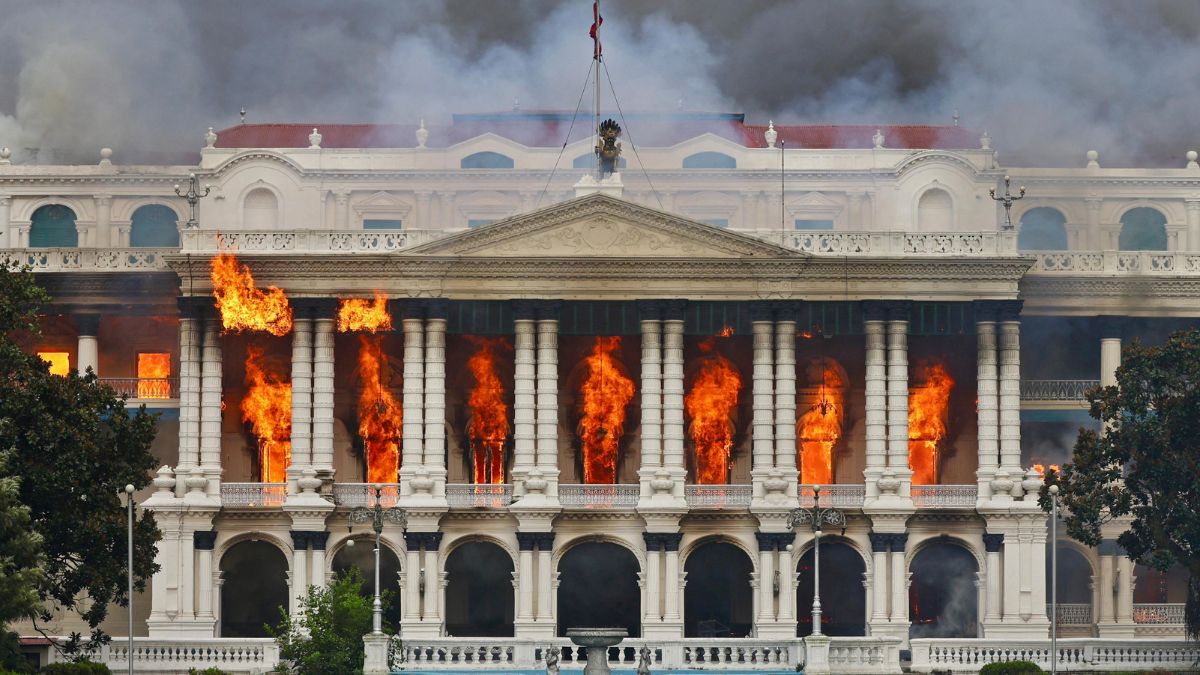 "Nepal: Oli to continue until new PM is sworn in, nation on edge as all branches of govt torched")
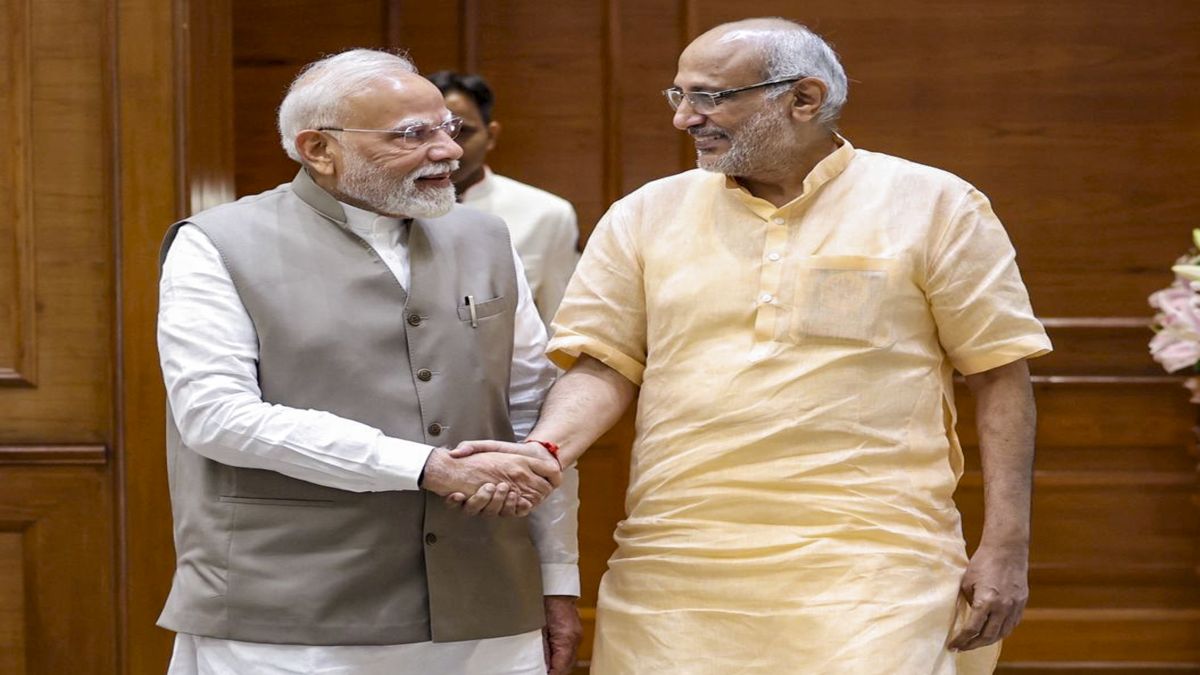 "Who is CP Radhakrishnan, India's next vice-president?")
 "Israel informed US ahead of strikes on Hamas leaders in Doha, says White House")



](https://images.firstpost.com/wp-content/uploads/2011/06/recession380.jpg)