

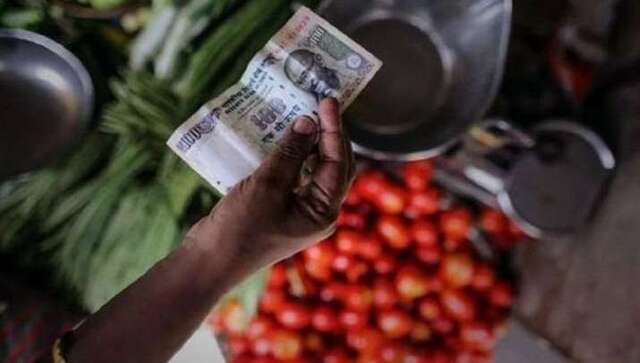
 "At 14.23% WPI inflation surges to more than a decade high in November")
New Delhi: The wholesale price-based inflation surged to more than a decade high of 14.23 percent in November, mainly due to hardening of prices of mineral oils, basic metals, crude petroleum and natural gas. WPI inflation has remained in double digits for eight consecutive months beginning April. Inflation in October this year was at 12.54 percent, while in November 2020 it was at 2.29 percent. The 12-year high inflation print in November is due to low base effect and spike in the fuel index. “The high rate of inflation in November 2021, is primarily due to rise in prices of mineral oils, basic metals, crude petroleum & natural gas, chemicals and chemical products, food products etc as compared to the corresponding month of the previous year,” the Commerce and Industry Ministry said in a statement on Tuesday. Inflation in fuel and power basket was higher at 39.81 percent in November, as against 37.18 percent in October. The food index more than doubled to 6.70 percent as compared to 3.06 percent in the previous month. Crude petroleum inflation was at 91.74 percent during the month under review, as against 80.57 percent in October. However, manufactured items saw moderation at 11.92 percent, from 12.04 percent in October. According to a senior Commerce and Industry ministry official, fuel and power have been the biggest contributors of higher inflation rate as it is almost 40 percent higher than November 2020. The international commodity prices and fuel prices have also been very high. Countries which traditionally have reported low inflation rates like the US have also now reported record inflation levels due to these global effects, the official said, adding, countries like Italy, Spain, Germany and even Singapore are having around 20 percent inflation. Primary articles and manufacturing products were barely touching double digits in spite of low base effects showing the efforts of Indian manufacturers, producers and industry, the official added. Terming the spike in the WPI inflation to a high of 14.2 percent as a shock, ICRA chief economist Aditi Nayar said most non-core categories have exhibited an inflation rate much steeper than expected. The unseasonal surge in vegetable prices, as well as a rise in the inflation for egg, meat and fish, and condiments and spices underpinned the turnaround in the primary food inflation to a 13-month high of 4.9 percent in November 2021, from a disinflation of 1.7 percent in the previous month, she said. A falling base is likely to push up the inflation rate for primary food articles further in the current month, in spite of an anticipated sequential moderation in prices of various food items, she added. The inflation for headline and core-WPI, and fuel and power printed at an all-time high levels in November 2021, Nayar said. Data released on Monday showed, retail inflation based on Consumer Price Index (Combined) rose to three months high of 4.91 percent in November, from 4.48 percent a month ago, as food prices inched up. The Consumer Price Index (CPI) based inflation, however, remained within the comfort zone of the Reserve Bank of India. The government has mandated the central bank to keep inflation at 4 percent (+/- 2 percent). The Monetary Policy Committee in its recent assessment retained its retail inflation forecast at 5.3 percent for the current fiscal. RBI Governor Shaktikanta Das last week while unveiling bi-monthly monetary policy review said the headline inflation would peak in the fourth quarter of the current fiscal. Read all the Latest News , Trending News , Cricket News , Bollywood News , India News and Entertainment News here. Follow us on Facebook, Twitter and Instagram.
This is resultant of a rise in prices of mineral oils, basic metals, crude petroleum and natural gas, chemicals and chemical products, food products etc as compared to the corresponding month of the previous year
Advertisement
End of Article


 "Charlie Kirk, shot dead in Utah, once said gun deaths are 'worth it' to save Second Amendment")
 "From governance to tourism, how Gen-Z protests have damaged Nepal")
 "Did Russia deliberately send drones into Poland’s airspace?")
 "Netanyahu ‘killed any hope’ for Israeli hostages: Qatar PM after Doha strike")
 "Charlie Kirk, shot dead in Utah, once said gun deaths are 'worth it' to save Second Amendment")
 "From governance to tourism, how Gen-Z protests have damaged Nepal")
 "Did Russia deliberately send drones into Poland’s airspace?")
 "Netanyahu ‘killed any hope’ for Israeli hostages: Qatar PM after Doha strike")



