

 "Why the fall of Xerox Zakaria is unthinkable in Indian media")
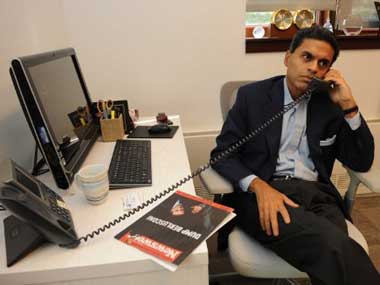
by BV Rao I suspect that the interest shown by the “mainstream” Indian media in the Fareed Zakaria plagiarism controversy was more because of his Indian origins and celebrity status than his professional transgressions. There are many good reasons for my suspicion but the most significant is that most journalists and media organisations would have no comprehension of the “crime” committed by Xerox Zakaria, as Newsbusters, the website that outed him, has wickedly dubbed him. In India, what Zakaria did is not even worthy of a pause, look and sneer. Here, our media gangs up to successfully cover up even the journalistic equivalent of genocide, so petty theft is no more than fleeting amusement. Zakaria’s American employees, too, thought the violation was minor and exonerated him but not before he was put through the ignominy of instant suspension and intense probe into his work. The plagiarism charge against him is so nuanced that it is important to explain what Zakaria was accused of and why it is such a big deal in America but a piffling issue for Indian media houses. Some time in April, Jill Lepore wrote an essay for The New Yorker magazine on gun control. In the essay she quoted from Adam Winkler’s book Gunfight: The Battle Over the Right to Bear Arms in America, to trace the history of gun laws since 1813. In August, Zakaria wrote about gun law, too, and quoted the same contents from Winkler’s book. He accessed Winkler via Lepore’s essay but credited Winkler and left out Lapore. Zakaria did not steal any original thought from either Winkler or Lepore. He merely borrowed general facts about dates and events. There are only so many ways in which you can express a fact like “the sun rises in the east” but, in the given context, it was clear that along with the facts, Zakaria borrowed Lepore’s words, too. Worse, whether by design or default, it seemed he wanted to camouflage the debit transaction, else he would have given a second level attribution to Lepore. He was guilty not of first degree murder but second degree manslaughter. But that was enough because when it comes to ethics and morals there are no degrees of difference. You either have them or you don’t. [caption id=“attachment_430309” align=“alignleft” width=“380”] 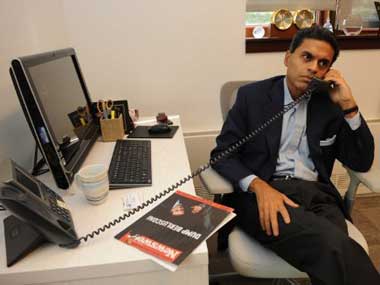 In contemporary journalism there is nobody, perhaps with the exception of Thomas L Friedman, who is as widely read and as highly revered across the world as Zakaria is. AFP[/caption] Time took the nuance to another level altogether. “Time accepts Fareed’s apology, but what he did violates our own standards for our columnists, which is that their work must not only be factual but original; their views must not only be their own but their words as well.” In short, Time was telling Zakaria he was in for trouble if he was having his column ghost-written by a junior. If you don’t have the time to write, don’t write. That is not the dictum in India as you will see shortly. Fareed Zakaria is in a league of his own. In contemporary journalism there is nobody, perhaps with the exception of Thomas L Friedman, who is as widely read and as highly revered across the world as Zakaria is. Zakaria is tipped to join Obama’s team in the state department — if there is such a team after 2013 January. That’s how big Fareed Zakaria is. Yet, the slightest whiff of moral turpitude was enough for his many employers to bring him down to earth. Time suspended his weekly column and CNN pulled off his web blog on a similar topic as the one he wrote for Time. Both announced an internal review of all his work. Underscore “all”. That was perhaps par for the course, but The Washington Post also suspended his column and CNN International switched off his hit Sunday show “GPS”, though both these works were unconnected to the offence at hand. But the logic was simple: if Zakaria’s work in one place in one organisation was suspect, all his work in that place and everywhere else becomes suspect as well. Indian media owners and star journalists would laugh at such ethical sanctimony. Here, the media, especially the media elite, is above reproach as case after recent case has demonstrated. I will give just two examples at the highest level: Aroon Purie, who was in a plagiarism row in October 2010, and two months later, Prannoy Roy, who twiddled his thumbs when his channel needed to benefit from his image, integrity and leadership. The news of Zakaria’s plagiarism and suspension hit the front pages of all major English newspapers (in Delhi) instantly. But when India Today editor-in-chief and promoter Aroon Purie found that his ghost writers had xeroxed (I’m sure that was not the intention, but….) copiously from a Slate article on Rajinikath, the media outdid itself in its familiar ostrich act. Forget about placing the scandal on page 1, there was not a word in most newspapers. Purie’s tabloid, Mail Today, which would lustily cover the Radia tapes scandal two months later, too, ducked it. Instead of an unequivocal apology, Purie tried a feeble online excuse about jetlag and sleep deprivation causing the mistake. “Jet lag is clearly injurious to the health of journalism. I was in America, and still a bit bleary-eyed and sleep-deprived when we took an unusual decision: to split the cover. This is jargon for changing the cover for some editions; so while the content of the magazine remained the same worldwide, the cover that went to our readers in south India had displayed the phenomenal Rajinikanth, while our other readers saw Omar Abdullah on the cover. This meant writing two versions of ‘Letter from the Editor’. Not being an acknowledged expert on the delightful southern superstar, I asked Delhi for some inputs. Unfortunately, a couple of sentences lifted from another article were sent to me. An excuse is not an explanation. So, without any reservations, mea culpa. Apologies.” That only led the author of the original Slate article, Grady Hendrix, to lampoon Purie. “Any man can apologise, but only the millionaire CEO of a multiplatform media company who is also editor-in-chief of a major news magazine can write an apology that is defiantly non-apologetic….But the jetlag apology wasn’t meant to be taken as a serious statement, it was more of an old school attempt to make the problem go away with a silly, “Whoops, I’m tired!” shrug. Only with the new media, problems like this don’t go away. While print journalists in India are said to be unlikely to report on the infractions of their colleagues, the Internet knows no loyalty, and all over India online writers are still (weeks after the controversy) tweeting and blogging for a better explanation.” That better explanation was never to be. In fact, millions of India Today’s readers in India and abroad did not even get to see the half-apology in India Today because it was printed only in its southern editions where the violation happened. A narrow technical view of a grave breach of trust issue. The violation may have happened locally but the fallout was global. The trust of all of Purie’s readers was shaken. Not that any of them would believe that Purie could ever steal another person’s work or words, but they needed to be explained what went so horribly wrong. That never happened. The real problem was that Purie could not get himself up to admit openly that, at least occasionally, what readers think are his words are not his. They are written by his senior editors and he signs it, but not without adding value, from what I know. As it turned out, the ghost-writer, a very senior editor, lost his job at India Today and Purie’s “letter from the editor” lost its “must-read” status. Similarly, Prannoy Roy, another proprietor-editor of eminence, lost a lot of sheen when the Radia tapes controversy erupted involving his protégé Barkha Dutt. The taped conversations cast aspersions and doubts about the conduct of celebrity editors such as Barkha Dutt, Vir Sanghvi, Prabhu Chawla and some more. Just as in the Purie case, the news was blacked out in Delhi for two full weeks (except, interestingly, by Purie’s Mail Today). Even when the clamour in the web world forced the papers to grudgingly write about it, it never ever made it to the front pages. As far as the Indian media was concerned, nothing worthwhile had happened. Any explanation for putting Zakaria on page one and hiding Vir and Barkha and others for as long as they could not avoid has to be just as credible as my explanation that the essential difference between god and the god particle is that the former is full of the latter! Indian journalism is full of gods and god particles. Gods for most of the time and invisible particles when the dirt hits the ceiling! News organisations have a direct bond of trust with their readers/viewers. When occasionally that trust comes under strain, as in this case, it is incumbent upon the organisations to take swift and honest action like Time, CNN and Washington Post did. Hindustan Times (Vir’s employer) did pull out his column, but only in the second week while Roy, Barkha’s boss and the most trusted brand on TV at that time, kept a safe distance from the controversy letting Barkha do all the defending, such as she did. Fareed Zakaria’s apology was instant and unambiguous: “Media reporters have pointed out that paragraphs in my Time column this week bear close similarities to paragraphs in Jill Lepore’s essay in the April 23rd issue of The New Yorker. They are right. I made a terrible mistake. It is a serious lapse and one that is entirely my fault. I apologise unreservedly to her, to my editors at Time, and to my readers.” Pit that against Barkha’s defiant non-apology. “I was gullible…I was silly…I may have been innocent, I made an error of judgement. I am sorry for that but that’s all…I’m not apologising for anything else.” She’s right, it’s hard to imagine that there can be “anything else” left to apologise for. It is this convenient notion of graded ethics — that violations are arranged in a neat ascending order from the insignificant to the most significant — that lets all our editors and media organisations escape scrutiny of the kind that Zakaria was put to because nobody admits to guilt of any offence other than at the lowest end of the scale. Vir also wobbled and waffled, denying any wrongdoing and subsequently exonerating himself. That is so stupid because they leave themselves open for lifelong suspicion and doubts over their integrity. The lack of grace in apologising causes even unintentional momentary blunders to become lifelong burdens. Zakaria will face recrimination for some time, will be the butt of jokes for long but now that CNN, Time and Washington Post have accepted his apology and exonerated him for the “unintentional error” and “isolated incident” he will ultimately live it down. Imagine the impact on NDTV 24x7’s image if Roy were to have taken Barkha off air, conducted an inquiry and went on air to tell us that he was reinstating her after chiding her for a one-off error in judgement. Roy would have acquired cult status. Instead he slunk away into the background and did nothing to restore the credibility of the channel or Barkha. She shall now live with the sword of doubt hanging over her head because every time I see her the Radia tapes play in my head. And I think she knows that. HT did slightly better because, as pointed above, it pulled off Vir’s column. But even here the paper did not face up to its readers and tell them the whys and whats. Vir’s column was there and Vir’s column was gone, that was that. Also, Vir continues his weekly food column elsewhere in the paper even to this day, possibly because corporate fixers manipulate only political columns! Against this, look at the comprehensive review of Zakaria’s work conducted by the three organisations before lifting the suspension for his minor lapse. The CNN statement exonerating him will give you a good idea. “CNN has completed its internal review of Fareed Zakaria’s work for CNN, including a look back at his Sunday programs, documentaries, and CNN.com blogs. The process was rigorous. We found nothing that merited continuing the suspension. Zakaria has apologised for a journalistic lapse. CNN and Zakaria will work together to strengthen further the procedures for his show and blog. Fareed Zakaria’s quality journalism, insightful mind and thoughtful voice meaningfully contribute to the dialogue on global and political issues. His public affairs program GPS will return on Sunday, August 26.” The moral of the story: however big a journalistic infraction in India, the journalist is always bigger, so the consequences are nil. Zakaria must be wondering if he did the right thing by leaving India. Come back, Zaka! BV Rao is editor of Governance Now (Disclosure: Firstpost is published by Network18, many of whose TV broadcast affiliates and publications compete with some of the Indian media channels and personalities mentioned in this article)
The extreme scrutiny and ignominy Fareed Zakaria faced in the US contrasts with how we treat our own media’s transgressions.
Advertisement
End of Article
Written by FP Archives
see more

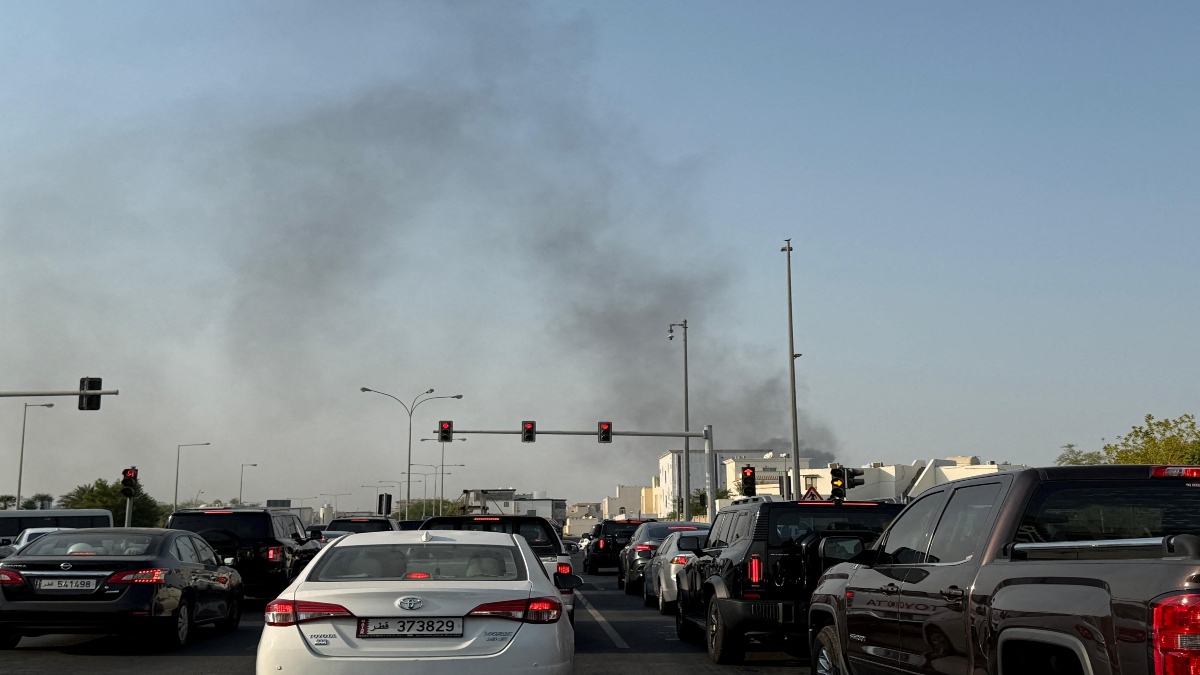 "Israel targets top Hamas leaders in Doha; Qatar, Iran condemn strike as violation of sovereignty")
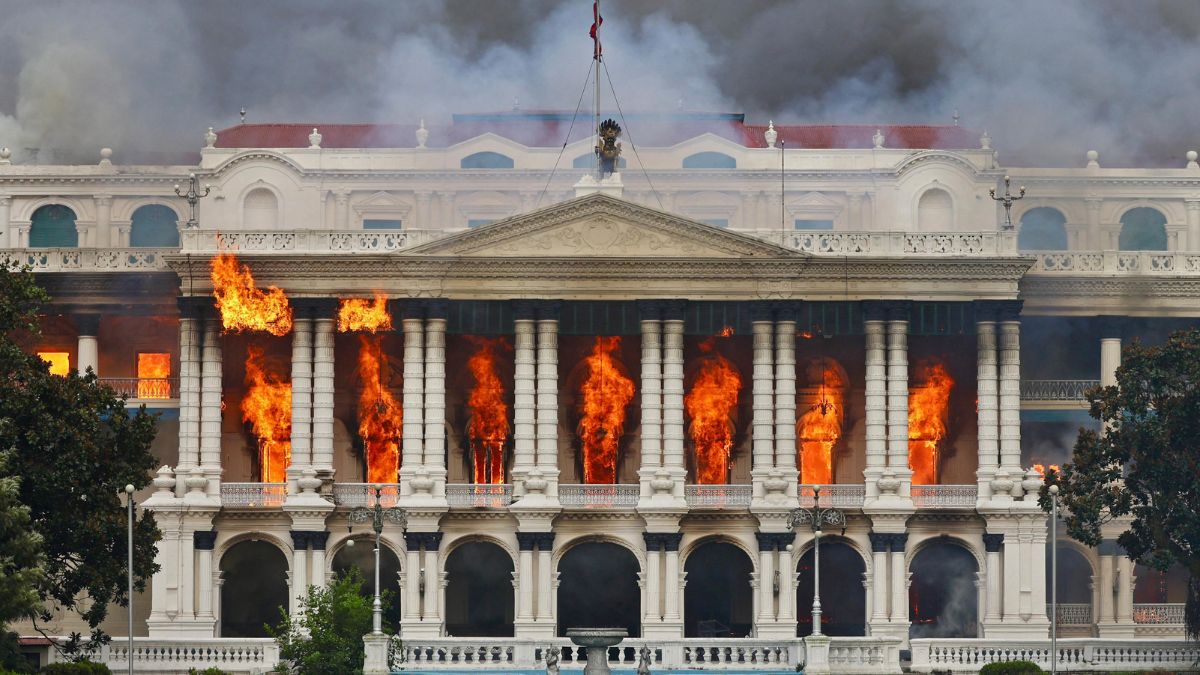 "Nepal: Oli to continue until new PM is sworn in, nation on edge as all branches of govt torched")
 "Who is CP Radhakrishnan, India's next vice-president?")
 "Israel informed US ahead of strikes on Hamas leaders in Doha, says White House")
 "Israel targets top Hamas leaders in Doha; Qatar, Iran condemn strike as violation of sovereignty")
 "Nepal: Oli to continue until new PM is sworn in, nation on edge as all branches of govt torched")
 "Who is CP Radhakrishnan, India's next vice-president?")
 "Israel informed US ahead of strikes on Hamas leaders in Doha, says White House")



](https://images.firstpost.com/wp-content/uploads/2012/08/Zakaria-afp.jpg)