

 "Yellow or Blue economy? In Hong Kong, businesses are choosing political sides amid shrinking middle ground")
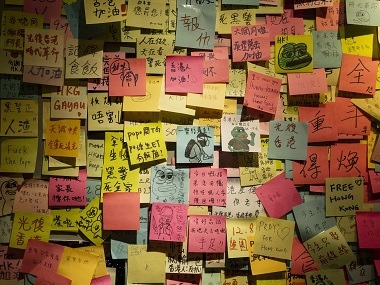
Hong Kong: The tapioca pearls at Fred Liu’s bubble teahouse are springy and fresh, just like the fish balls at Elaine Lau’s noodle shop. But that is not the only reason customers flock to these eateries in Hong Kong’s bustling Causeway Bay shopping district. Both are members of the so-called yellow economy, shops that openly support the democracy movement remaking Hong Kong as it strives to protect the freedoms differentiating the territory from the rest of China. After seven months of street protests against Beijing’s assault on these liberties, Hong Kong is colour-coded — and bitterly divided. The yellow economy refers to the hue of umbrellas once used to defend demonstrators against pepper spray and streams of tear gas. That is in contrast to blue businesses, which support the police. Families and businesses have cleaved, sometimes forcefully, between those who believe Beijing must be compelled to carry out promised reforms and those who worry that the democracy crusade is destroying Hong Kong’s reputation as a stable financial capital. A middle ground between the blue and yellow factions barely exists. “I’m yellow, but my parents are blue,” said Lau, the fish ball noodle seller. “A lot of families are like that.” “Luckily, I control 90 percent of the restaurant,” she added, as diners slurped down bowls of soup. “So I can do what I want here.” [caption id=“attachment_7930151” align=“alignleft” width=“380”] Expressions of pro-democracy support on a wall at Fred Liu’s bubble teahouse, a so-called yellow economy business. By Lam Yik Fei © 2019 The New York Times[/caption] Both Lau’s noodle shop and Liu’s teahouse are plastered with Post-it notes of encouragement for pro-democracy forces, mimicking the Lennon Wall in Prague where messages of dissent proliferated under Soviet domination. Maps and apps showing businesses’ perceived leanings help guide customers their way. “We want to show the Chinese Communist Party that Hong Kong people can be economically self-sufficient through the yellow economic circle,” Liu said. “We want to put pressure on blue shops to close.” Devoid of natural resources and crowded onto limited land, Hong Kong has flourished because of its people, mostly entrepreneurial immigrants who left China for better prospects in the former British colony. Hong Kong residents advanced up the economic ladder, as sweatshop laborers rose to become bosses with factories on the mainland and even real estate or shipping tycoons. Today, the territory, which was returned to Chinese rule in 1997, ranks behind only New York and London as a nexus of global finance. Yet months of unrest, along with the trade war between the US and China, have battered Hong Kong’s economy, which entered recession last year. In the central business district, police officers fired live bullets and arrested unarmed schoolgirls. On university campuses, students lobbed firebombs with homemade catapults. Tear gas has been unleashed in all but two of Hong Kong’s 18 districts. On Sunday the violence flared again as two police officers were beaten when officials tried to halt a pro-democracy rally in the Central district. Tourists from mainland China, a vital source of income for local businesses, have stayed away because of the turmoil. Retail sales have plummeted. Small-business owners, whose operations make up the bulk of Hong Kong’s enterprises, are bearing the brunt of the downturn, even as they contend with some of the highest rents in the world. Economic analysts fear for the city’s future. “A deterioration of the sociopolitical situation and delays in addressing structural challenges of insufficient housing supply and high income inequality could further weaken economic activity and negatively affect the city’s competitiveness in the long term,” the International Monetary Fund warned last month. Amanda Leung’s family has sold dried seafood for three generations. In recent years, mainland visitors concerned about the safety of the domestic food supply have been some of her biggest customers, she said. They bought fish maw and mollusks, abalone and sea cucumber. “They have stopped coming,” she said. Still, Leung said she understood the frustrations that have kept the protest movement going, from peaceful marches of more than a million people demonstrating against a now-withdrawn extradition bill to the passions of a hard core of brick-throwing youth. “China should leave Hong Kong alone,” she said. “We can do business our own way.” As tempers have flared, businesses on both sides of the color divide have been attacked. Down the street from Liu’s tea shop, vandals lobbed red paint at a food stall known as a yellow establishment, while a nearby snack food store considered to be pro-Beijing was damaged. The battle has gone online, too. Ken Leung helped create WhatsGap, a popular app in Hong Kong that maps businesses that are considered yellow, helping them draw customers. This month Google removed the app from its online store, saying it violated its policies related to sensitive events, but critics said the company might have been acting to placate China. Apple pulled a similar service from its app offerings last year. “The divide in Hong Kong society has only increased, not lessened,” Ken Leung said.
But in November, pro-democracy candidates won a landslide victory in district council elections, the first time that Hong Kong voters had a chance to express their positions on the protests since this movement began.
The yellow economy was backed up by the ballot box. “There’s a perception that Hong Kong businesspeople are not sympathetic to the protests, but look at the silent majority that spoke in large peaceful marches or in the district council elections,” said Todd Darling, an American restaurateur who has lived in Hong Kong for 16 years. As the protests gathered force last year, Rocky Siu watched as an orderly column of demonstrators, miles long, marched past one of his ramen restaurants. When the police cracked down, he opened his doors, offering half-price bowls of noodles and free saline solution to wash the tear gas from protesters’ eyes. “I’m losing money, but that’s not the point,” he said. “We have to support our young people.” Siu’s father was born in China and came to Hong Kong to seek a better life. But he owns a jewellery factory on the mainland and is, as Siu puts it, “deep blue”. “I tell him I don’t understand. You escaped China but now you’re supporting them,” Siu said. “To me, it’s not yellow or blue. It’s black and white, right and wrong.” Hannah Beech c.2020 The New York Times Company

 "Charlie Kirk, shot dead in Utah, once said gun deaths are 'worth it' to save Second Amendment")
 "From governance to tourism, how Gen-Z protests have damaged Nepal")
 "Did Russia deliberately send drones into Poland’s airspace?")
 "Netanyahu ‘killed any hope’ for Israeli hostages: Qatar PM after Doha strike")
 "Charlie Kirk, shot dead in Utah, once said gun deaths are 'worth it' to save Second Amendment")
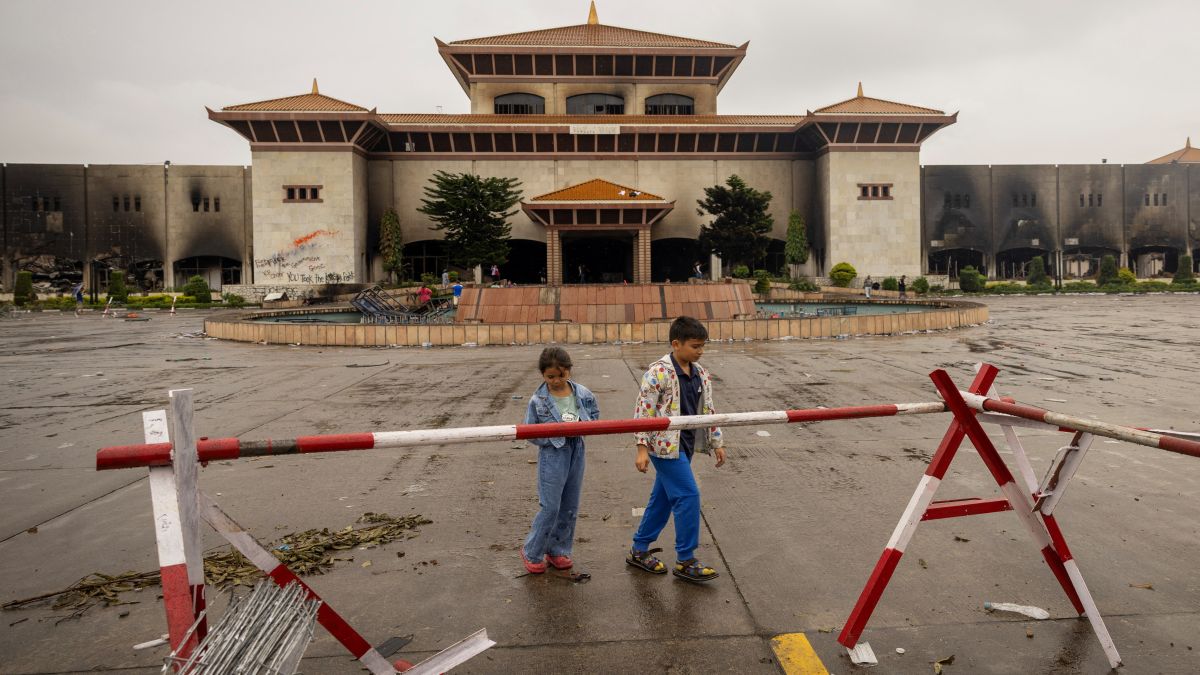 "From governance to tourism, how Gen-Z protests have damaged Nepal")
 "Did Russia deliberately send drones into Poland’s airspace?")
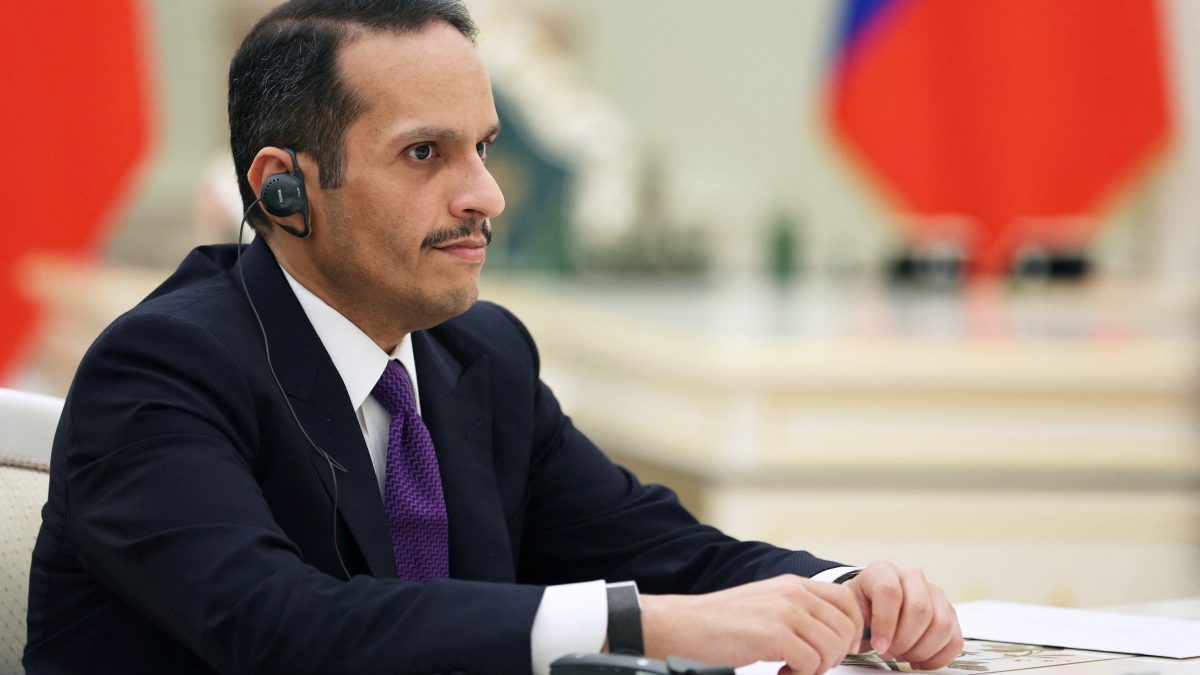 "Netanyahu ‘killed any hope’ for Israeli hostages: Qatar PM after Doha strike")



