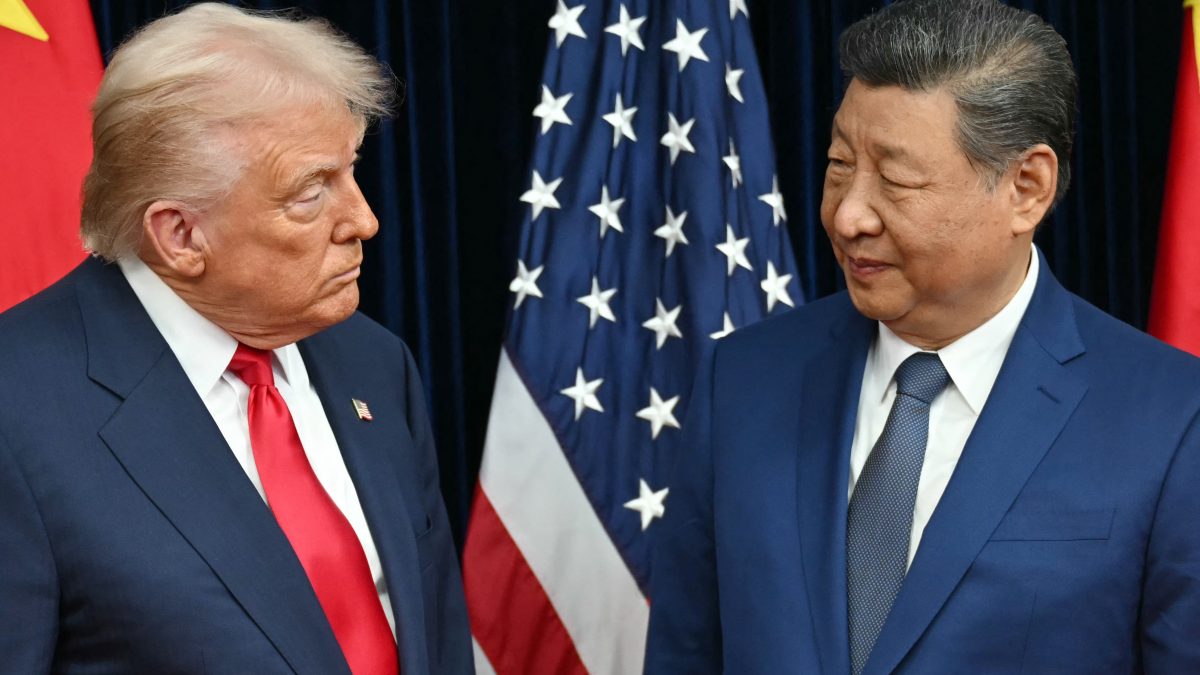
 "As the Trump-Xi meeting approaches, China's balancing act becomes even more important. (File/AFP)")
US President Donald Trump has said that he has urged China to delay his meeting with President Xi Jinping by “a month or so”, citing the Iran war.
The meeting between Trump and Xi is scheduled from 31 March to 2 April. The two leaders met face-to-face in October last year and have since held several phone calls.
“We got a war going on. I think it’s important that I be here,” Trump said at a White House event, adding there were “no tricks” to the delay — his clearest public admission yet that he does not expect the conflict to be resolved within the month.
Is there a ’trick'?
In an interview with the Financial Times, Trump said that he expects Beijing to help unblock the Strait of Hormuz before any summit.
However, Treasury Secretary Scott Bessent has clarified that the request for postponing the meeting was based on logistics and not on China’s no-show in the Strait of Hormuz issue or any trade disagreements.
Bessent’s clarification matters because the US is not publicly conditioning the Beijing trip on Chinese action in the strait, but Trump’s own words have muddied that message considerably.
Why is China unlikely to help US?
China is unlikely to police the strait on Washington’s behalf — Beijing is far better positioned to quietly cut its own safe-passage deal with Tehran, given that roughly 90% of its oil transits through the waterway.
The delay is not, by itself, a crisis. Preparations for the visit were reportedly already behind schedule, and the tone from US-China trade talks in Paris over the weekend was cautiously positive.
The more significant signal buried in the rescheduling: the US president is publicly conceding the Iran war will not be over by the end of March, and that changes the entire timeline for how long this conflict, and its economic fallout, may run.