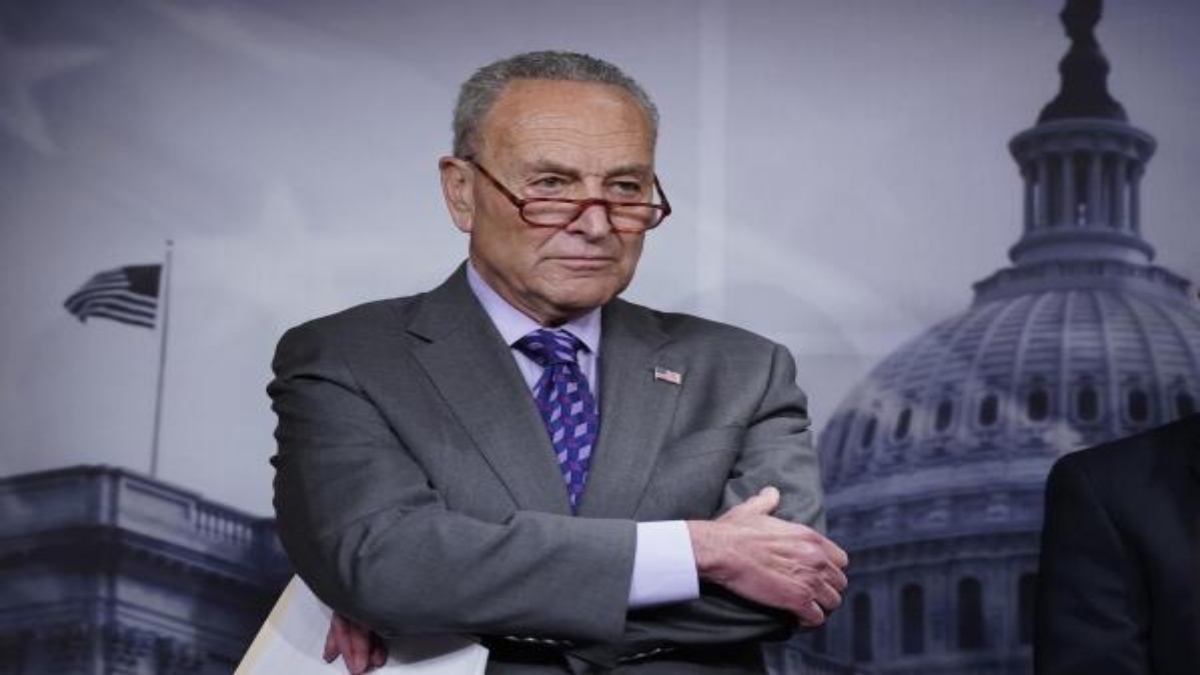
 "Senate Majority Leader Chuck Schumer. Source: AP")
The US Senate voted to renew the controversial warrantless surveillance law shortly after it expired. The legislation which is described as critical to combating terrorism has received major backlash from civil liberties advocates from both the right and left sides of the political aisle.
With the vote 60-34 in favour of the law, the bill will now be sent to US President Joe Biden for the stamp of approval, NBC News reported. The legislation extends Section 702 of the Foreign Intelligence Surveillance Act, or FISA, for two more years.
The final vote came after the Senate rejected a total of six amendments to the legislation which were proposed by progressive and conservative senators. Both sides argued that the spying powers enshrined in the bill were too broad and demanded protections for Americans’ civil liberties and privacy.
However, the Biden administration and FISA supporters in the past warned that even a brief lapse in the legislation could have a detrimental impact on the intelligence-gathering procedures.
The bill gets a greenlight even after the Senate missed the deadline
According to NBC News, Senators missed the midnight deadline to reauthorize the FISA Section 702 statute. However, they voted to reauthorise the bill minutes later.
It is important to note that if the Senate agreed to adopt any amendments to the bill, it would have been sent back to the House. The FISA supporters fear that this would have caused a major lapse of law.
Impact Shorts
More Shorts“In the nick of time, bipartisanship has prevailed here in the Senate,” Senate Majority Leader Chuck Schumer said after the Senate voted to re-authorise the legislation.
“It wasn’t easy, people had many different views, but we all know one thing: letting FISA expire would have been dangerous. It’s an important part of our national security to stop acts of terror, drug trafficking, and violent extremism,” Schumer averred on the Senate floor.
“Thank you to all my Senate colleagues on both sides of the aisle for their good work in getting this done," he added.
The house passed the bill with the slightest majority
Last week, the US House of Representatives passed the two-year FISA renewal legislation by slimmest of the margins. What caused the delay in the renewal was the fact that many senators were demanding an amendment that would require a warrant to search through the communications of Americans as part of data collected while surveilling foreigners.
“It’s important that people understand how sweeping this bill is,” said Senator Ron Wyden, a member of the Intelligence Committee and outspoken proponent of privacy protections.
“Something was inserted at the last minute, which would basically compel somebody like a cable guy to spy for the government. They would force the person to do it and there would be no appeal," he added.
About the law
Section 702 allows the government to collect data from US companies like AT&T and Google. This data includes messages from foreigners abroad who have been targeted for foreign intelligence or counterterrorism purposes without a warrant. This is applicable even when they are communicating with Americans.
The tool became controversial since it also sweeps up messages of Americans to and from those foreign targets. Interestingly, the law traces back to the warrantless wiretapping program.
The controversial program was secretly created by Former US President George W Bush after the devastating terrorist attacks of September 11, 2001. However, the legislation introduced by Bush violated the Foreign Intelligence Surveillance Act of 1978, which required warrants for national security wiretapping on domestic soil.
After the news of the existence of such a law became public, the US Congress in 2007 legalized a form of it in a short-lived legislation called the Protect America Act.
The Act incorporated an exception to FISA’s warrant requirement for wiretapping on American soil that targets foreigners abroad. The lawmakers enacted the infamous Section 702 the following year. The legislation has been extended in 2012 and 2018.