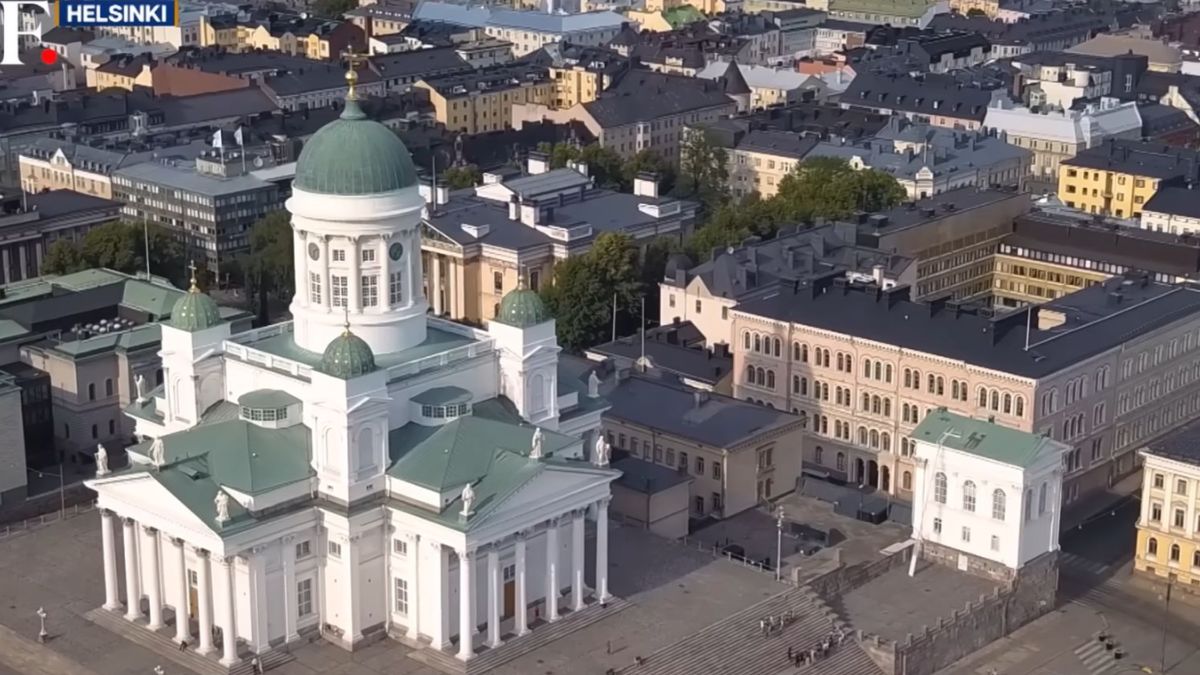
 "Helsinki Capital of Finland.")
For eight consecutive years, Finland has claimed the top spot in the World Happiness Report, a testament to the nation’s deep commitment to well-being and balance. That happiness isn’t just an abstract ideal; it’s built into the country’s design philosophy. Nowhere is this more evident than in Helsinki, a city where every structure, park, and public space seems shaped with intention. Here, design isn’t about grandeur or display; it’s about creating calm, connection, and comfort for those who live there. And perhaps no place captures that spirit better than the Oodi Central Library, the architectural heart of the Finnish capital.
On a typical grey Helsinki morning, when rain falls softly and the air bites with cold, locals still find their way to Oodi. The library, all glass and timber curves, glows like a warm lantern against the subdued sky. It isn’t just a place for books; it’s a modern gathering space where the city’s rhythm continues, whatever the weather.
Inside, the building hums with quiet energy. The ground floor draws chess players into intense concentration. Upstairs, open reading areas blend seamlessly with co-working desks and creative studios. Families settle into play zones, teenagers organise gaming sessions, and artisans use the workshop corners to bring ideas to life. It feels less like an institution and more like a living organism—part library, part community centre, part social hub.
Watch the video here:
Since opening in 2018, Oodi has become a cornerstone of Finnish public life. Its guiding idea is simple yet radical: design must serve everyone. Here, anyone can walk in, stay as long as they like, and make the space their own. Equality isn’t just a value inscribed on the walls; it’s built into the very layout of the building.
This belief in design as a democratic act stretches back to the early 20th century, when architect Alvar Aalto began shaping Helsinki’s identity. His philosophy was deeply human: architecture should improve life, not just decorate it. That legacy remains visible across the capital today.
Impact Shorts
More ShortsUnlike many cities that expand in chaotic sprawl, Helsinki grows through intention and planning. Streets are designed for people, not cars; public spaces invite connection rather than exclusion. Oodi is perhaps the clearest embodiment of that spirit, a space that transforms architecture into experience and design into dialogue.
In showing how thoughtfully designed spaces can bring a city together, Helsinki reminds the world that true innovation isn’t about size or spectacle. It’s about creating places where everyone feels they belong.