

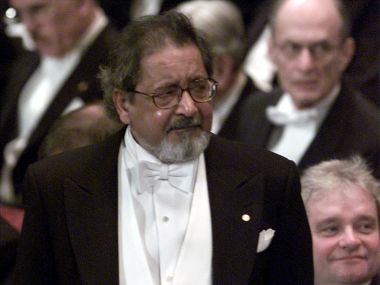
 "VS Naipaul's 86th birth anniversary: From In a Free State to A House for Mr Biswas, a study of the author's themes")
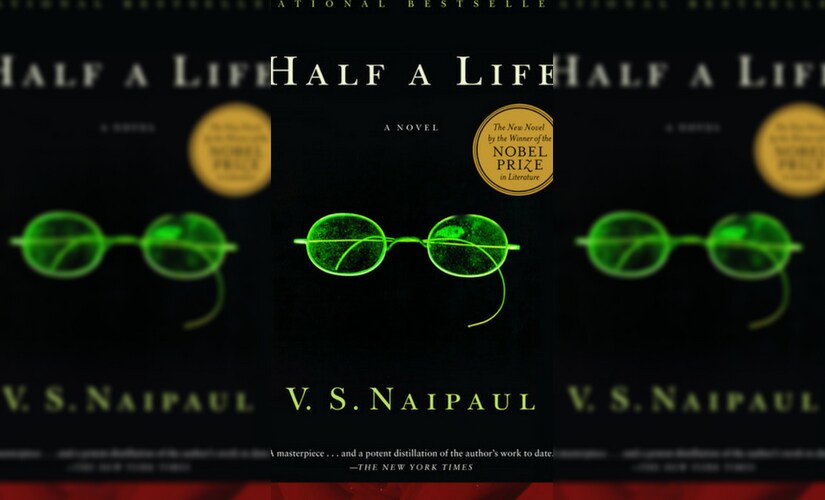
British author VS Naipaul, the famously outspoken Nobel laureate who wrote on the traumas of post-colonial change, breathed his last on 11 August, six days before his 86th birth anniversary this year. Naipaul, who was born in Trinidad and the son of an Indian civil servant, was best known for works including A House for Mr Biswas and his Man Booker Prize-winning In A Free State. “He died surrounded by those he loved having lived a life which was full of wonderful creativity and endeavour,” his wife Lady Nadira Naipaul said in a statement on Saturday. She described the outspoken author as a “giant in all that he achieved”. [caption id=“attachment_4947401” align=“alignnone” width=“825”]
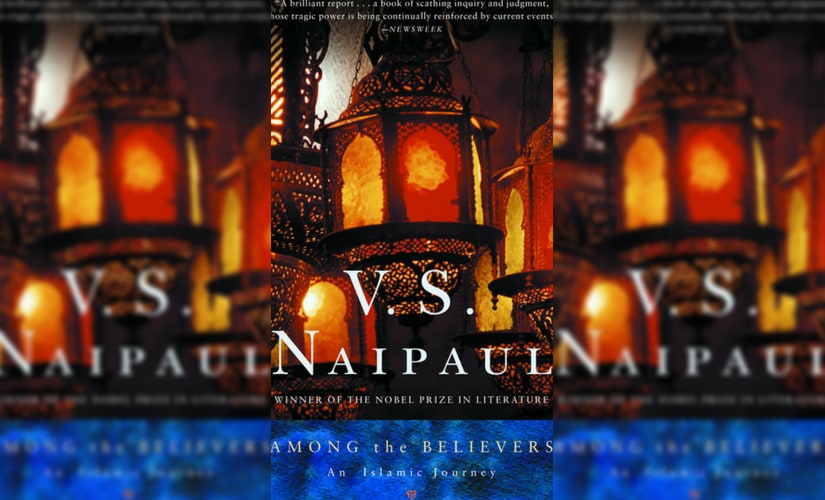
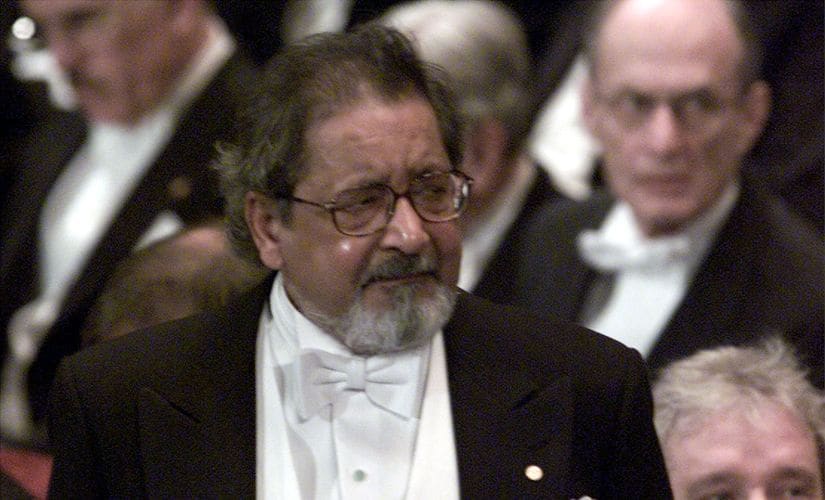 VS Naipaul during the reception of his Nobel prize for literature in 2001. Reuters[/caption] Vidiadhar Surajprasad Naipaul settled in England and studied English literature at Oxford University on a scholarship. But he spent much of his time travelling and despite becoming a pillar of Britain’s cultural establishment, was also a symbol of modern rootlessness. Naipaul’s early works focused on the West Indies, but came to encompass countries around the world. He stirred controversy in the past, describing post-colonial countries as “half-made societies” and arguing that Islam both enslaved and attempted to wipe out other cultures. When he was awarded the 2001 Nobel prize for literature, the Swedish Academy described him as a “literary circumnavigator, only ever really at home in himself, in his inimitable voice”. It said he was “the annalist of the destinies of empires in the moral sense: what they do to human beings. His authority as a narrator is grounded in his memory of what others have forgotten, the history of the vanquished,” it said. Naipaul, who was knighted in 1990, mixed fiction, non-fiction and autobiography without distinction. Overall he wrote more than 30 books. Among his noted works were, A House for Mr Biswas (1961) [caption id=“attachment_4947491” align=“alignnone” width=“825”]
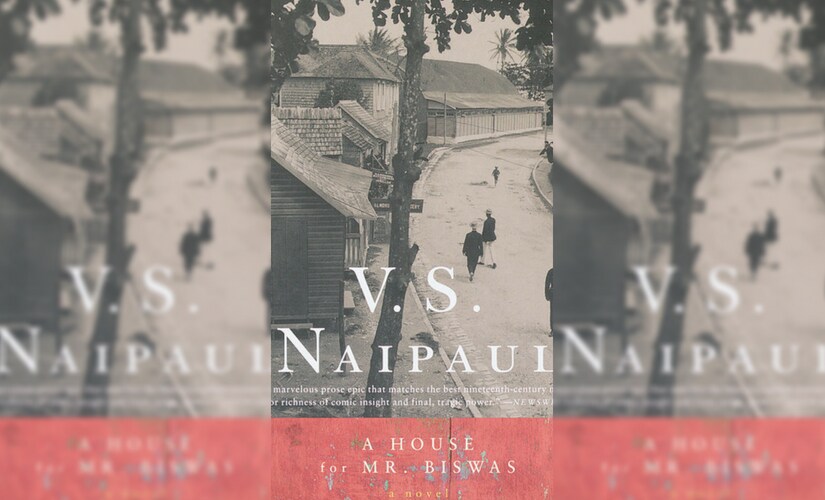 Image credit: Penguin Random House[/caption] One of his seminal novels, the book looked at the almost impossible task for Indian immigrants in the Caribbean of trying to integrate into society while keeping hold of their roots. The book follows the life of Mr Mohun Biswas, a protagonist inspired by Naipaul’s father, as he struggles to find his freedom and a house of his own. He marries into the Tulsi family, on whom he becomes dependent, but rebels and takes on a succession of occupations in a struggle to weaken their hold over him. Anthony Burgess
called the work “a work of great comic power qualified with firm and unsentimental compassion.” A Bend in the River (1979) [caption id=“attachment_4947511” align=“alignnone” width=“825”]
 Image credit: Penguin Random House[/caption] Short-listed for the Booker Prize in 1979, the novel tells the story of Salim, a young Indian man, who accepts an offer to a small business in Central Africa. As he strives to establish himself, he becomes closely involved with the fluid and dangerous politics of the newly-dependent state. “Always a master of fictional landscape, Naipaul here shows, in his variety of human examples and in his search for underlying social causes, a Tolstoyan spirit,” John Updike
wrote of the work. Miguel Street (1959) [caption id=“attachment_4947541” align=“alignnone” width=“825”]
 Image credit: Penguin Random House[/caption] Set during World War II and narrated by an unnamed-but precociously observant-neighborhood boy, Miguel Street is a collection of linked short stories featuring an array of characters — from Popo the carpenter to Man-man, who goes from running for public office to staging his own crucifixion to Mrs Hereira, a man in thrall to her monstrous husband — and set in wartime Trinidad and Tobago. “Miguel Street, by VS Naipaul, is a beguiling book about growing up in the West Indies. The sketches are written lightly, so that tragedy is understated and comedy is overstated, yet the ring of truth always prevails,”
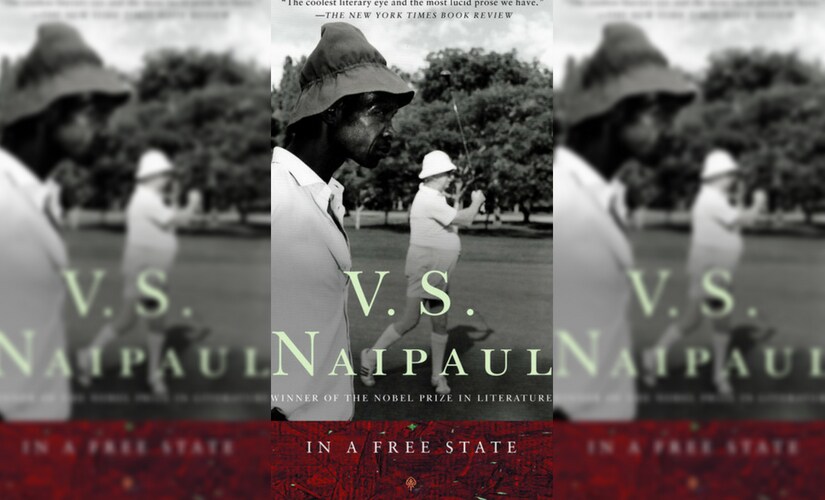
noted The New York Times upon its release. In a Free State (1971)
Overall VS Naipaul wrote more than 30 books, and was one of the first winners of the Booker Prize, now Britain’s leading literary award, in 1971 for “In A Free State”.
Advertisement
End of Article


 "US ready to ‘impose costs’ on Russia if war in Ukraine drags on, says Hegseth")
 "US tells Hamas to stop violence against Gaza civilians and disarm 'without delay'")
 "China seizes 60,000 maps mislabelling Taiwan, omitting South China Sea islands")
 "Syria’s Sharaa pledges to honor Russia ties, seeks economic and military support in Kremlin visit")
 "US ready to ‘impose costs’ on Russia if war in Ukraine drags on, says Hegseth")
 "US tells Hamas to stop violence against Gaza civilians and disarm 'without delay'")
 "China seizes 60,000 maps mislabelling Taiwan, omitting South China Sea islands")
 "Syria’s Sharaa pledges to honor Russia ties, seeks economic and military support in Kremlin visit")



](https://images.firstpost.com/wp-content/uploads/2018/08/RTRQ7NJ-825.jpg)
](https://images.firstpost.com/wp-content/uploads/2018/08/Untitled-design6.jpg)
](https://images.firstpost.com/wp-content/uploads/2018/08/Untitled-design-111.jpg)
](https://images.firstpost.com/wp-content/uploads/2018/08/Untitled-design-210.jpg)
](https://images.firstpost.com/wp-content/uploads/2018/08/Untitled-design-46.jpg)
](https://images.firstpost.com/wp-content/uploads/2018/08/Untitled-design-54.jpg)
](https://images.firstpost.com/wp-content/uploads/2018/08/Untitled-design-63.jpg)
](https://images.firstpost.com/wp-content/uploads/2018/08/Untitled-design-73.jpg)