 "Venezuela to immigration: Is a Trump vs Pope Leo battle brewing?")
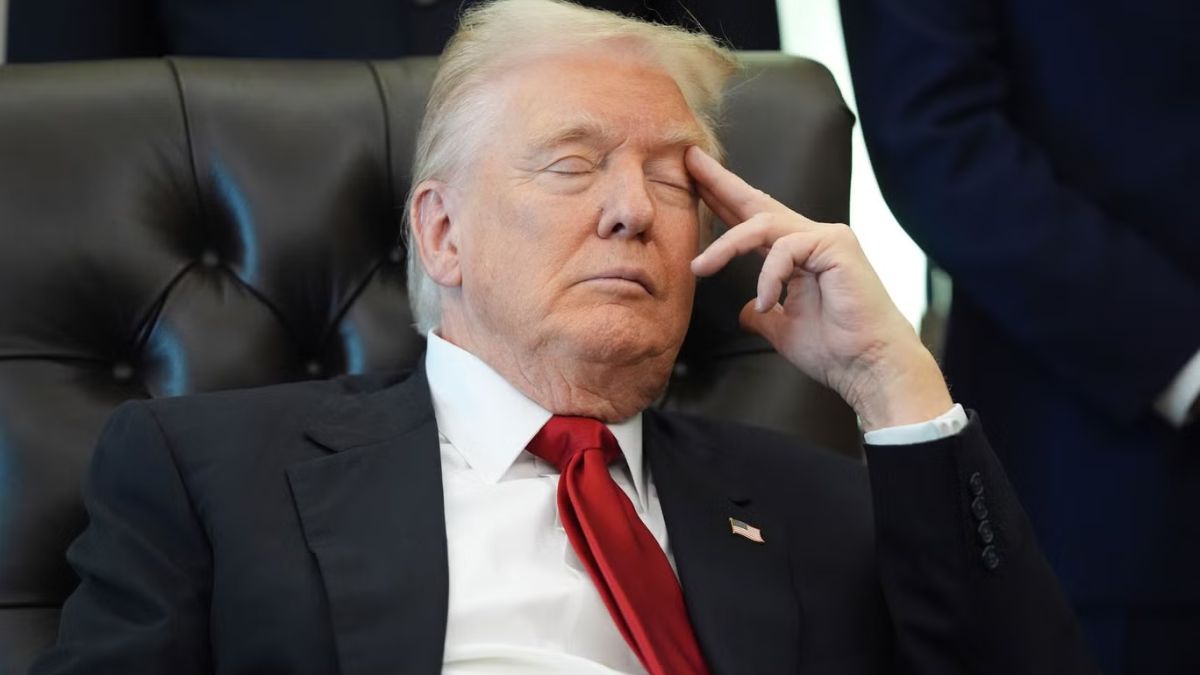
A subtle but significant rift appears to be emerging between US President Donald Trump and Pope Leo XIV, with Venezuela and immigration becoming early flashpoints.
While the clash has so far remained measured, recent statements and decisions suggest a broader ideological divide taking shape between the White House and the Vatican.
Venezuela sovereignty sparks tensions
The latest friction surfaced after Trump suggested that the US could effectively “run” Venezuela following the capture of President Nicolás Maduro and Washington’s takeover of the country’s governance. Shortly afterwards, Pope Leo XIV publicly called for the safeguarding of Venezuela’s sovereignty.
Addressing the faithful during his Sunday prayer in St Peter’s Square, the Chicago-born pontiff urged that the interests of the Venezuelan people be placed above all else.
“The good of the beloved Venezuelan people must prevail over every other consideration,” Leo said, calling for an end to violence and a path towards justice and peace. He emphasised the need to protect the country’s sovereignty, uphold constitutional rule of law, respect human and civil rights, and work collectively towards stability and harmony, with particular concern for the poorest affected by the economic crisis.
The pope also asked those present to pray for the people of Venezuela. His remarks were widely interpreted as a direct rebuke of Washington’s stance.
Trump’s unusually cautious response
Despite the criticism, Trump has responded with uncharacteristic restraint. Known for sharply attacking critics, the US president has avoided direct confrontation with the first American pope.
The caution is largely political. Catholics make up a significant share of Trump’s core electorate, limiting his appetite for an open clash with the Vatican and forcing a more measured response to papal criticism.
Immigration emerges as a deeper fault line
Beyond Venezuela, immigration has become the most pronounced area of disagreement. In recent months, Pope Leo has urged senior clergy to speak out in defence of vulnerable migrants. US bishops echoed the message, condemning what they described as the “dehumanising rhetoric and violence” associated with Trump’s deportation policies.
Leo later made a public appeal that migrants in the US be treated “humanely” and “with dignity”, firmly positioning the Vatican against the tone and approach of the administration’s immigration crackdown.
Quick Reads
View AllICE raids and growing polarisation
The pope’s stance emboldened bishops in Florida to call for a temporary pause in Immigration and Customs Enforcement raids during Christmas.
“Don’t be the Grinch that stole Christmas,” said Archbishop Thomas Wenski of Miami.
Reflecting America’s deep political polarisation, however, the Department of Homeland Security defended the arrests, describing them as a “Christmas gift to Americans”.
Vatican reshuffle sends a message
The divide was further underscored by a key Vatican personnel decision. Pope Leo removed Cardinal Timothy Dolan — Trump’s preferred papal candidate and a frequent presence on conservative Fox News — from a powerful role as archbishop of New York.
He was replaced by a bishop known for pro-migrant views, a move widely seen as signalling the pope’s priorities and reinforcing the Vatican’s stance on immigration.
A divided Catholic base
The growing clash highlights a deeper moral divide within the US Catholic community. Catholics account for around 22 percent of Trump’s electorate, according to a Pew Research Center poll, making them a crucial political constituency.
While Pope Leo aligns himself with liberal causes such as migrant rights, climate action and social justice, many MAGA-aligned Catholics take far stricter positions on migration, sexuality and climate change.
An uneasy relationship ahead
For conservative Catholic figures within Trump’s orbit, including former strategist Steve Bannon, Pope Leo XIV has become a deeply controversial figure.
Taken together, the developments suggest that while the confrontation between Trump and the pope remains cautious for now, a wider ideological battle may be brewing — stretching from geopolitics in Latin America to the culture wars over immigration within the US itself.

 "Trump announces 25% tariff on Iran’s trading partners. How India may be affected")
 "India, US to resume BTA talks after 5 months as Gor pushes for trade deal with 'real friends'")
 "ICC sources rubbish Bangladesh sports adviser’s sensational claim of BCB being asked to drop Mustafizur")
 "Jerome Powell: The 'Fed chair with a spine' taking on Trump")
 "Trump announces 25% tariff on Iran’s trading partners. How India may be affected")
 "India, US to resume BTA talks after 5 months as Gor pushes for trade deal with 'real friends'")
 "ICC sources rubbish Bangladesh sports adviser’s sensational claim of BCB being asked to drop Mustafizur")
 "Jerome Powell: The 'Fed chair with a spine' taking on Trump")