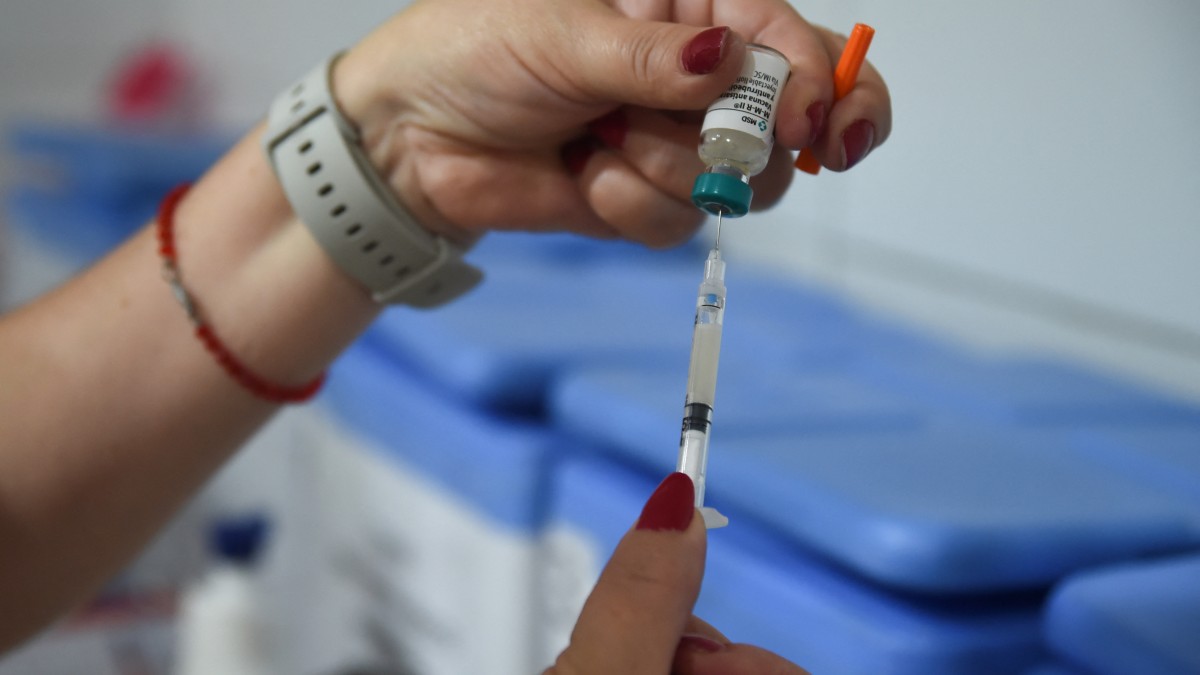
 "Representative image. AFP")
The US Department of Health and Human Services has changed its recommendation on the vaccines an American child should get, significantly slashing the number of shots in an unprecedented overhaul.
Health officials will maintain their recommendations for vaccines against measles, mumps, rubella, polio, chickenpox, HPV, and others. However, they are refining their guidance for meningococcal disease, hepatitis B, and hepatitis A, advising these vaccinations only for children at higher risk of infection.
The department says that vaccines against flu, Covid-19 and rotavirus should be based on consultation and “shared clinical decision-making,” meaning that people who want to get them have to see a health care provider.
What changes?
Health Secretary Robert F Kennedy Jr has justified the move, saying the overhaul came “after an exhaustive review” and “protects children, respects families, and rebuilds trust in public health.”
“We are aligning the US childhood vaccine schedule with international consensus while strengthening transparency and informed consent,” he added.
Under the new policy, children will be given 11 shots instead of the earlier 17 vaccines, as per the Centres for Disease Control and Prevention (CDC) recommendation.
The list of vaccines that are thrown out of the schedule includes hepatitis A and B shots, along with Covid and rotavirus.
For the time being, insurance will continue to cover vaccines that are still recommended at the end of 2025.
The CDC compared the current vaccine recommendations for children in the U.S. with those of 20 developed countries and found that the U.S. was “a global outlier” in terms of both the number of diseases covered and the number of doses, according to the Department of Health and Human Services.
Quick Reads
View AllMonday’s announcement followed weeks after a CDC panel issued new guidelines on when children should receive their first hepatitis B vaccine. Previously, the first dose was recommended within 24 hours of birth, but the revised guidelines in December shifted it to two months after birth, provided the mother is hepatitis B negative.