 "Clinton’s Pak ‘apology’ does not mean much")
Washington: The sort-of US apology to Pakistan for the Salala incident last November is a tactical move which changes nothing in essential terms about how the Obama Administration understands Islamabad and its game. The “apology” will be portrayed by Pakistan’s civilian leaders as the price they extracted from Washington after months of brinkmanship but a careful reading of Hillary Clinton’s statement should clarify that “mistakes” were made by both sides. In the end Pakistan agreed to reopen NATO supply routes without raising the price per container as it had earlier demanded and settled for the old tag of $250. The history of this “apology” itself was a tragedy of errors – when to give it, who should offer it and who would benefit from it in Pakistan. The apology will allow the US to save money by using the shorter supply route and it will get Pakistan the lifeline to more than $1 billion in coalition support funds, which Washington had blocked. Both sides have a chance to cool down. [caption id=“attachment_366486” align=“alignleft” width=“380”]
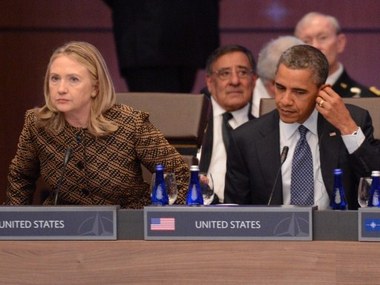
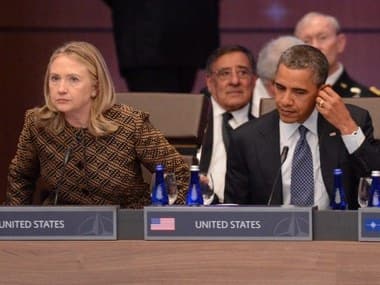 The reaction in Washington is vehemently mixed. AFP[/caption] The reaction in Washington is vehemently mixed. Supporters of the US-needs-Pakistan school are relieved and call the apology a step in the right direction. This group is concerned with short-term gains about costs, logistical support and an “orderly exit” of US troops from Afghanistan. The believers simply ignore the clash of strategic goals and Pakistani games. Others raise precisely the question of Pakistani complicity in attacks on US troops over the years. Christine Fair, a professor at Georgetown and an expert on Pakistan, called the apology was “an enormous step back” and a typical example of “lazy thinking.” It only “recalibrates” the US dependence on Pakistan. Lisa Curtis of the Heritage Foundation said Pakistan has never “explained, let alone apologised, for its lack of action against the enemies of the US that find sanctuary on its soil.” So where is the US-Pakistan relationship headed – after the balm of an apology? It is clear the Obama Administration no longer believes in the magic of Pakistan’s conversion from a state deeply embedded in a mess of its own creation to a country that wants to change. It has come to the painful understanding that it can’t lure, intimidate, cajole or bribe Pakistani decision makers into smashing the safe havens from which the Haqqani network and others operate against NATO forces in Afghanistan. On this there is now a Washington consensus. In fact the Salala incident in which 24 Pakistani soldiers were killed last November by the US is a study in hardening of attitudes. The reason the Pentagon opposed any apology for the longest time is because it says the firing against US helicopters first came from the Pakistani side. Besides, the Pakistani positions were in places where they were reported not to be. Pakistani military later said they fired because they thought it was the “Taliban”— which last heard didn’t possess helicopters. It is difficult to overstate the anger against Pakistan. If there is another provocation – an attack on the US that is traced back to Pakistan – more than drone attacks might be ordered. President Barack Obama’s thinking on Pakistan began changing in 2010 when Gen Ashfaq Kayani handed him a paper outlining Islamabad’s “strategic objectives” in Afghanistan. Obama had ordered a review of America’s Afghan policy and Kayani wanted to influence it to his advantage. But what happened was exactly the opposite. Obama read the paper and two others from the military establishment and reportedly came to the conclusion the general was paranoid about India. He understood that Pakistani generals were too fixated on India and were beyond “salvation,” according to an advisor familiar with the evolution of Obama’s thinking. Obama apparently decided he won’t bend backwards to make anything more palatable for the Pakistanis. Kayani was “furious” when Obama did nothing to nix the India-Afghanistan strategic pact. Obama has steadily become tougher on the big decisions while leaving the daily management to Clinton. The apology fits in the daily management, not in the big picture.
Seema Sirohi is a foreign policy analyst currently based in Washington. She has worked for The Telegraph (Calcutta), Outlook and Ananda Bazar Patrika in the past, reporting from Geneva, Rome, Bratislava, Belgrade, Paris, Islamabad and Washington on a range of issues. Author of Sita’s Curse: Stories of Dowry Victims, she has been a commentator on BBC, CNN and NPR.