After years of scandals, the Biden administration determined that Wells Fargo had sufficiently changed its poisonous culture and loosened some of the limitations placed on the bank. Investors believed that Wells Fargo, which has been operating under strict regulatory supervision for years, could be able to restore its image and resume growth in response to the news, which caused the company’s shares to rise substantially on Thursday. In incredibly lively trading, the bank’s shares finished up 7.2% to $52.04, their highest level since March 2022. Big national banks like Wells Fargo are regulated by the Office of the Comptroller of the Currency, which on Thursday ended a consent order that had been in effect since September 2016. The bank was forced by the order to change the way it offered financial products to consumers and to include more safeguards for consumers and whistleblowers. That consent decree was implemented following a slew of government and media reports in 2016 that revealed Wells Fargo to have a toxic sales culture that drove staff members to upsell consumers on unnecessary items. Millions of unauthorised accounts were opened by employees, who worked in “stores” rather than bank offices. Consumers’ credit scores were affected and their identities were taken. Americans who did not understand English made up a disproportionate fraction of the millions of consumers affected. The scandal severely tarnished the reputation of San Francisco-based Wells Fargo, which eight years ago was considered one of the best-run banks in the country by investors and analysts. Since the scandal broke, Wells Fargo overhauled its board of directors and management, paid more than a billion dollars in fines and penalties, and has spent eight years trying to show the public that the bad practices are a thing of the past. The scandal led to unionization efforts at some branches as employees protested how managers pushed unreasonable sales goals. In a brief statement Thursday, the Comptroller of the Currency said that Wells Fargo’s “safety and soundness” and “compliance with laws and regulations does not require the continued existence of the Order.” The decision is a major victory for Wells Fargo’s management and Charles Scharf, who took over as CEO in 2019. “Confirmation from the OCC that we have effectively implemented what was required is a result of the hard work of so many of our employees, and I’d like to thank everyone at Wells Fargo involved for their dedication to transforming how we do business,” Scharf said in a prepared statement. Citigroup banking analyst Keith Horwitz said in a note that the OCC’s decision was “positive proof” that Wells Fargo’s management was making the right decisions to fix the company’s culture. There remains in place a Federal Reserve consent order against Wells Fargo as well as a requirement by the Fed that bank grow no bigger than its current size until it fixes its sales culture. The Fed declined to comment, but the OCC’s decision is likely to pressure the Fed to make its own decision regarding its restrictions on Wells Fargo. Including the Fed’s order, Wells Fargo still has eight consent orders that govern its operations. That’s down from 14 when Scharf took over the bank. Management says they still have work to do. “We’ve changed the company across a number of dimensions,” said Scott Powell, Well Fargo’s chief operating officer, in an interview. Powell joined the bank roughly around the same time as Scharf. We’re doing better for customers and employees and we keep working to address the risk issues that are still outstanding."
US eases restrictions on Wells Fargo after years of strict oversight following scandal
FP Staff
• February 16, 2024, 08:53:22 IST
Big national banks like Wells Fargo are regulated by the Office of the Comptroller of the Currency, which on Thursday ended a consent order that had been in effect since September 2016
Advertisement
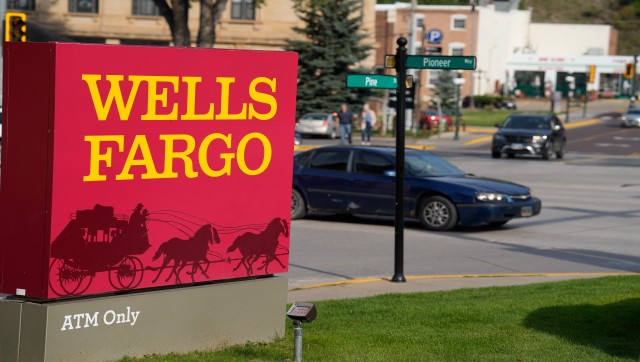 "US eases restrictions on Wells Fargo after years of strict oversight following scandal")
End of Article